


تم اغلاق
الموقع الرسمي لسلسلة ملاعب الجولف والنوادي التابعة للعلامة التجارية ترامب، احتجاجاً على تدخلات الرئيس الامريكي ترامب في الشؤون الداخلية للعراق سيستمر اغلاق الموقع لمدة ساعتين متواصلتين، محذرين من تداعيات التدخلات الخارجية الامريكية في شؤون الشرق الاوسط عامة والعراق
خاصة
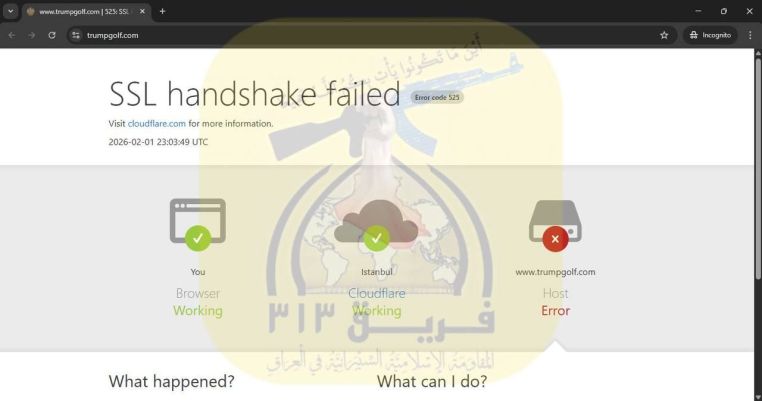
Evidence confirms a targeted cyber disruption against trumpgolf.com on February 1, 2026. Data shows the website encountered a 525 SSL handshake error while attempting to route traffic through an Istanbul-based Cloudflare node. Such errors typically indicate a failure in the secure connection between the content delivery network and the origin server. A semiotic analysis of the overlay reveals a clear ideological signature. The watermark displays an AK-style rifle, a map of Iraq, and religious iconography associated with Shia militant groups. Forensic linguistics identify the actors as the 313 Team, representing the Islamic Cyber Resistance in Iraq.
Operational patterns suggest a time-bound denial-of-service attack or a deliberate configuration disruption. The group issued a specific threat narrative focusing on American foreign policy. They claim this action protests perceived interference in Iraqi internal affairs. Abductive reasoning points to a symbolic psychological operation rather than a pursuit of long-term technical control. The two-hour window reflects a controlled demonstration of capability designed to generate media visibility.
Technical analysis of the provided check-host report verifies the global unavailability of the site during the specified period.
The Cultural Nexus Framework highlights the significance of the 313 moniker, which refers to the companions of the Mahdi in Shia eschatology. This numerical branding aligns with previous activities by Iranian-aligned hacktivist collectives. Use of such religious symbolism converts a standard cyber outage into a political statement. These actors seek to influence public perception by demonstrating an ability to strike high-profile American commercial assets.
Current trends indicate an increase in synchronized hacktivism where groups leverage regional instability to justify digital aggression. The Islamic Cyber Resistance in Iraq uses these events to project power beyond physical borders. Future risks include expanded targeting of diverse Western economic interests as regional tensions fluctuate.
Evidence confirms the 313 Team operates as a specialized psychological and disruptive cell within the broader Iranian-aligned hacktivist ecosystem. Inductive reasoning identifies a consistent pattern of retaliation-based targeting. This group gained notoriety in June 2025 by claiming a Distributed Denial of Service (DDoS) attack on Truth Social immediately following American military strikes on Iranian nuclear facilities. Their operational playbook prioritizes high-visibility Western political and commercial assets to amplify their ideological message.
Analysis of their technical infrastructure reveals a preference for utilizing open-source attack tools and public DDoS stressers rather than proprietary zero-day exploits. They frequently coordinate with other collectives under the Cyber Islamic Resistance umbrella, including groups like Keymous+ and Cyber Jihad. This collaborative model allows for the rapid mobilization of traffic to overwhelm targets during specific geopolitical flashpoints. The February 2026 disruption of trumpgolf.com fits this historical trend of symbolic aggression.
The group demonstrates a clear reliance on Telegram for operational communication and propaganda distribution. They routinely share screenshots of outages and technical logs to validate their claims and intimidate adversaries. While their technical sophistication remains moderate, their ability to align digital effects with physical world events creates a significant psychological impact. They exploit the perceived vulnerability of Western digital infrastructure to project an image of resistance and reach.
Tactical patterns suggest the 313 Team will continue focusing on edge devices and poorly secured web resources. Their adherence to the Cultural Nexus Framework ensures that every technical action carries a heavy weight of religious and political symbolism. This fusion of digital disruption and ideological warfare characterizes their role as a “cognitive army” designed to influence perceptions through strategic cyber operations.
You must be logged in to post a comment.