


Smuggling and Illicit Acquisition of Starlink Terminals by Russian Forces
Despite U.S. sanctions and Starlink’s absence from the Russian market, Moscow’s troops have managed to acquire SpaceX Starlink satellite-internet terminals through covert channels. Ukrainian intelligence reports and Western investigations reveal a thriving gray-market supply network funneling Starlink kits into Russian hands
Black-Market Purchases via Intermediaries
Russia’s military has obtained “thousands” of Starlink terminals by having private Russian firms buy them through third-party intermediaries in neighboring countries. These intermediaries procure the equipment abroad (often in Europe or former Soviet states) and smuggle them into Russia or occupied Ukraine. Lieutenant General Kyrylo Budanov, Ukraine’s intelligence chief, confirmed that Russian troops have been using Starlink “for quite a long time,” delivered through such channels. This indicates a systematic evasion of export controls.
Online Gray Market and Telegram Dealers
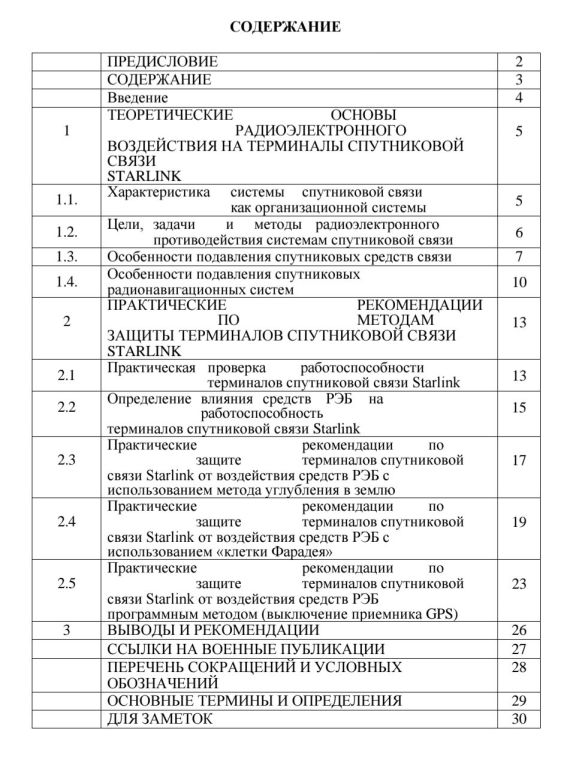
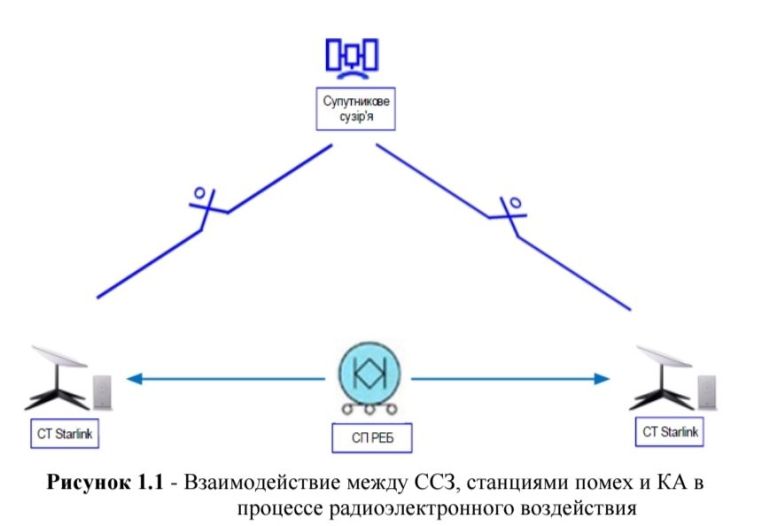

An illicit online market has emerged in Russia, with numerous websites and Telegram channels openly offering Starlink kits for sale to support the “special military operation”. These dealers advertise terminals (typically around $1,000 USD including connection fees) and even provide customer support and tips to avoid detection. Terminals often originate in Europe and transit through third countries (for example, shipped through the UAE) before reaching Russia. Sellers help Russian users skirt Starlink’s regional restrictions by activating the devices using foreign phone numbers, emails, and payment methods – sometimes borrowing identities from unwitting third parties. One vendor warns buyers “not to activate the terminal in Russia” to avoid geofencing blocks. By registering terminals with addresses or accounts in permitted countries (like Ukraine), Russians can fool the system and get service even on occupied soil. This sophisticated smuggling pipeline illustrates how sanctions are being undermined.
Possible Capture of Ukrainian Units’ Kits
Ukrainian officials acknowledge it’s possible some Starlink sets were captured from Ukrainian forces during battles. As Russia overran certain positions (for instance, during intense fights in 2022–2023), they may have seized Starlink dishes left behind. However, Ukraine’s Defense Intelligence (GUR) says the primary explanation for Russia’s Starlink access is illicit procurement from abroad, not just battlefield trophies. In February 2024, GUR intercepted Russian soldiers explicitly discussing setting up a Starlink — evidence the devices were on hand in a frontline unit, though GUR did not detail whether that particular terminal was smuggled or a stolen Ukrainian one. Either way, the **scale of Russian Starlink usage is growing “systemic”**, far beyond a few isolated captures.Date / IncidentEvidence of Russian Starlink DeploymentSourceFeb 2024 (Donbas)83rd Air Assault Brigade (Russia) operating near Klishchiivka was recorded installing Starlink terminals for frontline internet access. Intercepted soldier comms confirm the unit using Starlink in occupied Donetsk.GUR intercept (via RBC Ukraine); GuardianSpring 2024 (Donetsk)After advancing past Avdiivka, Russian troops set up Starlink dishes on a coke plant roof. Ukrainian forces observed and destroyed these terminals, noting the enemy had plenty of units to equip even small teams.Ukrainian 47th Brigade officers account (WaPo)Sept 2024 (Vuhledar Front)An officer of Ukraine’s 72nd Brigade reported that Russian attackers using Starlink ‘just overpowered us.’ He cited Russian Starlink-facilitated coordination as a key factor (alongside manpower and firepower) in forcing Ukrainian withdrawal from Vuhledar.Washington Post report (Ukrainian soldier testimony)Sept 2024 (Shahed Drone)A downed Shahed-136 kamikaze drone (Russian-launched) was found fitted with a Starlink receiver and dish. This jury-rigged modification enabled real-time control and data link over long range (up to 2,000 km).Defense Express analysis with photos
Deployment by Russian Units in Occupied Territories
Multiple Russian military units have been caught deploying Starlink on the battlefield, especially in occupied parts of eastern Ukraine. What began as scattered incidents has become a widespread phenomenon. By late 2023 and 2024, Ukrainian officials described Russian Starlink use as a “systemic” problem. For example, the 83rd Separate Air Assault Brigade – a unit of the Russian Airborne Forces – was identified using Starlink terminals in Donetsk oblast, near the fiercely contested villages of Klishchiivka and Andriivka (south of Bakhmut). Intercepted radio conversations between invaders explicitly discussed setting up the Starlink kit to get online in that area. Notably, those villages had been liberated by Ukraine and were within Starlink’s coverage, but as Russian troops attempted to re-attack, they co-opted the same Starlink service intended for Ukrainian defenders.
Ukrainian soldiers on other fronts also began encountering Starlink dishes in enemy positions. Reconnaissance drone units report seeing the telltale satellite dishes in Russian trenches and strongpoints. Near Novohrodivka (Donetsk region), a Ukrainian platoon commander observed Starlink terminals suddenly appearing among Russian front-line units in mid-2024. By late 2024, Starlink terminals had proliferated “across Russian positions” from Luhansk down to southern Ukraine. Ukrainian paratroopers from the 47th Brigade even noted that Russians have “enough dishes to give out to individual teams rather than just commanders” – implying extensive distribution, with possibly each platoon or drone squad having its own terminal. This marks a dramatic change; earlier in the war, such high-tech gear was a rarity for Russian units, which relied mostly on older radios.
The presence of Starlink in Russian hands has been confirmed in recent battles. During Russia’s 2024 offensive push around Avdiivka (a long-besieged Ukrainian bastion near Donetsk city), Ukrainian forces discovered multiple Starlink setups used by attacking Russian troops. In one case, Ukrainians destroyed several Starlink dishes that Russian soldiers had installed on an industrial facility’s rooftop to coordinate their assault. Each time Ukrainian troops overran or inspected Russian positions, they now routinely look for and target these distinctive devices. As one Ukrainian drone operator put it, *“They have a lot of them… They use them the same way we do”*. This parity is deeply unsettling for Ukraine, which had long leaned on Starlink as its edge in communication.
Starlink as a Battlefield Force-Multiplier for Russia
Having Starlink internet has enhanced Russian combat capabilities, effectively narrowing the tech gap between Russia’s forces and the digitally-networked Ukrainian military. Secure, high-bandwidth satellite internet allows Russian units to coordinate tactics in ways previously out of reach for them:
Real-Time Drone Reconnaissance and Strikes
Russian commanders are using Starlink to get live video feeds from drones and to direct those drones beyond line-of-sight. The terminals give frontline officers a “live battlefield view” via UAV cameras. This means Russian artillery observers and drone operators can instantly relay target coordinates, adjust fire on-the-fly, and even steer loitering munitions in real time. Ukrainian troops report that Russians are flying many more drone sorties and hitting with far more accurate artillery fire now – a direct result of Starlink-based connectivity. One Ukrainian platoon leader described how previously Russian observers often gave incomplete or wrong info over unreliable radios, but “that has changed” now that they have fast data links to share reconnaissance imagery.
Faster, Cohesive Command and Control
By leveraging Starlink, Russian units can communicate through encrypted chats, live maps, and video calls instantly across the battlefield. This mimics Ukraine’s own digital command network. Ukrainian soldiers say this boosted Russia’s coordination and flexibility – Russian assault groups that were once rigid and slow are now acting with up-to-date intel and orders. For instance, during the battle for Vuhledar (Donetsk oblast), Ukrainian defenders were shocked at how efficiently Russian attackers adjusted tactics in real time. A Ukrainian officer from the 72nd Brigade recalled how Russian forces, empowered by Starlink comms, “just overpowered us”, swarming positions and outmaneuvering his unit. He specifically cited Russian Starlink use as one of the critical factors (alongside sheer troop numbers and firepower) that forced Ukraine to withdraw from Vuhledar in October 2024. In other words, Starlink helped Russia neutralize one of Ukraine’s few advantages – secure communications – thereby tilting some engagements in Russia’s favor.
Integration into Drones and Weapons Systems
In a startling development, Russia has begun physically integrating Starlink hardware into its weapons. In September 2024, Ukrainian air defense shot down a modified Shahed-136 kamikaze drone (Iranian-designed, Russian-operated) that was equipped with a Starlink satellite communications module. Photos of the wreckage showed a Starlink antenna and terminal components inside. This innovation suggests Russian engineers are trying to turn one-way attack drones into two-way, networked weapons. With Starlink on board, a long-range drone like Shahed (which can fly ~2,000 km) can send back live video and receive new instructions mid-flight. As Defense Express analysts noted, this effectively transforms the Shahed into a reconnaissance-strike UAV – it could scout for targets (with an added camera) and even be redirected in flight to hit moving targets, all guided via satellite link. This development vastly increases the threat of these drones, since they are no longer “fire-and-forget” but can be steered to maximize damage. It also shows Russian technical adaptation: having previously experimented with 4G cellular modems on drones, they have moved to the more robust Starlink connectivity. The strategic danger of such applications is grave – unlimited-range drones guided by Starlink could be used not just in Ukraine but anywhere, even by Russian proxies or terrorists, bypassing traditional line-of-sight control limits.
Electronic Warfare Dynamics
Ironically, the Russian army’s use of Starlink comes even as it deploys electronic warfare (EW) units to jam or spoof Starlink signals used by Ukraine. Russian EW systems have attempted to disrupt Starlink by targeting its GPS functionality and uplink signals. Ukrainian communications specialists have had to harden their Starlink kits (for example, by disabling GPS receivers to thwart Russian jamming). This cat-and-mouse electronic battle underscores the paradox: Russia knows Starlink is a potent asset – so it tries to deny it to Ukraine while exploiting it for itself. In some cases, Russia’s jamming has backfired; once a Starlink terminal is connected, it can resist interference by hopping frequencies and using encryption. Nonetheless, the Russian army’s willingness to invest in attacking Starlink signals speaks to the network’s importance on the modern battlefield – for both sides. The Kremlin clearly recognizes that Starlink connectivity, wherever it exists, is a lethal force multiplier.
Ukrainian troops have taken to actively hunting Russian Starlink units whenever possible. Sniper teams and drone strikes will target the distinctive dish and its power supply, knowing that knocking out Russian communications can slow down the enemy’s onslaught. But given the abundance of terminals the Russians now field, this is like playing whack-a-mole. “They have a lot of them… They use them the same way we do,” a Ukrainian drone pilot said ruefully. Another Ukrainian commander noted that Russian Starlink use is “not the only factor” in Moscow’s advances, but clearly it has “played a role” in recent Russian successes on the eastern front. What was once Ukraine’s secret weapon has been co-opted, turning the tables on the very tech Elon Musk provided to Ukraine’s army.
Elon Musk and SpaceX
Contradictions and Controversy
Elon Musk’s public stance on the war and SpaceX’s official policies reveal a pattern of alarming inconsistency when compared to the on-the-ground reality of Starlink being used by Russia. Musk has repeatedly portrayed himself as a stalwart supporter of Ukraine – yet the passive tolerance of Starlink’s presence in Russian hands, and some of Musk/SpaceX’s own actions, tell a different story.
Musk’s Vocal Support for Ukraine
In the early phase of the war, Musk garnered praise for rapidly supplying Starlink to Ukraine. He often highlights that Starlink has been a lifeline for Ukraine’s defense. As recently as March 2025, Musk boasted that “my Starlink system is the backbone of the Ukrainian army” and claimed *“their entire front line would collapse if I turned it off.”*. He has taken credit for enabling Ukraine’s communication infrastructure and even noted he once challenged Putin to a fistfight over Ukraine. These statements project an image of Musk as a champion of the Ukrainian cause, aware that his technology is critical to Kyiv’s survival.
Restricting Ukraine’s Use of Starlink
Behind Musk’s bravado, however, SpaceX has not always acted in full support of Ukraine’s war effort. In fact, SpaceX imposed limits on Ukraine’s Starlink usage when it came to offensive military operations. President Gwynne Shotwell of SpaceX publicly stated that Starlink was “never meant to be weaponised” and revealed in early 2023 that the company had disabled Ukraine’s ability to control drones via Starlink. Specifically, SpaceX took steps to prevent Ukrainian forces from using Starlink to guide armed UAVs, such as maritime drones targeting Russian ships, citing that the service was for humanitarian communication, not offense. Musk personally intervened in September 2022 to deny a Ukrainian request for Starlink access in Crimea’s coastal waters, effectively foiling a planned Ukrainian naval drone attack on the Russian Black Sea Fleet. Musk was reportedly worried about enabling a strike that could escalate the war, and even consulted a Russian ambassador at the time. To Ukraine, these actions felt like betrayal: Musk’s technology had a kill switch just when it was needed most for a critical operation, ostensibly to appease Musk’s conscience (and perhaps Russian red lines).
Silence and Inaction on Russian Misuse
In stark contrast to the active steps taken to limit Ukraine’s tactics, SpaceX’s response to Russians illicitly using Starlink has been largely passive. Both Elon Musk and SpaceX insist they “do not do business” with Russia’s government or military, emphasizing that Starlink service isn’t even officially available in Russia. Musk has angrily denied “false” reports that Starlink terminals were being sold to Russia, calling the notion *“categorically false.”*. Yet, when pressed on whether Russian soldiers might be obtaining and using Starlink anyway, Musk offered no clear answer. SpaceX’s official line is that if they obtain knowledge of unauthorized use, they *“take actions to deactivate the terminal if confirmed.”*. However, this reactive stance comes off as disingenuous given the evidence – Russian use has been known and growing for over a year, right under SpaceX’s nose. Journalists asked SpaceX if it could categorically rule out that Russian troops were using Starlink; the company did not respond. Tellingly, neither Musk nor Starlink have outlined any proactive measures to stop Russian forces from getting or using new terminals. There’s no indication of geofencing adjustments or mass deactivations to counter the “systemic” problem that Ukraine is warning about. The result is a glaring double standard: Musk was willing to limit Ukraine’s access to prevent escalation, but has not decisively cut off Russian exploits of his network that actively enable aggression.
Ukrainian Frustration and Accusations
On the Ukrainian side, there is a growing sense of betrayal. Frontline soldiers and officers – once grateful to Musk – now curse the Starlink units they see aiding the enemy. Some have openly criticized Musk by name, saying SpaceX has “not done enough to crack down on illicit use.” They question Musk’s willingness to fix the issue, even suspecting that his sympathies lie with Russia due to his hesitance to act. “This is something that kills us,” one battalion commander said starkly, referring to Russian Starlinks guiding deadly strikes on his troops. The moral outrage among Ukrainian defenders is palpable: the very tool that saved Ukrainian lives is now costing Ukrainian lives, and they blame Musk’s indecision and mixed messaging. By late 2024, Ukrainian officials were so alarmed that they pleaded with SpaceX to intervene. Kyiv’s Defense Intelligence agency formally asked SpaceX to prevent Starlink connections in occupied areas being used by Russia. Officials also shared lists of suspect terminal ID numbers with the U.S. and SpaceX, hoping they’d deactivate these units. Still, there’s little evidence that many Russian terminals have been shut off – Ukrainian commanders on the ground have “not yet seen evidence” that SpaceX’s control methods have made a dent in the problem.
Musk’s Controversial Commentary
Elon Musk’s own statements have grown increasingly at odds with Ukraine’s objectives. While insisting he’s pro-Ukraine in providing Starlink, Musk in parallel espouses a viewpoint that Ukraine should perhaps seek peace and concede. In social media posts, he lamented *“years of slaughter in a stalemate that Ukraine will inevitably lose”* and urged “Peace now!!” regardless of the justice of the cause. Such comments echo Kremlin talking points that Ukraine cannot win, undermining Ukrainian resolve. Musk’s positions have drawn rebuke from Ukrainian officials and supporters, who note that he often appears more concerned about Russia’s perspective (e.g. fearing “strategic defeat” for Russia or nuclear escalation) than about enabling Ukraine’s victory. This perceived pro-Russian tilt – whether Musk realizes it or not – combined with the allowance of Starlink in Russian hands, strikes many as deeply hypocritical. How can the self-proclaimed “backbone of the Ukrainian army” also be the unintentional backbone of the Russian army’s communications?
Strategic and Ethical Implications–A Technological Betrayal
The confirmed use of Starlink by Russian forces carries severe geopolitical and ethical implications. At the strategic level, it demonstrates how a U.S.-produced civilian technology can be repurposed by an adversary to gain military advantage. This raises questions about export controls and the responsibility of tech companies in war. Starlink’s misuse by Russia blatantly violates U.S. sanctions and end-user agreements, essentially amounting to tech theft – yet, the burden of enforcement has fallen into a grey zone between government and a private company. U.S. officials are scrambling: the Pentagon and Treasury have been working with SpaceX to find ways to cut off Russia’s access, and in March 2024 U.S. House Democrats launched an investigation into SpaceX’s efforts (or lack thereof) to prevent Russian utilization of Starlink. Lawmakers warned that Russia’s *“misuse of Starlink… poses a serious threat to Ukrainian lives and U.S. national security.”* There is even concern that U.S. defense secrets could be compromised if Starlink hardware or protocols fall into Russian hands for reverse-engineering, or that Russia’s adaptation of Starlink in drones could threaten NATO assets in the future. Simply put, allowing the Kremlin to piggyback on this technology undercuts the West’s strategic edge.
Ethically, the situation is often described in Ukraine as a betrayal. Elon Musk’s Starlink was delivered as an aid to the victim of aggression; now, through negligence and loopholes, it is aiding the aggressor. This inversion has profound human consequences. Russian forces have used Starlink-guided tactics to rain destruction on Ukrainian soldiers and civilians – from more accurate shelling of frontline positions to potentially coordinating strikes on civilian targets (should those terminals be used to relay reconnaissance). Every instance of Russian Starlink use represents a failure to keep a civilian network out of the hands of war criminals. Yet Musk’s public responses show little urgency about this. By maintaining that SpaceX isn’t “doing business” with Russia, Musk shifts blame entirely onto smugglers and users, as if washing his hands of the outcome. In reality, critics argue that SpaceX has a moral obligation to do more – just as it quickly acted to limit Ukrainian offensive use, it could aggressively geofence occupied regions or require firmware updates that blacklist known stolen terminals. The fact that Starlink signals continue to empower Russian troops day after day, with only belated and opaque efforts to stop it, is seen as willful blindness at best and corporate complicity at worst.
The contradictions and hypocrisies in Musk’s approach have eroded trust. Musk enjoys acclaim for helping Ukraine, while avoiding accountability for how that same help has been co-opted by Russia. He simultaneously positions himself as a peacemaker (“stop the meat grinder”) and a provider of a wartime communications backbone – a confusing dual role that leaves both sides wary. For Ukraine, relying on Starlink has become a double-edged sword: indispensable for their own operations, yet now also empowering the enemy. This dilemma has spurred Ukraine and its allies to start seeking alternative satellite services not under Musk’s sole control. The European Union, for example, is in talks to provide Ukraine with different satellite internet options to reduce the reliance on Starlink.
The saga of Starlink in this war underscores a grim reality: technological neutrality is a myth when war intervenes. Elon Musk’s initial bold support for Ukraine has been undermined by a failure to anticipate and prevent Russian exploitation. The result is a strategic and ethical quagmire. Russian soldiers – from elite units in Donbas to drone operators launching Shaheds – are leveraging a U.S.-made network to kill Ukrainians, even as Elon Musk proclaims support for those very Ukrainians. This lethal irony is not lost on anyone. As one Ukrainian commander angrily observed about the Russian Starlink scourge, *“It is something that kills us.”* The geopolitical consequence is that a private businessman’s decisions (or indecisions) have enabled a critical battlefield resource to slip into the wrong hands, potentially prolonging the conflict and increasing its toll. And the moral consequence is a stark one: without swift corrective action, Musk’s Starlink – hailed as a lifesaver for Ukraine – could go down in history as a tool that also empowered an aggressor through indifference and neglect.
You must be logged in to post a comment.