


Trump pawn move
Zelensky’s public statement reveals an advanced information warfare tactic wrapped in diplomatic theater that corners Putin strategically and psychologically. By announcing a concrete time and location for direct talks, without any Russian confirmation, Zelensky stages a calculated gambit that projects initiative, frames Ukraine as the peace-seeking actor, and exposes Russia as duplicitous and uncooperative—all without firing a shot. The statement acts as both a trap and a spotlight.
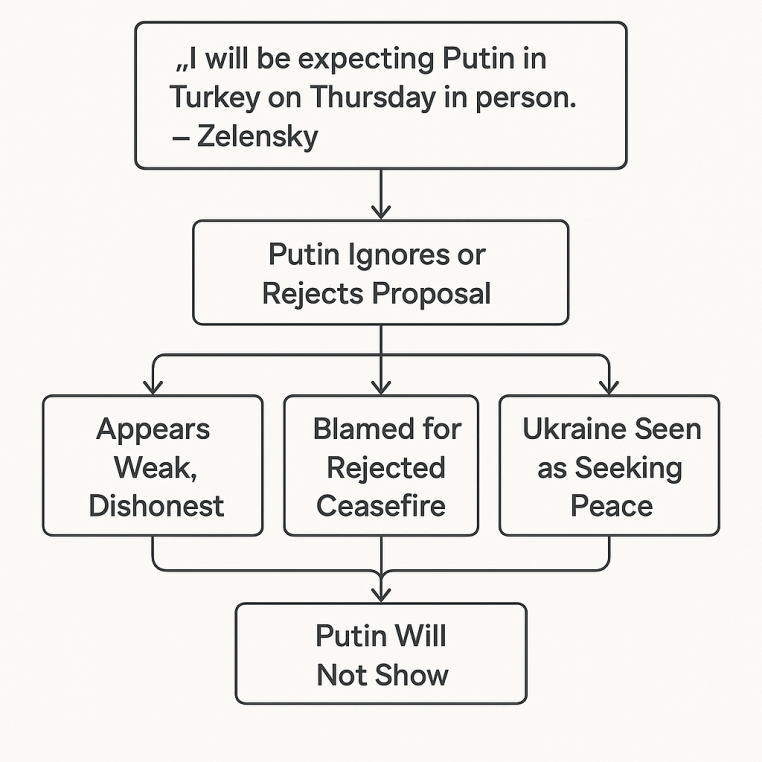
He reframes the ceasefire not as a Ukrainian concession but as a global expectation—removing it from a bilateral issue and placing it in the hands of world opinion. That wording turns the absence of a Russian response into an active rejection of peace rather than a passive delay. Zelensky anchors the demand in a moral frame: “There is no point in continuing the killing for even one more day.” That line strikes directly at Russia’s bloody inertia while appearing magnanimous.
Calling Putin out publicly with the phrase, “I will be expecting Putin in Turkey on Thursday in person,” does several things at once. It forces a decision—show up and appear weak by negotiating, or fail to appear and seem cowardly, dishonest, and unserious about peace. Zelensky applies pressure by making the invitation about personal accountability. Putin becomes the absentee antagonist rather than the dignified decider.
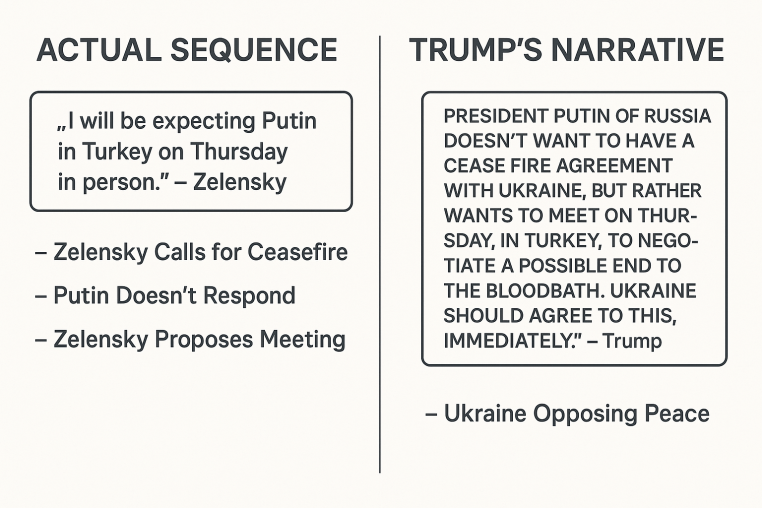
The language also co-opts Russia’s ceasefire narrative, strips it of ambiguity, and pins responsibility for failure directly on Moscow’s indecision. Should Russia ignore the deadline or fail to honor the ceasefire, it validates Ukraine’s narrative that Putin’s overtures are performative disinformation designed to fracture Western resolve. The move undermines Kremlin influence narratives domestically and internationally by presenting Moscow as unreliable, reactive, and deceitful.
Zelensky’s maneuver weaponizes expectation management, positions Ukraine as diplomatically superior, and neutralizes Kremlin talking points about Ukrainian aggression. Putin now faces a loss of narrative control whether he responds or not. In ignoring the proposal, he looks weak. In responding negatively, he looks intransigent. In agreeing, he appears cornered.
Zelensky’s move doesn’t seek a genuine meeting—it seeks to publicly document the absence of Russian sincerity. That frames Russia’s entire wartime posture as hollow, while reaffirming Ukraine’s standing with NATO, the EU, and the Global South. A masterclass in hybrid warfare narrative control.
Trump’s post reads like an accidental confession of disinformation laundering and egotistical buffoonery that undermines U.S. foreign policy, embarrasses Ukraine, and exposes Putin. The statement accepts Kremlin propaganda as fact, misrepresents the diplomatic sequence, and reveals a stunning ignorance of the tactical setup already in motion. Trump echoes a fictitious Russian narrative: that Putin, not Zelensky, proposed the Turkey meeting—when in reality, Putin ignored a Ukrainian ceasefire offer and Zelensky flipped the table by daring him to show up. Trump either didn’t check or didn’t care, blindly parroting the Kremlin’s inversion of events.
By demanding Ukraine agree “IMMEDIATELY,” he hands rhetorical power to Moscow, implying that Kyiv resists peace. That not only betrays Zelensky’s stated readiness, it enables Russian influence operations by amplifying the fiction that Ukraine prolongs the war. Trump’s framing deliberately omits Russia’s daily violations, refusals to negotiate in good faith, and complete absence from any official process. He clumsily gifts Putin plausible deniability while pressuring Ukraine to submit to diplomatic ambush under a fabricated moral equivalency.
Worse, the invocation of WWII—“which could not have been won (not even close!) without the United States”—muddies timelines and motivations. That irrelevant historical brag shifts focus from war crimes and ceasefire violations to American exceptionalism, as if Zelensky must obey for the sake of U.S. legacy. The incoherence distracts from Moscow’s bad faith and instead reinforces Russian revisionism—ironically validating Putin’s obsession with WWII mythology.
Trump’s statement unintentionally confirms Zelensky’s brilliance. It shows that Ukraine’s offer boxed Putin in so cleanly that trump spews Russian talking points without realizing they were already outmaneuvered. Trump stumbles through a pawn move, shouting for peace, unaware the board has changed and his king is cornered—Putin’s included.


You must be logged in to post a comment.