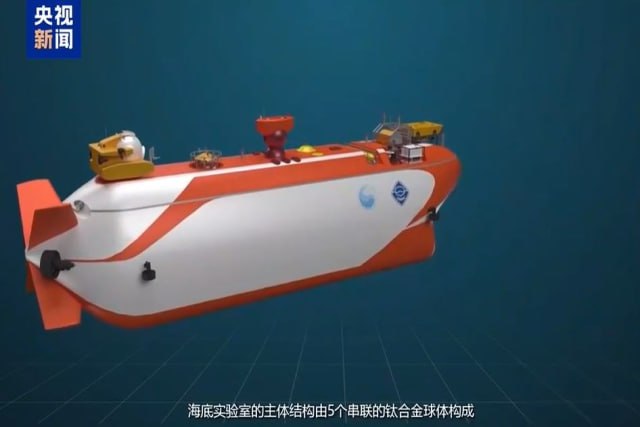
China has embarked on constructing a pioneering underwater laboratory in Guangzhou, led by the South China Sea Institute of Oceanology (SCSIO) of the Chinese Academy of Sciences (CAS). This facility aims to advance research in deep-sea environments, focusing on cold seep ecosystems, methane hydrates, and the origins of life.
The laboratory will comprise an underwater module, terrestrial simulation centers, and comprehensive life support and safety systems. Once operational, it will accommodate up to six scientists for missions lasting up to a month. This setup enables continuous study of cold seep ecosystems, which are methane-rich hydrothermal vents that harbor unique lifeforms and substantial methane hydrate deposits.
Cold seeps, often termed “deep-sea oases,” provide habitats for organisms adapted to extreme conditions, offering insights into life’s resilience and the Earth’s deep carbon cycle. Understanding these ecosystems is crucial for assessing the ecological impact of extracting methane hydrates, a potential energy resource.
The facility’s strategic location in the South China Sea, a region rich in resources and subject to territorial disputes, underscores China’s commitment to enhancing its maritime research capabilities. The project aligns with China’s “ocean power” strategy and its goals for sustainable development and carbon neutrality.
The SCSIO, established in 1959, stands as one of China’s largest marine research institutes, dedicated to comprehensive studies of the South China Sea’s environment and resources.
China’s development of this underwater laboratory represents a significant advancement in marine science, offering potential breakthroughs in understanding deep-sea ecosystems and resources. However, its location in a geopolitically sensitive area necessitates careful consideration of international maritime laws and regional relations.