


Read the below as written on Iranian sites and our follow on analysis:
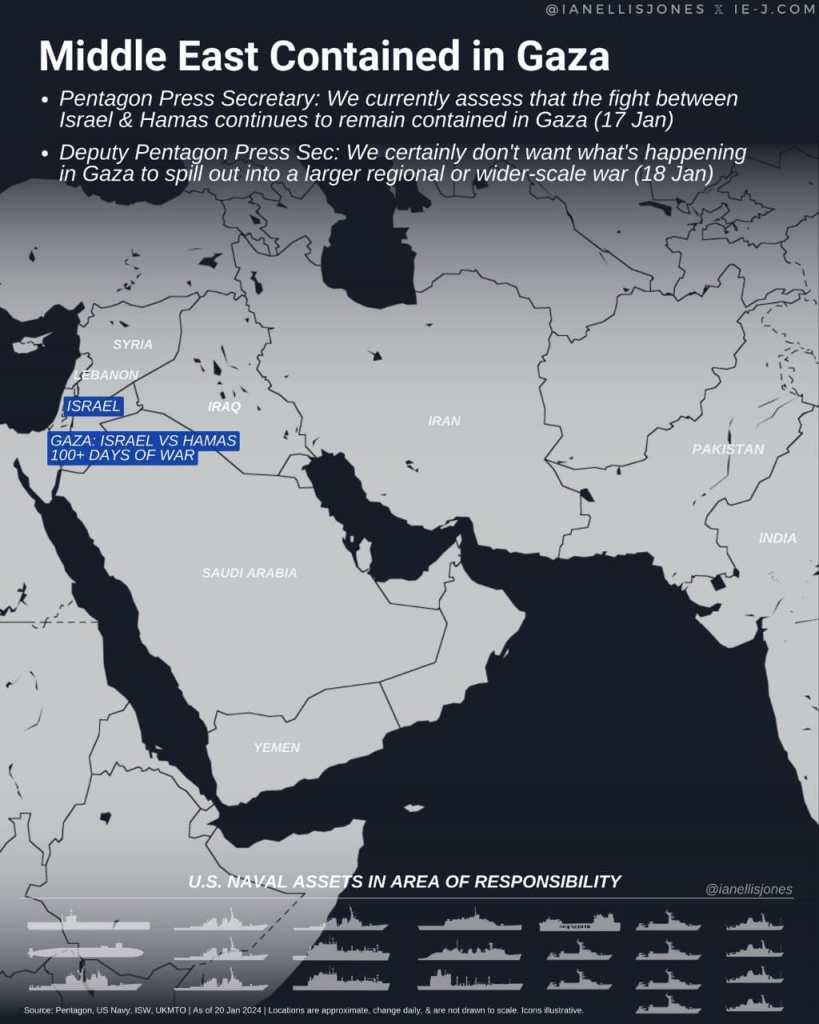
The first map shows the Middle East conflict described by the Pentagon: contained in Gaza—no wider regional war.

The second shows what’s played out as Iran + proxies drive a dangerous cycle of escalation, including a large attack today on U.S. forces.
In the past week, since the U.S. & U.K. launched retaliatory strikes against the Houthis in Yemen:
– On 11 Jan, U.S., U.K., & Allies conducted large-scale strikes against 60+ Houthi targets at 28 locations—for the first time since the conflict began.
- – Today: large attack on U.S. forces at an airbase in Iraq by Iranian-backed militants
- – Iran attacked 3 countries in 48 hours (Pakistan, Iraq, Syria), hijacked a ship & took hostages, & caught sending ballistic missile components to Yemen
- – In a proportional tit-for-tat response to Iran’s attack, Pakistan struck multiple targets in Iran
- – 140+ attacks now on U.S. forces in Iraq & Syria (confirmed by DOD), U.S. responded with precision strikes 10+ times (& gunship sorties)
- – The U.S. followed up with an additional 6 rounds of strikes, targeting key Houthi infrastructure
- – Houthis continue to attack commercial shipping & U.S. Navy ships, with at least 35 incidents recorded (more than 5 since the 11th)
In scrutinizing the images to discern the narrative they convey and the underlying intent we find the first image, with its portrayal of the conflict as contained within Gaza, aligning with messages from Pentagon officials suggesting control and an effort to prevent escalation. The image could indicate an attempt to project a sense of stability and precision in conflict management.
The second image presents a starkly different narrative, with Iran depicted as the primary antagonist, engaging in aggressive actions across the region. The term “powder keg” suggests a volatile and unpredictable situation with the potential for conflict to escalate rapidly. The detailed listing of military engagements and incidents paints a picture of a region in turmoil, driven by Iranian actions.
Both images employ framing techniques that guide the viewer’s interpretation of the events. The first downplays the risk, possibly to justify a particular policy approach or to reassure domestic and international audiences of the situation’s manageability. The second image, conversely, emphasizes the threat, which could be aimed at rallying support for more assertive actions against Iran.
Recognizing Iranian cognitive bias in interpreting these images involves understanding the inclination to perceive and present events in a manner that justifies Iran’s regional policies and actions. Such bias could lead to an emphasis on external threats and aggression to validate Iran’s actions as defensive or retaliatory.
We must triangulate the information with independent reporting and intelligence for a comprehensive assessment, analyzing open-source intelligence, classified information if available, and reports from multiple stakeholders, including those with opposing views. The resulting analysis must weigh the credibility of sources, verify claims, and consider the broader geopolitical context, including the historical and current motivations of the actors involved.
The images are a starting point for a more in-depth intelligence analysis that incorporates a range of sources and methods to validate the claims and understand the broader implications for regional and international security.


You must be logged in to post a comment.