


Combined war in the eyes of Russia
Nevertheless, it seems; The Federal Security Service mainly considers intelligence operations from a defense perspective and takes them very seriously.
▪️Especially after Georgia, the potential offensive opportunities in modern intelligence operations were sharply reduced, and in accordance with the usual iterative and competitive habits of the Russian security services and the military, new moves were made from within to develop their capabilities.
The high-spirited Federal Security Service has tried to maintain its near-monopoly and, with a 2013 presidential decree, assumed the lead role in detecting, preventing, and mitigating cyberattacks against Russia, but the military demanded He created his own “intelligence forces” to prosecute the accused.
At this important time, information operations that may include; “Psycho-social manipulation” is widespread, it had an effective result during the occupation of Crimea and was noticed by many politicians.
▪️ As a result, the war in Ukraine has an integrated intelligence operation that includes all components including (targeted propaganda, direct terrorism and various cyber attacks).
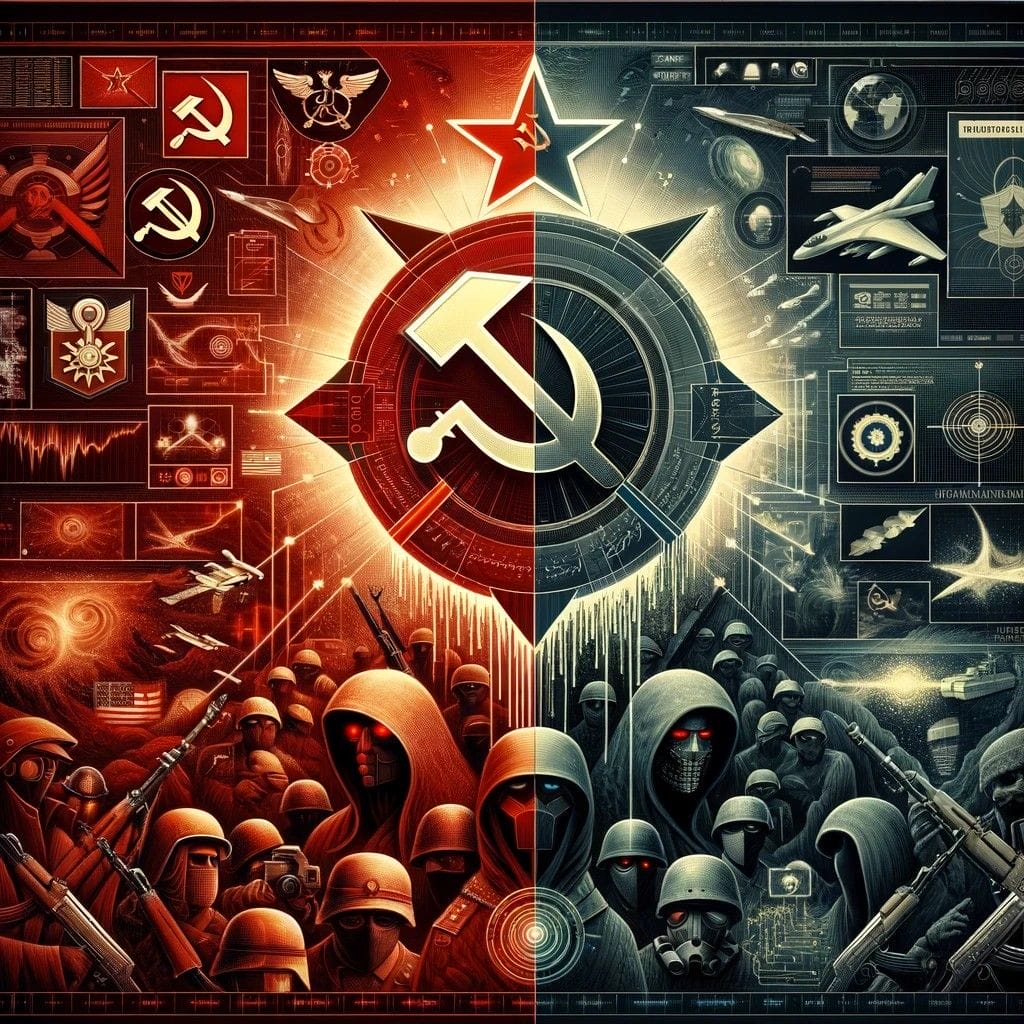
▪️However, basically active measures are also seen in Mesner’s (virtual realm or subversive warfare) implemented on the battlefield. Undoubtedly; In addition to the new ways of war, in many ways, “combined war” and “political war” can be considered as a revival of the effective methods of the former Soviet era adapted to modern conditions.
The statements above analyze Russia’s approach to combined warfare, focusing on intelligence operations, cyber capabilities, and information operations:
Federal Security Service’s Defensive Orientation-The statement suggests that Russia’s Federal Security Service (FSB) primarily views intelligence operations defensively, aligning with historical perspectives, where intelligence agencies often prioritize defense against external threats.
Shift Post-Georgia Conflict-After the conflict with Georgia, there seems to have been a reduction in Russia’s offensive intelligence capabilities, indicating a strategic reassessment or international pressure influencing Russia’s intelligence operations.
Internal Competition and Capability Development-The mention of “iterative and competitive habits” within Russian security services highlights a known characteristic of Russian security apparatus, where different agencies often compete for influence and resources. The competition drives innovation and capability development.
Federal Security Service’s Dominance and Military Involvement-The FSB’s attempt to maintain a near-monopoly in cyber defense, especially after a 2013 presidential decree, suggests a centralization of cyber defense capabilities. However, the military’s creation of its own intelligence forces indicates a diversified approach to cyber and intelligence capabilities within Russia’s security framework.
Information Operations and Psychological Warfare-The effective use of information operations in Crimea, including “psycho-social manipulation,” underscores Russia’s emphasis on non-conventional means of warfare, including using propaganda and disinformation to achieve strategic goals, a tactic observed in various Russian military engagements.
War in Ukraine as an Integrated Intelligence Operation-The statement highlights the complex nature of the conflict in Ukraine, encompassing propaganda, terrorism, and cyberattacks, aligning with observed Russian tactics of using a blend of conventional and unconventional warfare methods.
Mesner’s Virtual Realm and Subversive Warfare-The reference to Mesner’s concepts (presumably related to virtual or subversive warfare) suggests an acknowledgment of the evolving nature of warfare, where cyber elements and information operations play a significant role.
Revival of Soviet-Era Tactics in Modern Context-The final part of the Iranian statement posits that current Russian tactics are a modern adaptation of Soviet-era methods, suggesting a continuity in strategic thinking, adapted to the modern technological and geopolitical landscape.
The Iranian regime statements show a complex and evolving Russian approach to warfare, heavily reliant on intelligence operations, cyber capabilities, and information warfare.
The approach blends traditional Soviet-era tactics with modern technological advances, reflecting a nuanced and multi-dimensional strategy in conflict scenarios.


You must be logged in to post a comment.