

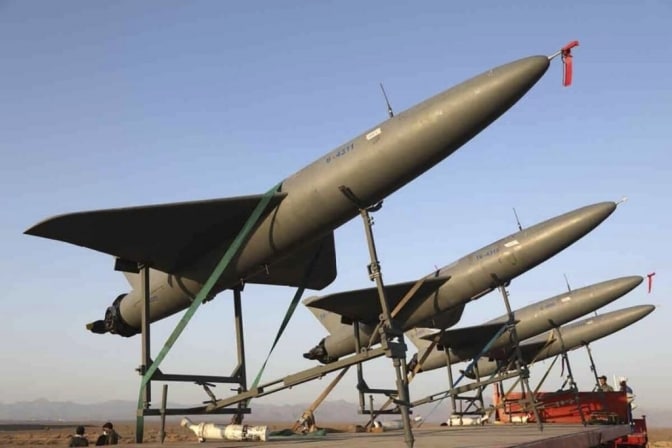

According to new satellite information and images, the IRGC Navy’s Shahid Bagheri drone carrier has been at sea in recent days (most likely for its third sea trials along with flight tests).
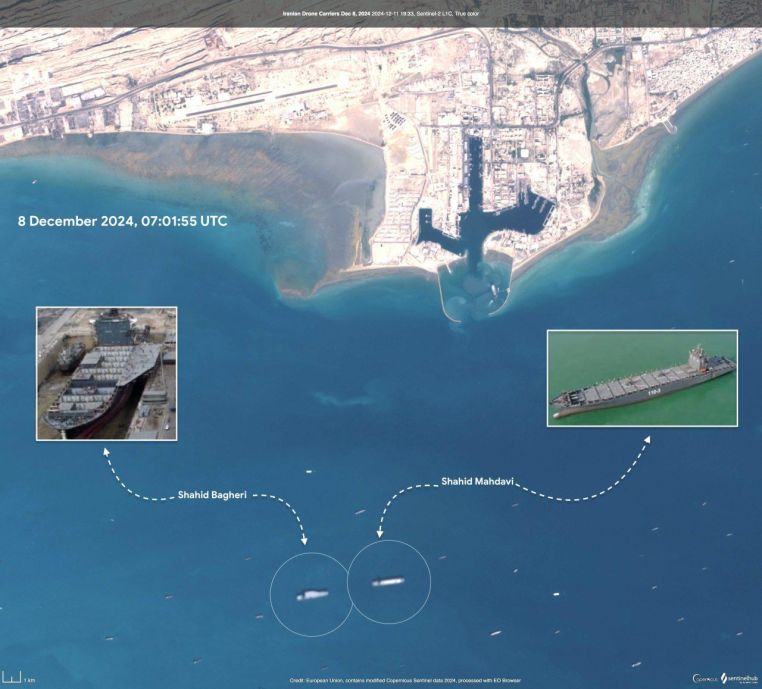
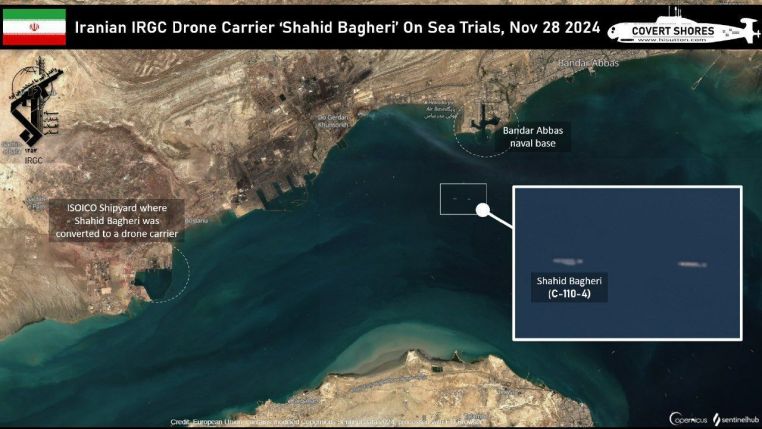
A satellite image of the IRGC Navy’s Shahid Bagheri drone carrier, which is currently conducting its own sea trials and will most likely be unveiled in the near future. Of course, its drone flight tests are still pending, and the ship will not be operational until these tests are completed.
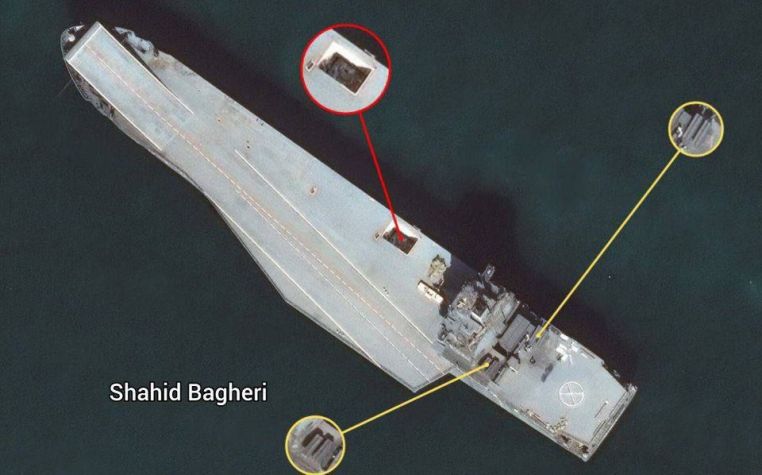
New satellite images of Iranian Navy ship and first “drone carrier” built from modified Shahid Bagheri tanker
🔹 With this ship, Iranian drones will be transported beyond Iranian territorial waters and will carry out surveillance or combat operations.
🔹 Drones such as:
● “Shahed-149” (“Gaza”)
● Immigrant family-6
● And it also has the ability to carry a helicopter
It can also carry several ship-launched ballistic missiles or missiles and defense systems.
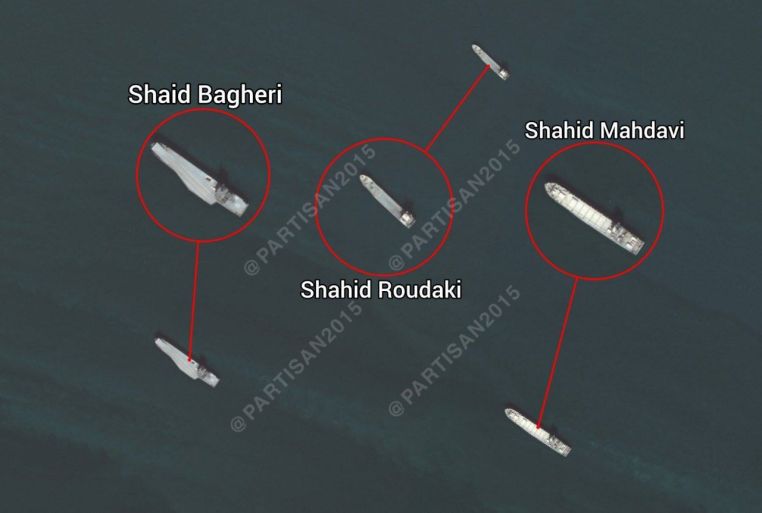
🔷 Latest satellite images of the modified ships of the IRGC Navy
The Shahid Bagheri drone carrier, which left Isoeco Industries last month for sea trials, has been spotted in satellite images along with the Shahid Mahdavi and Shahid Rudaki ships.
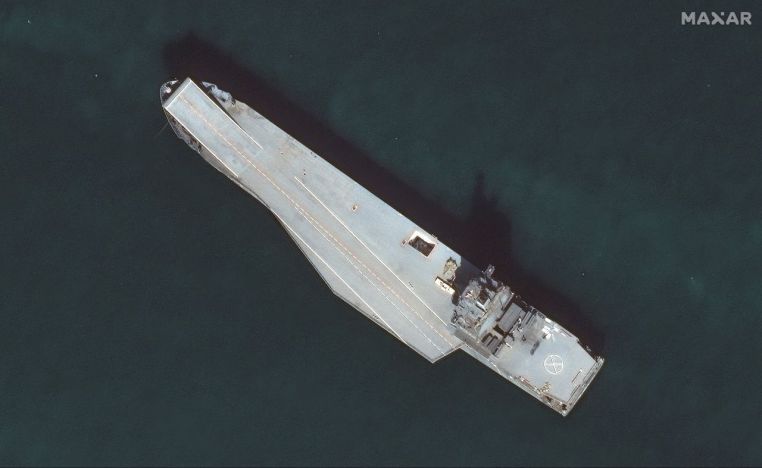
🔹The Shahid Bagheri is 240 meters long and the transverse bridge of the Shahid Bagheri is a relic of the ship’s commercial days. The IRGC Navy was forced to add a diagonal deck to avoid the additional cost of removing and moving the bridge superstructure. In conventional structures of drone carriers in the world, the bridge is built longitudinally on the starboard side to use the maximum length of the ship for the flight deck.
🔹Now, with the addition of a diagonal structure for the drone takeoff and landing deck on the port side of the ship, along with the addition of a sky jump ramp on the stern, the Shahid Bagheri will become the first IRGC ship that will have the ability to return a drone to the deck after it takes off (without the need for Jato).
Qader/Qadir anti-ship cruise launchers are also seen on the ship’s deck, as well as a lift on the starboard side of the ship that will be used to move drones, ammunition, and other supplies from inside the main hangar to the deck and vice versa.
🔹Other images show the Shahid Mahdavi and Rudaki frigates, which have demonstrated their offensive capabilities by firing anti-ship cruise missiles and ballistic missiles (from containers) during the IRGC’s Great Prophet 17 and 18 exercises, respectively.
Although this fleet, with all its offensive capabilities, has a major weakness in the defense sector, it is usually escorted by other military vessels with defense capabilities, which in the IRGC Navy will be the Shahid Soleimani-class ships according to the plan.
However, it is hoped that in the future, the IRGC’s heavy ships themselves will be equipped with defense systems for the minimum necessary defense.
#نیروی_دریایی #سپاه #باقری #ایران

😁 Iranian drone carrier at the final stop
😁 The latest images of the Shahid Bagheri UAV indicate that the project is partially completed. While the construction and paving of the runway (main deck) has been completed and the lines have been drawn, the second deck (behind the superstructure) is in the process of being paved. The second deck could be a temporary location for heavy/medium-heavy helicopters or even modular missile/defense systems. It is likely that an elevator/lift will be provided for the main deck, and there is capacity to create a permanent helicopter hangar in the space behind the vessel.
😁 The most important issue for the structure of this vessel will be maintaining balance during navigation (especially due to the addition of a separate structure as part of the runway). On the other hand, it is not clear what the take-off mechanism of the drones will be. Specifically, a ramp or ski jump has been used at the end of the runway to compensate for the short runway by increasing the angle of the aircraft during take-off. At the same time, it remains to be seen whether a catapult will also be used. Currently, aircraft carriers use electromagnetic catapults, which are not required for a drone carrier, but using a type of catapult based on compressed gas (imitating early steam catapults) could be a suitable option.



Comment on “IRGC Navy’s Shahid Bagheri drone carrier”
Comments are closed.