


#هشت_شب
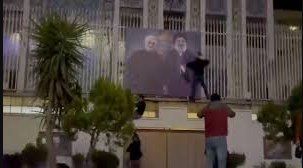
Removal of the large banner featuring Qasem Soleimani and Hassan Nasrallah, former prominent, murderous figures symbolizing Iran’s regional influence and its alignment with proxy groups like Hezbollah. The act reflects widespread public frustration with authoritarian domestic policies and Iran’s external interventions in the Middle East. We expect an increase in these public displays of defiance due to the growing disconnect between the regime’s priorities and the grievances of its population.
The accompanying text, written in Persian from Edaalate Ali, outlines a call to action for organized civil disobedience. It encourages citizens to leave their homes at 8 p.m. each night, gather silently in public spaces, and walk peacefully without chanting slogans or drawing unnecessary attention. The strategy fosters a sense of collective unity while minimizing immediate confrontation with security forces. The instructions emphasize the importance of persistence and patience, suggesting that as participation grows, the movement will reach a tipping point where a single decisive event could catalyze broader resistance.
The mention of “removing all symbols of dictatorship” shows the protesters’ intent to challenge the regime’s legitimacy. The movement’s deliberate, nonviolent approach seeks to exploit the regime’s inability to suppress widespread, silent dissent effectively. The hashtag “هشت_شب#” (translated as “#EightAtNight”) is a rallying cry for digital mobilization, amplifying the campaign’s reach and encouraging coordination across different regions. The text exemplifies the strategic and symbolic dimensions of modern protest movements in authoritarian settings, where indirect actions often carry profound political implications.

You must be logged in to post a comment.