


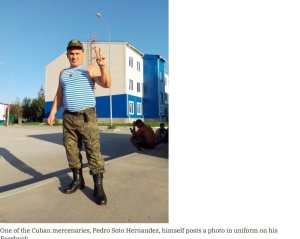
In September, a network of recruiting local residents into the Russian army was uncovered in Cuba. The mercenaries said that they were recruited by an employee of the Russian Academy of Sciences
After the Cuban Foreign Ministry spoke about the network of recruitment of Cubans into the Russian army, Politico and Cubanet spoke with the mercenaries.
They said that they were promised work at a construction site or in the rear, but instead they were sent to the airborne division, and the recruitment was also carried out by an employee of the Volga Russian Academy of Sciences.
Most of the Cubans Politico spoke with said they saw posts on social media in the name of user Elena Shuvalova, aimed at those who want to leave the island or are already in Russia.
Many say they did not plan to be on the front line. Working in the Russian army, Politico writes, is often seen by young Cubans as an opportunity to get off the island and a chance for a better life — “even if not all of them understood what they were getting into.”
According to three Politico interlocutors, they knew that they were heading to the army, but they were assured that they would work far from the front line as drivers or on construction sites.
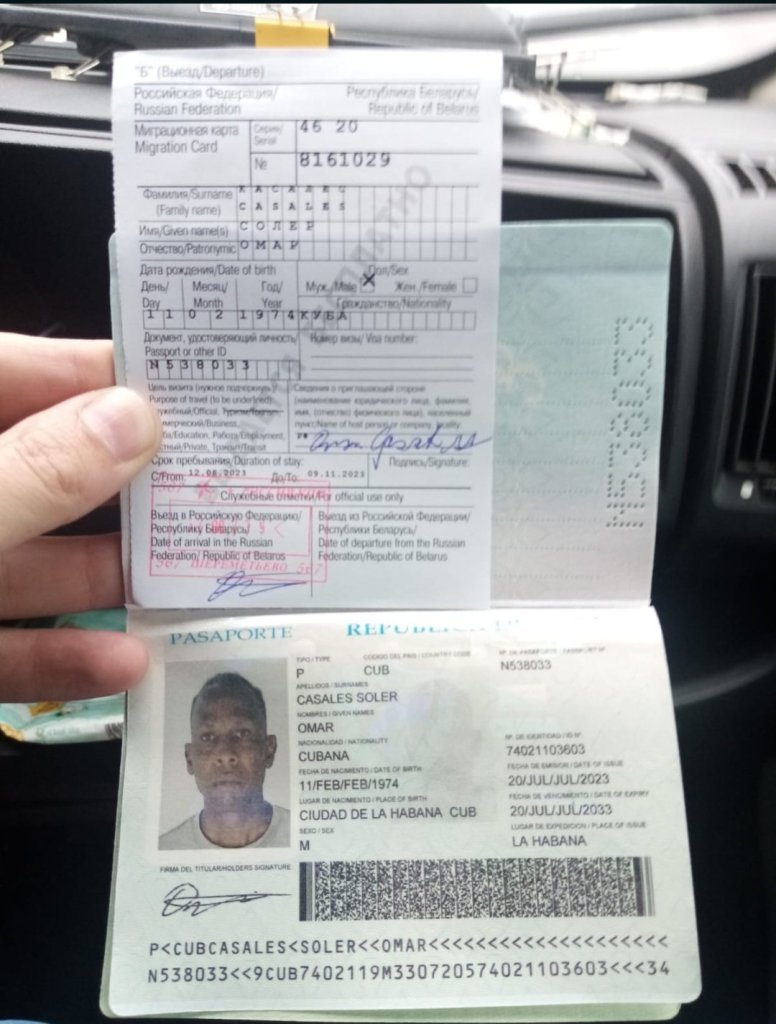
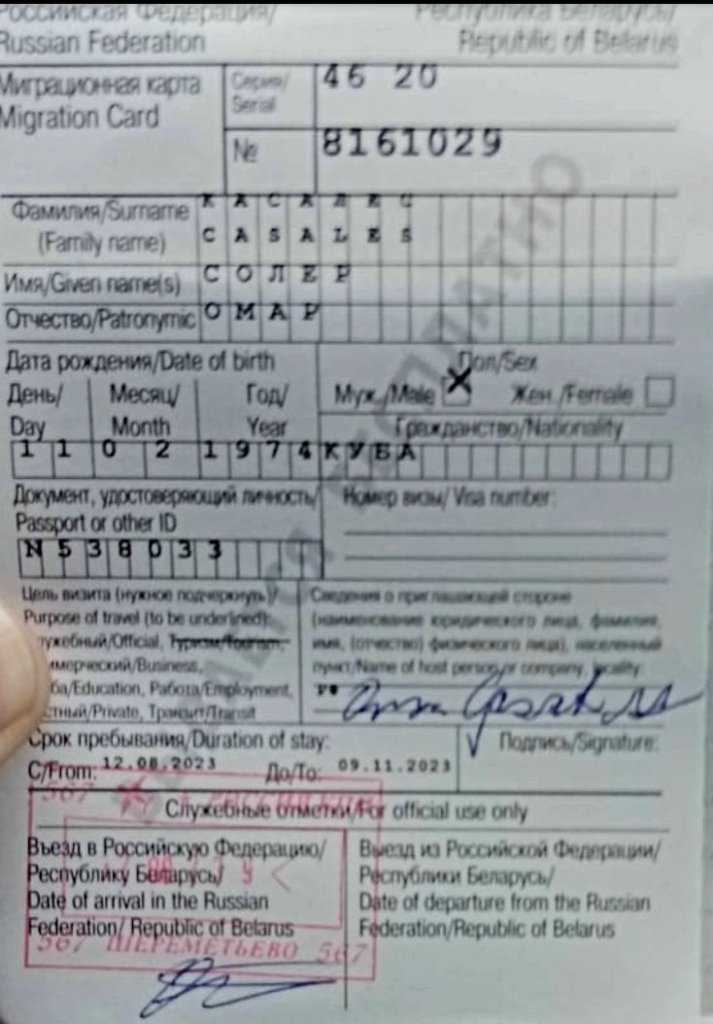
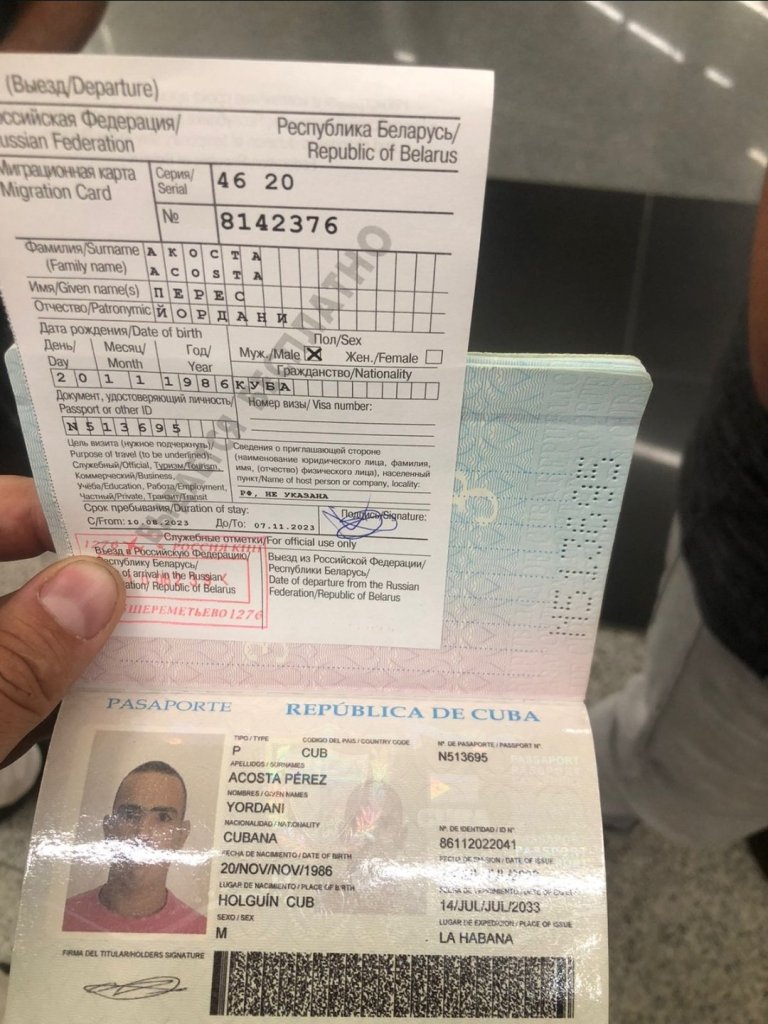
They said that they arrived from Cuba in the summer. There were several dozen other men on the plane with them. When departing from Varadero, they were not given stamps in their passports, and when entering Russia, the Cubans’ migration cards wrote “tourism” as the purpose of their stay.
They were met at Sheremetyevo and taken to a military unit near Ryazan. There, they underwent a medical examination and signed contracts with the Ministry of Defense.
Most of the Cubans were then assigned to the 106th Guards Airborne Division, based in Tula. In recent months, Politico has written that this division has been stationed around Soledar and Bakhmut. “When we were given the uniform and told to go to the exercise, I realized that this was not about construction at all,” says one of the recruits.
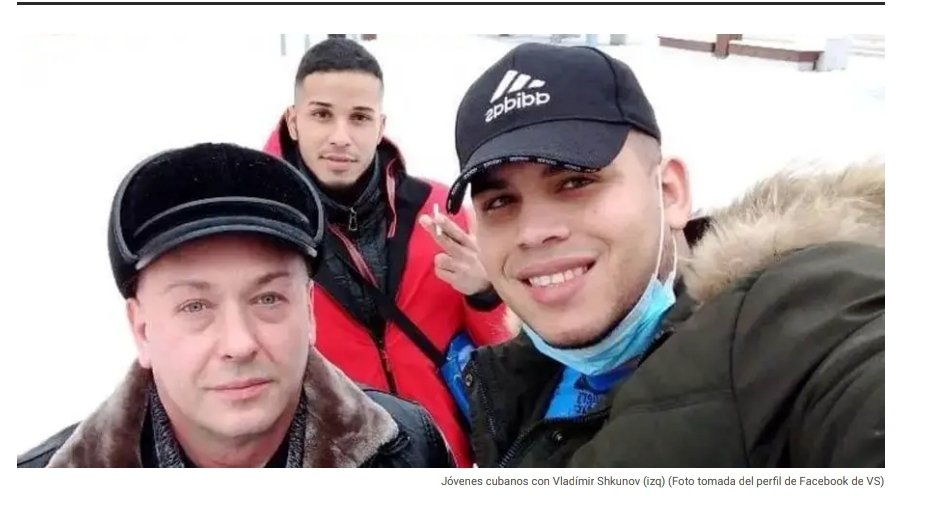
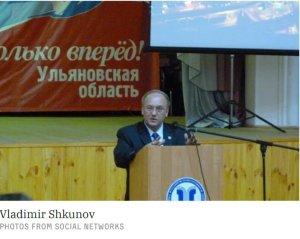
Eight Cubans, whom Cubanet spoke with, said that they corresponded with Vladimir Shkunov about working in Russia. He administers the “Russia for Cubans” group on Facebook and works as the main representative of the Ulyanovsk regional branch of the Russian Society for Friendship with Cuba.
In addition, Shkunov is a leading researcher at the Volga region branch of the Institute of Russian History of the Russian Academy of Sciences and a member of the expert council under the Russian government.
Journalists from “Important Stories” tried to contact Shkunov, but he refused to talk.
Cuban security forces have arrested 17 people on recruitment-related charges. They are charged with human trafficking, mercenary activities, and hostile acts against a foreign state.
Those arrested face imprisonment for up to 30 years, life imprisonment or the death penalty.
Havana Cuba. – Young Brayan González did not have to look for information. He only received a message on Messenger, on his Facebook account, and he decided to try. It was, in his own words, an “interesting proposal” for employment in Russia. Since he had recently finished his military service , he could accept it, especially when for the jobs he had found in Cuba he did not receive even a tenth of what he would earn as a worker in Moscow.
“It was supposed to be for construction and that they would pay me about 2,000 rubles a day [about 20 dollars at the exchange rate in Cuba] and that at the end of the contract they would give me 2,000 euros plus the possibility of residing permanently in Russia (…). I didn’t have to pay anything here in Cuba, neither the plane ticket nor the passport procedures, they later deducted that from my salary while I was in Moscow,” says Brayan, who also says that he began to doubt the proposal when the questions from the Russian contractor began to rely exclusively on his military skills, something that was not necessary to be a bricklayer.
“I was surprised because that was in July 2022, and [Russia’s invasion of] Ukraine was recent,” Brayan continues. “There were almost no flights to Moscow, and in the military unit, before we were discharged, a lieutenant colonel came to give us a talk about the war, internationalism, the friendship between Russia and Cuba and he even told us that if we were willing to go to Russia (…). Everyone said yes, you know, you are in the green [Military Service], you don’t want problems, you have to say yes to everything but that smelled strange to me, and I immediately thought about it when the person who wrote to me started to ask me about military things.”
“I wrote to them about a construction job that interested me but they never responded,” says Leodanis García, a young civil engineer willing to work as a bricklayer or helper outside of Cuba for better pay. “They let me know, even though I sent them my resume and even photos of my work. Then I entered a group [on Facebook] called “Russia for Cubans” and there I wrote to Vladimir Shkunov, which was the name given to me by a friend who was hired [in Russia], but nothing, first he told me that He did not do those things, if I wanted I would contact another man, but after about 10, 15 days he himself wrote to me again asking for my personal information and I sent it to him, but until today’s sun, it seems that I didn’t pass the casting,” he says, laughing.
Of the Cubans contacted for a work contract in Russia, eight claimed to have received messages from Vladimir Shkunov, who since 2021 has managed the Facebook group created by himself and named “Russia for Cubans”, while working since April 2019 as the main representative of the Ulyanovsk Regional Office of the Russian Society of Friendship with Cuba, affiliated with the Cuban Institute of Friendship with the Peoples (ICAP) – currently directed by former spy Fernando González Llort – and the Cuban Embassy in Moscow, with which maintains regular contacts, which it has reported on its own social networks.
“Vladímir [Shkunov] writes to me and tells me that there are good jobs, that they are looking for young people for construction,” says Fidel Hernández, who managed to be accepted although the most recent events prevented, for the moment, his trip to Russia to join military groups involved in the invasion of Ukraine.
And he continues saying: “[Vladímir Shkunov] first tells me that it is construction; I send him my information and about a week later he writes to me again asking me if he was willing to join the Army, that they would pay me well, and I answered yes, but that he couldn’t pay for the procedures; Then he tells me that it doesn’t matter, that they weren’t even going to ask me anything [at the airports] neither here nor in Moscow. I had everything to leave but everything is frozen for the moment (…), they told me until further notice (…). Vladimir wrote to me only once after that to ask me if he was still interested in me (…). Of course I do, the thing is to get out of here and then we’ll see.”
Vladimir Shkunov resides in the city of Inza, is a graduate of History from a Soviet military academy and a member of the Russian Communist Party. He frequently travels to Havana where he maintains contacts with the main Cuban leaders and in this sense he was among those invited to the official reception and decoration ceremonies of the Minister of the FAR, Army Corps General Álvaro López Miera, as part of the his working visit to Moscow at the end of June 2023, and following the Wagner Group rebellion.
He also regularly participates in the activities of the Cuban Embassy in Moscow and maintains a close friendship with Ambassador Julio Garmendía , the same official who recently publicly declared that the regime was not opposed to “legal participation” of Cuban citizens in what dictatorship calls “Russian special operation in Ukraine.”


You must be logged in to post a comment.