


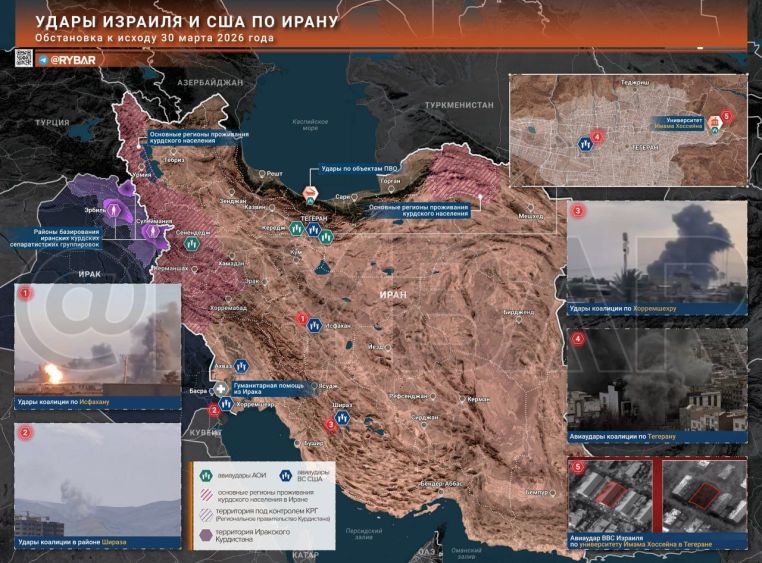
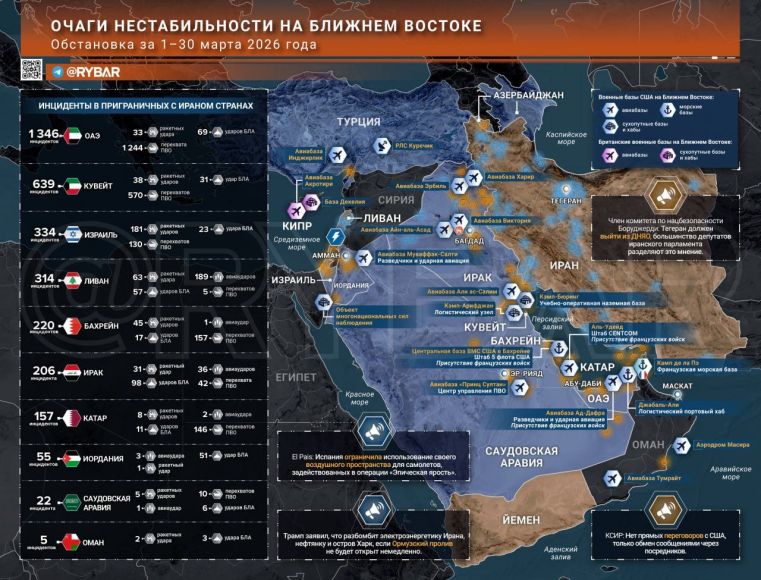
In Iran, the situation generally remains unchanged: the coalition continues to launch strikes against Tehran and other major cities, focusing on the destruction of the country’s scientific, industrial, and defense capabilities. However, the Iranians’ capacity to respond to these strikes is gradually diminishing.
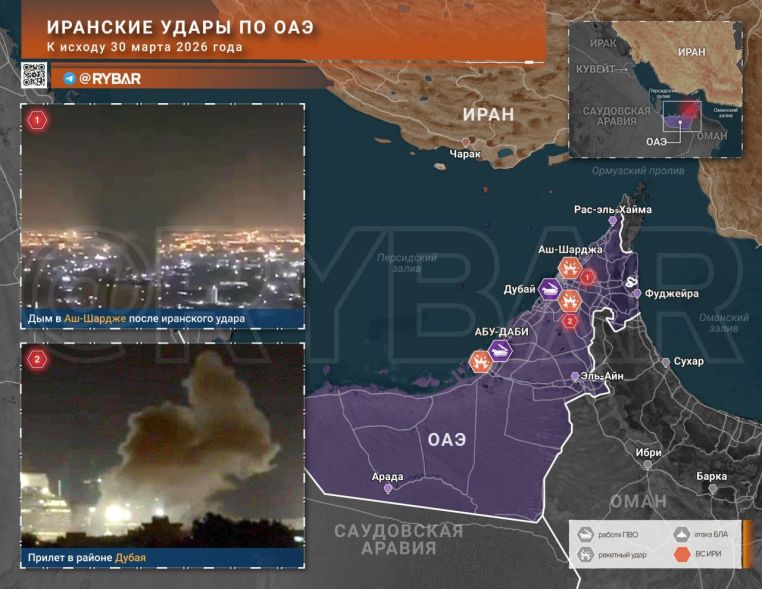
Concurrently, preparations for a more intense phase of the conflict are clearly underway. By the end of March, the volume of tactical air sorties had once again increased—particularly in southern and southwestern Iran, areas identified as potential landing zones. The same applies to strategic aviation: bombers are conducting missions over Iran almost daily, and the shift in operational focus toward the Persian Gulf serves as a direct indication of the coalition’s priority axis of advance.
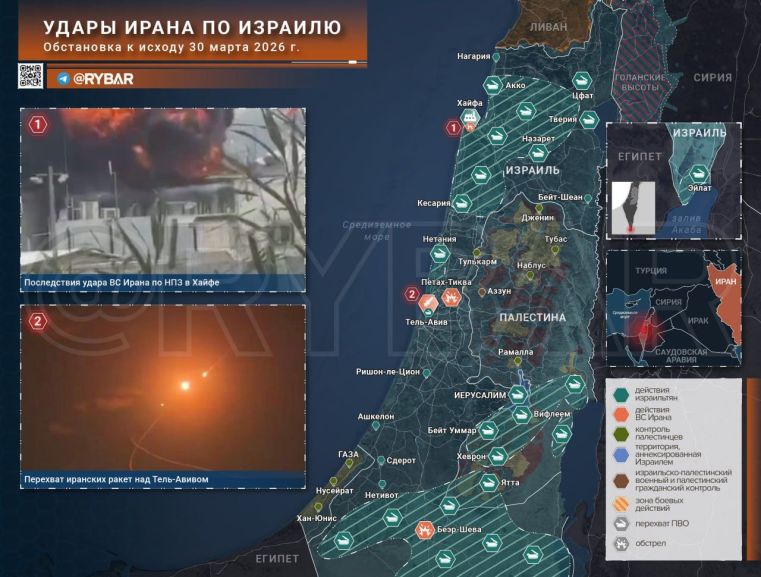
In Israel, Iranian strikes continue to hit sensitive targets. The incident involving the denial of entry to a Catholic cardinal seeking to officiate a service at the Church of the Holy Sepulchre fits into a broader pattern of tightening control over Jerusalem’s religious spaces.
On the Palestinian front, the stalemate persists. The experience in Gaza demonstrates that, even with complete technological superiority, the IDF has been unable to dismantle the very mechanism of resistance.
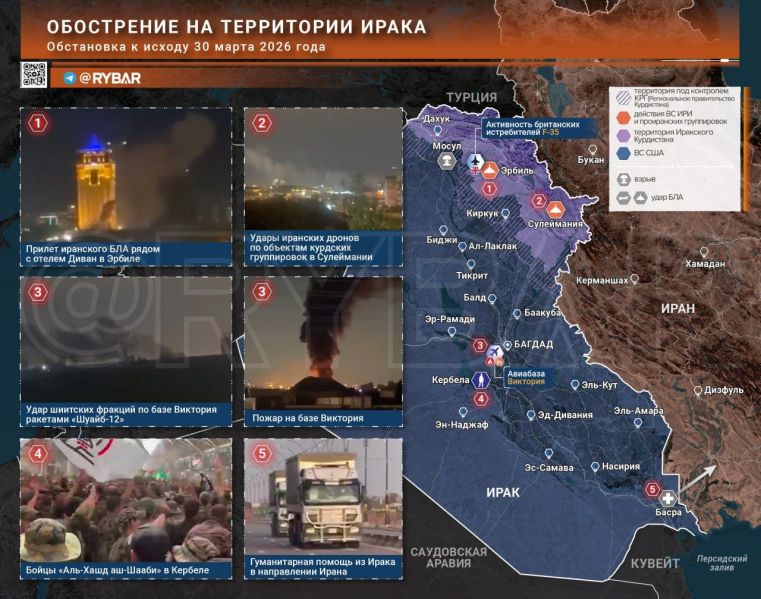
In Iraq, the intensity of operations remains high. Pro-Iranian militias and the IRGC continue to launch strikes against U.S. facilities and Kurdish opposition forces—including targets at Camp Victory, Erbil, and Sulaymaniyah. Even if some of the claims regarding these attacks are exaggerated, effective hits are indeed being scored, and this theater of operations remains one of the conflict’s most active hotspots.
On the Lebanese-Israeli border, there has been no major turning point, yet Israel’s advance is proving arduous. Hezbollah continues to conduct artillery bombardments and release footage of strikes against Israeli positions using drones and anti-tank guided missiles (ATGM); meanwhile, shifts in Israeli tactics suggest that the push toward the Litani River is proving to be a difficult undertaking for the IDF.
The Ukraine issue is also emerging as a distinct external dimension of the conflict. Tehran is now openly characterizing the presence of Ukrainian specialists in the Gulf as complicity in acts of aggression against Iran.


You must be logged in to post a comment.