

The Anatomy of an Authoritarian State
The recent publication of a comprehensive thirty-eight-point indictment, accompanied by the explicit identification of senior paramilitary commanders, exposes the vast apparatus of repression functioning inside the Islamic Republic of Iran. Activist collective Edalat-e Ali breached government servers, securing classified documents that detail egregious human rights violations, systemic corruption, and catastrophic environmental destruction. The ruling establishment relies on intimidation, economic deprivation, and ecological neglect to maintain absolute control over a completely disenfranchised population. Exposing figures such as Hadi Ghasemi, Mohammad Amin Khabaz, and Ruhollah Razavi Nejad strips the anonymity from the enforcers of state violence. Authorities mandate extreme measures to silence opposition, ranging from arbitrary detention to the outright physical mutilation of peaceful demonstrators.
The evidence strongly indicates that a government is actively waging war against its own populace. The convergence of economic ruin, environmental devastation, and hyper-violent repression reveals a state entirely devoid of domestic legitimacy. The ruling apparatus maintains power solely through the application of absolute terror, ensuring an inevitable fracture within the societal structure. Through the systematic eradication of civil liberties, the targeted persecution of minorities, and the deliberate impoverishment of the working class, the government engineers a permanent state of crisis designed specifically to prevent organized resistance.
The extensive document leak outlines an interconnected web of atrocities. State officials criminalize dissent, weaponize the judicial system, and plunder national resources to fund foreign proxy militias while domestic citizens starve. The thirty-eight specific charges brought forward by the hacktivist network paint a horrifying picture of a nation held hostage by its own leaders. Every facet of civil, economic, and social life is subjected to intense surveillance and violent regulation.
Table 1 details the specific paramilitary commanders exposed in the recent intelligence leak, individuals responsible for orchestrating the suppression of student movements and ideological enforcement within academic institutions.
| Target Name | Operational Position | National ID Number | Biographical Details |
| Hadi Ghasemi | Commander-in-Chief, Student Basij | 68080591 | DOB: 11 Mordad 1360. Spouse: Fatemeh Fadaei. Children: Alireza, Zahra. |
| Mohammad Amin Khabaz | Head, Basij Commander’s Office | 5489857471 | DOB: 1 Farvardin 1360. Spouse: Samaneh Seraj. Children: Zahra, Taha. |
| Ruhollah Razavi Nejad | Head, Scientific Basij Organization | 4231742243 | Director of ideological conformity in scientific research and academia. |
The State Apparatus of Violence and Physical Intimidation
Extortion of the Bereaved: The “Bullet Fee” Policy
Security forces routinely withhold the corpses of slain protesters from their grieving families, transforming the deceased into instruments for financial extortion. State agents demand exorbitant payments, known colloquially as “bullet money,” to release the remains of individuals murdered during street demonstrations. Officials estimate between seventy million and two hundred fifty million tomans per bullet fired into the victim. Families face extortion demands reaching seven hundred million tomans in cities like Rasht and Tehran merely to recover their loved ones. Refusal or inability to pay results directly in the secret burial of the victim, often in unmarked graves or distant locations unknown to the relatives.
Authorities deny families the fundamental human right to hold traditional mourning ceremonies, wash the bodies, or announce the funerals publicly. Security personnel force relatives to sign fraudulent documents attributing the death to underlying health conditions, suicide, or traffic accidents, completely falsifying the historical record. The case of Golaleh Mahmoudi Azar exemplifies the cruelty of the system; authorities returned her body only after extracting a seven-hundred-million-toman payment, strictly limiting the family to three minutes to view her face. Officers subsequently buried her in a black bag, entirely erasing standard religious and cultural rituals. Such calculated depravity transforms the state into a massive extortion syndicate, profiting directly from the slaughter of citizens.
Furthermore, hospital morgues operate under strict military control. Facilities such as the Kahrizak forensic medicine complex overflow with the victims of state violence. Video evidence verified by international observers displays dozens of bodies laid out inside large warehouse-style halls, with trailers continuously arriving to unload additional corpses. Security personnel tightly restrict access to these facilities, creating chaotic scenes where families wait endlessly for any information regarding missing relatives.
Physical Mutilation and the Blinding of Dissent
Anti-riot units purposefully target the faces and eyes of protesters with pellet guns. The resulting mass blindings instill pervasive fear throughout the population, leaving permanent physical markers of state retribution on young dissidents. United Nations rapporteurs document the widespread and unlawful use of shotguns loaded with metal pellets against peaceful gatherings, an action constituting a massive violation of human rights. Officers shoot directly into crowds, guaranteeing catastrophic injuries that forever alter the lives of the survivors.
The state relies on permanent mutilation as a primary deterrent, calculating that a generation of blinded youth will permanently discourage future uprisings. Mai Sato, the United Nations special rapporteur, explicitly concluded that restrictions on freedom of assembly leave citizens completely unable to protest lawfully. State security elements operate with absolute impunity, knowing no independent judicial body possesses the authority to investigate excessive use of force. The complete lack of accountability emboldens security forces to deploy lethal force not as a last resort, but as the immediate, default response to any public display of dissatisfaction.
Arbitrary Detention, Sexual Violence, and Enforced Disappearances
The intelligence apparatus conducts massive sweeps, executing the arbitrary detention and enforced disappearance of thousands of protesters and political opponents. Activists routinely vanish into secret detention centers operated by the Islamic Revolutionary Guard Corps or the Ministry of Intelligence and Security. Inside these black sites, interrogators systematically employ sexual assault and extreme physical violence against detained women and men. Guards use sexual violence explicitly as a tool of psychological torture and profound humiliation, seeking to shatter the identity and resolve of the captive.
The state actively targets the families of the victims as well. Security forces regularly harass, summon, and detain relatives seeking justice on the anniversaries of the killings or when visiting the gravesites of the deceased. Families attempting to place flowers or memorial stones face immediate arrest. Authorities criminalize grief itself, recognizing that public mourning events frequently evolve into renewed anti-government demonstrations.
Judicial Malfeasance, Prison Conditions, and Psychological Torture
Weaponized Medicine and “Gradual Death” in Detentions
Prison officials systematically deny life-saving medical care to political dissidents, weaponizing illness to exact a slow, agonizing demise. Incarcerated individuals suffering from severe conditions receive no treatment, leading directly to documented cases of “gradual death”. The recent deaths of Anwar Chaleshi, Hassan Damani, and Bahram Darvishi demonstrate a calculated policy of medical neglect designed specifically to eliminate ideological opponents without triggering the immediate international outrage associated with formal public executions. Guards casually dismiss desperate pleas for medical intervention, leaving prisoners to succumb to cancer, widespread infections, and chronic organ failure.
Table 2 outlines recent documented cases of state-sponsored medical neglect resulting in the death of the prisoner.
| Prisoner Name | Age | Detention Facility | Documented Cause of Death |
| Anwar Chaleshi | 50 | Orumiyeh Prison | Colon cancer: complete denial of oncological care. |
| Hassan Damani | 28 | Lajevardi Prison | Severe illness; guards dismissed repeated complaints. |
| Bahram Darvishi | 31 | Lakan Prison | Unspecified severe illness; total denial of treatment. |
| Farzaneh Bijanipour | N/A | Qarchak Prison | Unspecified severe illness; deliberate medical neglect. |
Interrogators employ long-term solitary confinement to shatter the psychological resilience of detainees, driving victims toward profound mental collapse. The psychological trauma inflicted upon prisoners often leads to severe feelings of guilt, shame, and irreversible cognitive damage. The prison system operates entirely outside all international legal frameworks, functioning strictly as an assembly line for human destruction.
The Execution Machine and the Illusion of Justice
The judiciary functions simply as a lethal extension of the security apparatus, issuing death sentences following fundamentally flawed proceedings. Judges routinely deny defendants access to independent legal counsel, forcing victims to rely on state-appointed lawyers who actively collaborate with the prosecution to secure convictions. State television broadcasts forced confessions extracted under severe physical and psychological duress, attempting to legitimize the impending executions in the eyes of the domestic public.
The state uses executions as a primary mechanism for political and social intimidation, drastically increasing the frequency of hangings during periods of domestic unrest to paralyze the population with fear. Revolutionary courts rely heavily on entirely fabricated evidence to secure convictions against targeted activists, journalists, and artists, criminalizing the fundamental right to free expression. An independent review of the judicial system reveals a complete absence of due process; the courts merely formalize the murder warrants generated by intelligence agencies.
The persecution extends to the legal professionals themselves. Security agencies apply intense pressure, issue threats, and execute the outright detention of independent lawyers, journalists, and human rights defenders who attempt to represent political prisoners or expose judicial corruption. The government systematically dismantles any structure capable of providing a legitimate defense for the accused.
The Paramilitary Enforcers and Ideological Control
The Structure of the Basij Command
The Edalat-e Ali indictment explicitly targets the leadership of the Basij paramilitary organization, exposing the individuals responsible for grassroots repression and ideological enforcement. Hadi Ghasemi, the Commander-in-Chief of the Student Basij, directs the suppression of academic freedom and orchestrates violence against student activists across the nation’s universities. Ghasemi frequently utilizes militant rhetoric to mobilize his forces. During recent escalations, Ghasemi instructed his subordinates that the “keffiyeh around the neck” of the Supreme Leader held profound meaning, signaling that the time had arrived to “untie the keffiyeh from your necks and tie it around your waists”—a clear metaphorical command to prepare for violent physical confrontation against dissidents.
Mohammad Amin Khabaz oversees the administrative and logistical operations of the Basij Commander’s Office, ensuring the efficient deployment of paramilitary units during periods of civil unrest. Ruhollah Razavi Nejad, serving as the Head of the Scientific Basij Organization, enforces ideological conformity within the academic and research sectors. Razavi Nejad publicly frames scientific advancement entirely through the lens of ideological warfare, asserting that “self-sufficiency” and “revolutionary science” are the only paths to overcome international sanctions. He actively subordinates genuine scientific inquiry to the political demands of the regime, isolating Iranian researchers from the global academic community.
Crushing Labor Movements and Driving Brain Drain
The paramilitary and intelligence forces act swiftly to suppress labor and trade unions. Authorities respond to desperate demands for basic wages and workers’ rights with immediate summons, imprisonment, and extensive case-making. The state views any form of organized labor as a direct threat to national security, completely outlawing independent unions and violently dismantling strikes.
The continuous suppression of freedom of expression, combined with the militarization of the university system, drives a massive exodus of elites, specialists, and young professionals. The government turns migration from a personal choice into a desperate necessity for survival. The regime actively bleeds the country of its intellectual capital, preferring a compliant, impoverished population over a thriving, educated society capable of demanding political reform.
Economic Asphyxiation and Resource Diversion
Hyperinflation and the Eradication of the Middle Class
Chronic inflation and massive currency devaluation have fundamentally destroyed the purchasing power of the average citizen, plunging millions into profound economic insecurity. Official statistics report an annual inflation rate hovering between 48 and 52 percent, while essential food inflation frequently exceeds 70 percent. The national currency plummeted to over 1.6 million rials to the United States dollar, transforming lifetime savings into worthless paper overnight.
The minimum monthly wage is approximately 120 dollars, an amount entirely insufficient to secure basic human necessities. Desperate individuals increasingly resort to selling vital organs to survive the crushing economic pressure, representing an ultimate manifestation of societal collapse. The state completely fails to provide basic economic stability, watching passively as families sink below the absolute poverty line. Expanding poverty plunges a vast majority of society into permanent livelihood insecurity.
Table 3 illustrates the catastrophic reality of the domestic economy and its impact on the population.
| Economic Indicator | Reported Value | Societal Implication |
| Annual Inflation Rate | 48.60% – 52.6% | Rapid erosion of all middle-class wealth and financial stability. |
| Food and Beverage Inflation | 72.0% | Immediate threat of widespread malnutrition and severe food insecurity. |
| Free-Market Exchange Rate | 1,600,000 Rials / 1 USD | Total collapse of import purchasing power for essential goods. |
| Minimum Monthly Wage | 110 – 120 Million Rials | Pushes families far below the absolute poverty threshold. |
Proxy Finance versus Domestic Welfare
Government planners systematically divert billions of dollars toward arming and funding regional proxy militias instead of investing in domestic infrastructure or social welfare. The National Iranian Oil Company channels massive oil revenues directly into the coffers of the Islamic Revolutionary Guard Corps to underwrite destabilizing military adventures abroad. Iranian public debt threatens to reach catastrophic levels; internal documents project an increase to over one trillion dollars without immediate international relief.
Citizens consistently protest the squandering of national resources on foreign terror networks while domestic poverty expands exponentially. State officials prioritize ideological warfare across the Middle East, willfully ignoring the starvation and desperation of the domestic population. The regime effectively steals the future of its citizens, funneling the wealth of the nation into endless, destructive regional conflicts.
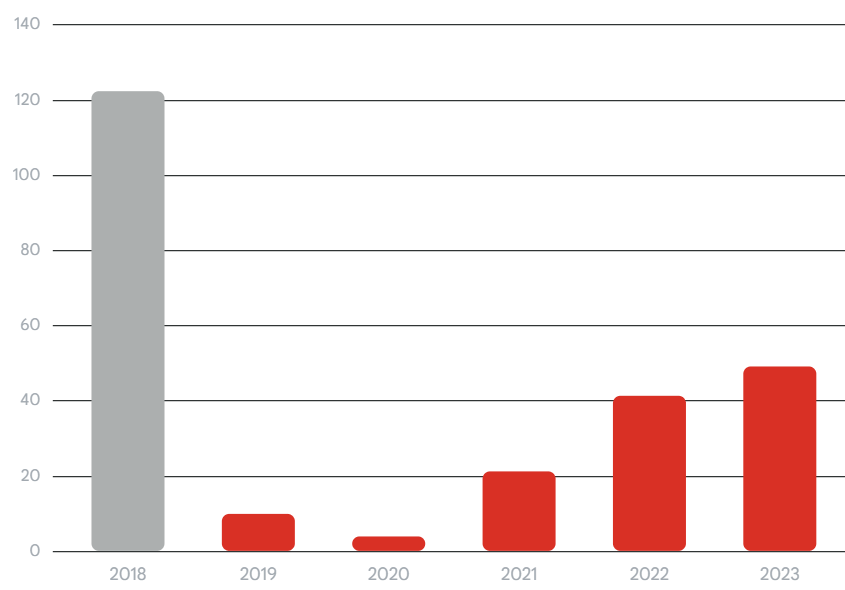
The United States has actively pursued hidden Iranian government assets to compensate victims of state-sponsored terrorism. In a landmark case, prosecutors secured a $318 million settlement tied to a Manhattan skyscraper secretly owned by the Iranian government through front companies and Bank Melli. Such actions highlight the extreme lengths to which the regime goes to finance its global operations while domestic infrastructure crumbles.
Engineered Environmental Collapse and Ecological Disaster
The Mismanagement of Aquifers and the Hydraulic Mission
State planners relentlessly pursue a “hydraulic mission” centered on massive, poorly planned dam construction and aggressive groundwater extraction. Over-extraction, driven entirely by systemic mismanagement and corrupt contracting, transformed a challenging arid climate into a permanent state of water bankruptcy. Authorities constructed highly water-intensive steel and petrochemical plants in entirely arid regions, completely ignoring the land’s ecological carrying capacity to enrich regime-connected industrialists.
More than 400 plains across the country face total groundwater depletion, prompting desperate, often ignored, government bans on new wells. The agriculture sector consumes an unsustainable 92% of available water resources, risking the imminent collapse of food security for millions and displacing over 1.3 million farmers. The regime actively represses environmental scientists and activists who attempt to warn the public about the impending ecological disaster, treating basic scientific facts as severe national security threats.
Ecological Collapse and Infrastructure Failure
Aggressive aquifer depletion triggers severe land subsidence, physically destroying national infrastructure from below. Major urban centers, including Tehran, Mashhad, and Isfahan, sink at alarming rates. President Pezeshkian explicitly warned that the government has no choice but to relocate the capital city due to the severity of the water crisis and physical subsidence. The dramatic reduction in dam water levels cripples hydroelectric power generation, creating a permanent energy deficit of 12,500 megawatts and forcing nationwide blackouts that further paralyze the economy.
Once-massive bodies of water, like Lake Urmia, have shriveled to less than 10% of their historical volume due to unrestrained damming and agricultural diversions. The destruction of wetlands and the subsequent proliferation of massive sandstorms turn the simple act of breathing into a permanent public health crisis for millions of citizens. The state treats the natural environment exactly as it treats the population: as an expendable resource to be drained aggressively until total systemic collapse occurs.
Table 4 outlines the primary indicators of the environmental catastrophe currently destroying the Iranian landscape.
| Environmental Indicator | Reported Metric | Direct Consequence |
| Forbidden Plains | 422 Restricted Regions | Severe aquifer depletion; irreversible land subsidence. |
| Agricultural Water Drain | 92% of National Supply | 1.3 million farmers displaced; imminent severe food insecurity. |
| Hydropower Deficit | 12,500 Megawatts Lost | Chronic nationwide blackouts and total industrial paralysis. |
| Lake Urmia Volume | < 10% of Historical Size | Massive ecological death; toxic salt storms destroying agriculture. |
The Subjugation of Women, Children, and Minorities
Institutionalized Child Marriage and Child Labor
The domestic legal framework actively facilitates the abuse of underage girls by permitting formal marriage from the age of thirteen, and even younger (nine lunar years), with judicial and paternal consent. Official records indicate tens of thousands of marriages involving children under the age of fifteen occur annually. Between 2021 and 2022 alone, authorities recorded at least 27,448 official marriages of children below the age of fifteen.
Economic destitution drives impoverished families to marry off their young daughters, an action often aided by state-provided financial incentives—such as cash grants—designed specifically to promote early marriage. Unregistered marriages in rural areas strongly indicate that the true scale of the crisis remains significantly underreported. Early marriages lead directly to elevated infant mortality rates, severely disrupted education, and unbreakable intergenerational cycles of extreme poverty. Expanding child labor naturally follows the collapse of family livelihoods, completely depriving children of basic education and plunging them into dangerous industrial environments.
Table 5 highlights the historical prevalence of child marriage within the country compared to regional averages.
| Year | Child Marriage Prevalence (Before Age 18) | Regional Comparison (Southern Asia) |
| 1985 | 40.1% | No Data |
| 1995 | 30.3% | No Data |
| 1999 | No Data | 53.1% |
| 2005 | 17.6% | No Data |
| 2010 | 16.7% | No Data |
Gender-Based Repression, Mandatory Hijab, and Human Trafficking
The government imposes rigid mandatory hijab laws, transforming women’s bodies and clothing into literal battlegrounds for state control and violent punishment. The ruling establishment enforces systemic discrimination across all aspects of civil and public life, actively denying women fundamental legal equality regarding inheritance, divorce, and child custody. Profound poverty pushes vulnerable women and girls toward sexual exploitation and massive human trafficking networks.
Global monitoring bodies, including the United States Department of State, classify the country as a Tier 3 state sponsor of human trafficking. Reports explicitly note the direct complicity of military and security agencies in the smuggling of individuals for intense sexual and labor exploitation. Authorities deliberately disregard massive trafficking rings, prioritizing strict ideological enforcement over the protection of the most vulnerable citizens. Furthermore, the country’s geographic location along main drug trafficking routes drastically intensifies social harms, spreading devastating addiction rates among the hopeless youth.
Targeted Persecution of Minorities
Security forces execute severe, highly targeted crackdowns against ethnic and religious minorities, actively denying them basic civil rights, political representation, and economic opportunities. The central government heavily militarizes regions inhabited by Kurdish, Baluch, and Arab populations, treating entire demographics as inherent threats to national security. In Khuzestan province, state-led water diversion projects deliberately devastate the local Arab economy, inflaming deep ethnic grievances and prompting violent state suppression of the resulting protests. The state routinely subjects minority citizens to disproportionate rates of arrest, torture, and execution, ensuring these communities remain permanently marginalized and terrorized.
Information Control, Cyber Warfare, and Systemic Corruption
Transnational Repression and the Digital Iron Curtain
The Ministry of Intelligence and Security directs highly sophisticated cyber operations to harass dissidents abroad and influence foreign political processes. United States law enforcement recently seized domains operated by the Handala Hack Team, a cyber group tied directly to the Iranian intelligence apparatus. Government-backed hackers aggressively target journalists affiliated with independent Persian-language media, seeking to disrupt the flow of uncensored information into the country violently.
Islamic Revolutionary Guard Corps cyber actors execute continuous spearphishing campaigns against foreign government officials and political organizations, attempting to steal sensitive data to advance the malign activities of the regime. Domestically, authorities implement extensive internet filtering and severe censorship to isolate the population entirely and conceal the magnitude of state violence from global observation. The state actively develops a heavily controlled, expensive, and class-based intranet designed specifically to disrupt the free dissemination of information during periods of protest, plunging the nation into digital darkness whenever massacres occur on the streets.
The successful breaches by the Edalat-e Ali hacktivist group expose the profound vulnerability of the government’s own digital infrastructure. The group released millions of classified judiciary files, directly highlighting the regime’s clandestine endeavors to exert absolute control over public figures and prosecute prominent dissidents. The leak fundamentally shatters the state’s illusion of invulnerability.
Systemic Corruption and the Discrediting of the Nation
Powerful elite circles accumulate vast wealth through rampant rent-seeking behaviors and the outright monopolization of public resources. Systemic corruption rots every single state institution, ensuring the continued impoverishment of the general public while regime loyalists secure lucrative government contracts and absolute market monopolies. Government officials operate entirely above the law, creating a mafia-style governance structure insulated from public accountability. Immunity of agents and perpetrators of repression from prosecution guarantees that crimes against humanity continue unabated.
The cumulative effect of terrorism sponsorship, human rights abuses, and severe economic mismanagement fundamentally discredits the Iranian passport. The government restricts the freedom of movement and destroys the dignity of its citizens worldwide, turning every Iranian traveler into an object of intense international suspicion. Deepening the country’s international isolation imposes massive political, economic, and human costs on a population that explicitly despises its rulers.
The extensive evidence presented within the leaked Edalat-e Ali indictment, corroborated by numerous international human rights reports, reveals a government actively orchestrating the destruction of its own nation. The convergence of absolute economic ruin, catastrophic environmental devastation, and hyper-violent state repression indicates a ruling apparatus completely devoid of any domestic legitimacy. The ruling establishment maintains its grip on power solely through the application of unspeakable terror, weaponizing the medical system against prisoners, extorting grieving families for the bodies of the slain, and permanently mutilating the faces of young dissidents.
State planners prioritize the funding of regional terror networks over the basic survival of the domestic population, pushing millions into starvation and forcing the total collapse of the national infrastructure. The active facilitation of child marriage, combined with massive human trafficking complicity and the deliberate persecution of ethnic minorities, demonstrates a profound disregard for human dignity. The systematic destruction of the environment—evidenced by massive land subsidence, dying aquifers, and toxic air pollution—ensures that the country’s physical landscape suffers as deeply as its population.
The regime relies entirely on brute force, arbitrary detention, and mass executions to suppress the inevitable consequences of its own systemic failures. The continuous exposure of the identities of paramilitary enforcers, such as those commanding the Basij, signals a critical shift; the enforcers of state violence no longer operate in complete anonymity. The Islamic Republic has transformed the nation into a sprawling prison, engineering a permanent state of crisis that guarantees a violent and catastrophic fracture within the societal structure in the immediate future.


