


Where will they land in Iran?
The modern beachhead does not begin at the shoreline; it begins in the electromagnetic spectrum. In the opening phases of Operation Epic Fury, the projection of naval power against the Iranian coastline required the total synchronization of kinetic force, cyberspace operations, electromagnetic maneuver, and cognitive warfare. Faced with a sophisticated anti-access/area-denial (A2/AD) architecture guarding the Persian Gulf and the Strait of Hormuz, the United States Marine Corps deployed its modernized Marine Expeditionary Units (MEU) and Marine Littoral Regiments (MLR) to execute Expeditionary Advanced Base Operations (EABO). The objective was not merely to seize physical terrain, but to systematically blind, disorient, and paralyze the Islamic Revolutionary Guard Corps (IRGC) command and control (C2) networks.
Operating within the adversary’s Weapons Engagement Zone (WEZ), Marine Stand-In Forces (SIF) rely on a low-signature, highly lethal posture to persist inside contested spaces. To breach the Iranian littoral, these forces cannot rely solely on the brute force of naval gunfire or airstrikes, which would expose them to the devastating reach of the mature precision strike regime. They must dismantle the adversary’s digital nervous system from the inside out. This mission requires the Marine Expeditionary Force Information Group (MIG) to weaponize information, deploying offensive cyberspace operations (OCO), electromagnetic spectrum operations (EMSO), and psychological warfare directly into the adversary’s decision cycle. By blinding sensors, severing communication links, and injecting catastrophic cognitive friction between the elite IRGC and the regular Iranian military (the Artesh), the littoral force clears an invisible path for the physical insertion of troops and long-range precision fires.
Anticipation Over Evidence
The foundation of the initial Iranian breach relied on a radical, doctrinal shift in how intelligence is gathered, analyzed, and operationalized. To paralyze the IRGC, intelligence cells attached to the MEU abandoned reactive methodologies. In the commercial sector and legacy military frameworks, threat intelligence is frequently characterized by the collection of “digital pollen”—hashes, IP addresses, and static Indicators of Compromise (IOCs)—which provide only forensic evidence of where an adversary has already been. In the high-velocity, lethal environment of a littoral breach against a near-peer or regional power, relying on backward-looking logs or post-incident telemetry guarantees operational failure. If an intelligence product arrives after the adversary has initiated their kill chain, it is merely a post-mortem document, entirely devoid of tactical utility.
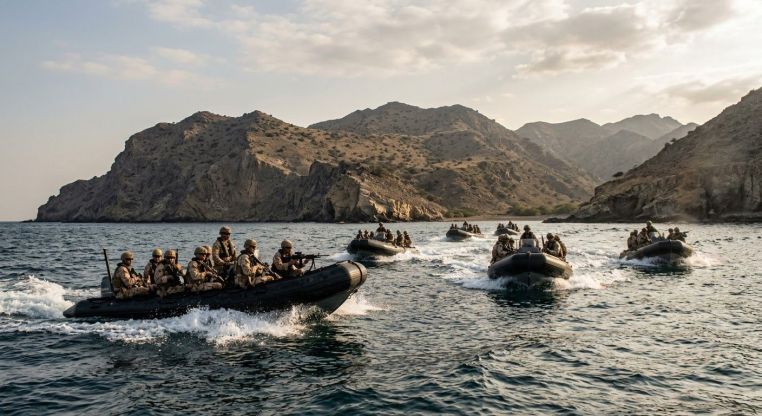
Instead, the intelligence preparation of the battlespace (IPB) for Operation Epic Fury was fundamentally proactive, built on the uncompromising principles of predictive modeling, strategic foresight, and opportunity detection. Analysts modeled the specific behavioral responses of IRGC provincial commanders under extreme duress, seeking to forecast consequences rather than describe past events. They mapped the physical and logical layers of the Iranian telecommunications infrastructure, identifying the exact submarine fiber-optic cables, high-frequency radio relays, and civilian cellular networks that form the backbone of the adversary’s C2.
By focusing on adversary intent and capability rather than historical artifacts, the intelligence apparatus achieved true decision advantage.
Intelligence Failure Modes (Reactive Evidence)
Proactive Intelligence Requirements (Decision Advantage)
Artifact Enumeration: Relying on lists of IOCs, IP addresses, and file hashes.
Adversary Intent & Capability: Understanding the strategic “why” and tactical “how”.
Post-Incident Forensics: Describing what the adversary did after network penetration.
Early Warning: Delivering predictive modeling before the threat materializes.
Log Analysis: Utilizing SIEM or EDR telemetry to show backward-looking activity.
Scenario Forecasting: Modeling adversary behavior under specific combat stressors.
Vulnerability Summaries: Distributing CVE lists devoid of operational context.
Tailored Mapping: Aligning data to the MEU’s specific mission requirements and geographic sector.
Naval planners understood that the IRGC would not fight as a centralized monolith once hostilities commenced. They modeled the exact pathways through which the IRGC would attempt to communicate once their primary military networks were severed. Intelligence revealed a critical reliance on the MTN Irancell network, specifically exploiting the Signaling System 7 (SS7) vulnerabilities within regional telecommunications carriers to route encrypted orders and receive targeting telemetry from Chinese Yaogan satellites. This anticipatory intelligence allowed US cyber operators to pre-position digital payloads and electronic attack vectors exactly where the IRGC would retreat, effectively laying a digital ambush. The tactical intelligence objective shifted from simply knowing where the enemy was, to dictating where the enemy could no longer go.
Vulnerabilities of the Mosaic Defense
To paralyze the Iranian military apparatus, the littoral force had to deconstruct and defeat its core survival doctrine-the “Mosaic Defense”. Formulated in the mid-2000s by former IRGC Commander Mohammad Ali Jafari, the Mosaic Defense is a highly decentralized warfare architecture designed specifically to absorb overwhelming kinetic decapitation strikes, drawing lessons from US operations in Iraq and Afghanistan. The doctrine divides the IRGC into 31 semi-autonomous provincial commands. If the central leadership in Tehran is neutralized, these regional nodes are fully empowered to execute pre-planned guerrilla operations, launch anti-ship cruise missiles, and mobilize the Basij paramilitary forces independently, turning a swift regime-change operation into a protracted war of attrition.
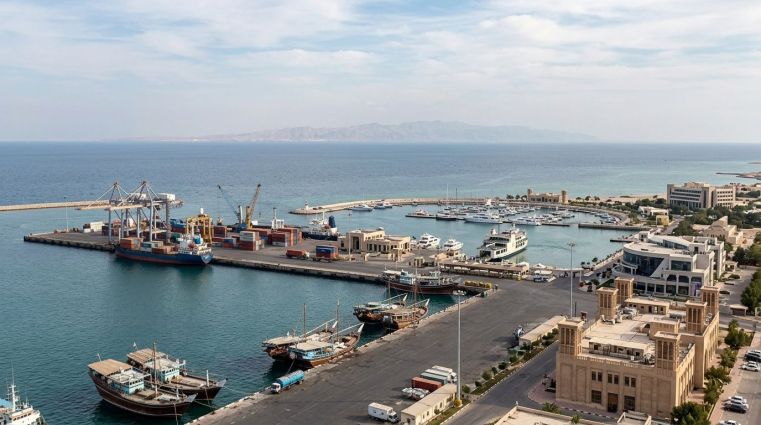
Qeshm Island
Geography and Terrain: Qeshm is the largest island in the Persian Gulf, spanning 135 kilometers in length and covering 1,491 square kilometers. The terrain is exceptionally rugged and features the 6-kilometer-long Namakdan Salt Cave, the sheer limestone walls of Chahkooh Canyon, and the dense Hara mangrove forests.
Naval Infrastructure: The Islamic Revolutionary Guard Corps (IRGC) operates a highly fortified naval base on the south-central shore, located between the cities of Shib Deraz and Messen. This base is home to the 112th Naval Combat Brigade, which fields fast attack craft and new stealth missile catamarans.
Aerospace and Missile Capabilities: The island hosts a probable drone base utilizing Shahed Saegheh UCAVs, mobile radars, and vertically launched Fajr-3 missile systems to create overlapping anti-access/area denial (A2/AD) zones over the narrow 5-nautical-mile chokepoint between Qeshm and Larak.
Tactical Application (Visuals): As illustrated in the Littoral Operations Area models (Image 6), an amphibious raid on Qeshm would require the expeditionary force to carve a protected “Air Corridor” and “Missile Corridor” through these defenses. Upon landing, the Littoral Anti-Air Battalion (LAAB) detailed in Image 7 would immediately deploy its Marine Air Defense Integrated System (MADIS) to protect the beachhead from localized drone swarms.
The Makran Coast near Jask
Geography: Situated outside the Persian Gulf, the Makran Coast faces the Gulf of Oman and offers direct access to the deep waters of the Indian Ocean.
Naval Infrastructure: The Iranian Navy (IRIN) 2nd Naval Region commands the area. Naval operations are divided between the northern mole of Jask’s commercial port and a newer, exclusive naval facility at Jask-Hojdan, 12 miles east of the city. This base, built on an artificial outcropping, frequently launches Ghadir-class midget submarines and Fateh-class submarines to patrol the maritime approaches.
Strategic Energy Targets: The Jask peninsula is the site of the Kooh Mobarak offshore loading terminal, located 65 kilometers west of Jask near Mubarak Mount. It is fed by the Goreh-Jask pipeline, a strategic asset built to allow Iran to export oil while completely bypassing the Strait of Hormuz.
Tactical Application (Visuals): A landing on the exposed Makran Coast would push supply lines to their limits. Based on the logistics framework in Image 4 and the “Spectrum of Forward Provisioning” in Image 9, the Combat Logistics Battalion (CLB) would have to forgo traditional supply depots. Instead, they would sustain the Littoral Combat Team using unmanned surface vessels, aerial precision drops, and autonomous materials handling to survive in the contested environment.
However, decentralization is only effective if the autonomous nodes possess clear situational awareness and a unified operational picture. The Mosaic Defense relies on an intricate, albeit fragile, web of communications. The physical infrastructure underpinning this network includes submarine fiber-optic cables linking Iran to the UAE via the Fiber-Optic Link Around the Globe (FLAG) network, dedicated microwave relay links to Kuwait, and satellite earth stations utilizing Intelsat and Inmarsat platforms. When military networks degrade under US bombing, the IRGC seamlessly transitions its C2 traffic onto commercial civilian infrastructure, exploiting roaming agreements with Gulf carriers.
The deliberate isolation of these thirty-one semi-autonomous IRGC provincial commands became the focal point of the Marine Corps’ information warfare strategy. By targeting the specific telecommunication interconnects, submarine fiber-optic linkages, and microwave relays that bind the decentralized network, offensive operations forced the autonomous nodes into complete operational isolation. The network, originally structured as a resilient hub-and-spoke model radiating from Tehran, was methodically severed. As the cyber and electromagnetic payloads struck their targets, the healthy data streams degraded into fragmented, disconnected pockets, stripping the provincial commanders of their overarching strategic awareness.
The MEU’s operational design exploited this exact dependency. The objective was not merely to physically destroy the nodes, but to digitally isolate them. By blinding the provincial commanders, the littoral force trapped them in a “digital fog,” rendering them incapable of coordinating anti-ship missile salvos or tracking the movement of US surface connectors in the Strait of Hormuz. Without communication, the Mosaic Defense ceased to be a resilient web and devolved into isolated, uncoordinated pockets of resistance, highly vulnerable to localized defeat in detail by Marine units of action.
Mosaic Defense Vulnerability
Iranian Mitigation Strategy
USMC / Cyber Command Exploitation Vector
Decapitation of Tehran HQ
Decentralization into 31 semi-autonomous provincial IRGC commands.
Severing regional interconnects to isolate commands, preventing coordinated counterattacks.
Destruction of Military Comm Links
As the task force enters the Strait of Hormuz, the Expeditionary Warfare Commander (EXWC) assumes control of the Littoral Operations Area (LOA). Operating under the CWC, the EXWC synchronizes the Marines’ landward power projection seamlessly with the Air and Missile Defense Commander (AMDC) and the Surface Warfare Commander (SUWC) afloat. The overarching objective is to establish an unblinking, multi-domain kill web inside the adversary’s Weapons Engagement Zone.

Pivoting to commercial telecommunications (MTN Irancell) and Gulf carrier roaming.
Exploiting SS7 signaling vulnerabilities to intercept, corrupt, or drop critical C2 packets.
Loss of Terrestrial Fiber-Optics
Utilizing satellite communications (Intelsat, Inmarsat, Starlink).
Targeted kinetic strikes on SATCOM terminals combined with advanced GPS/signal spoofing.
Degradation of Coastal Radars
Fusing civilian traffic camera feeds and local spotter reports for battle damage assessment.
OCO payloads deployed against Hikvision/Dahua IP cameras; total national internet blackout.
H-Minus 72-The Cyber-Electromagnetic Vanguard
The beachhead breach initiated days before the first amphibious combat vehicle hit the surf. At H-Minus 72 hours, US Cyber Command (USCYBERCOM) and US Space Command operated as the “first movers,” launching Operation Epic Fury’s invisible vanguard. Their mission was to establish localized electromagnetic and cyberspace supremacy over the intended landing zones, executing tasks delegated to the Information Warfare Commander (IWC) within the Composite Warfare Commander (CWC) construct.
The initial salvos were executed from keyboards and server farms thousands of miles away, integrated seamlessly with the tactical elements afloat. Offensive cyberspace operations targeted the routing infrastructure of the Iranian National Information Network (NIN). Hijacking and deploying custom malware targeting vulnerabilities in unpatched VPN gateways and edge devices—specifically exploiting known flaws in Pulse Secure, Fortinet, and Citrix systems—cyber operators severed the logical connections between Iran’s coastal defense missile batteries and their central targeting repositories by executing Border Gateway Protocol (BGP).
This was not a one-sided engagement. The Iranian cyber ecosystem, heavily bureaucratized under the Ministry of Intelligence and Security (MOIS) and the IRGC Cyber-Electronic Command, fought back ferociously. Advanced Persistent Threat (APT) groups like MuddyWater (Mango Sandstorm) and APT33 (Peach Sandstorm) attempted to leverage compromised Azure infrastructure and deployed AI-assisted malware variants like GhostFetch to maintain their grip on the network. The hacktivist front Handala, operating as an MOIS proxy, routed their traffic through commercial Starlink satellite ranges to bypass the IRGC-controlled gateways that were collapsing under the US assault, managing to launch a highly destructive wiper attack against the US medical device manufacturer Stryker in retaliation.
Despite these counterattacks, the weight of the US cyber offensive was overwhelming. Government digital services failed. The national internet capacity plummeted to between one and four percent of its normal baseline. The digital fog was rolling in over the Persian Gulf.
H-Minus 24-The Tactical Edge and Electromagnetic Supremacy
As the MEU’s amphibious transport docks (LPDs) and amphibious assault ships (LHAs) approached the littoral zone, the fight moved from the strategic networks to the tactical edge. Elements of the 1st Radio Battalion, functioning under the MEF Information Group, deployed to the flight decks and forward operating positions. These highly specialized Marines brought organic, ground-based electronic attack capabilities directly to the fight, effectively translating code into combat power.
Their primary weapon was the Communication Emitter Sensing and Attack System II (CESAS II). CESAS II is a highly scalable, high-power electronic attack asset designed to detect, deny, and disrupt adversary communications across a massive frequency range, doubling the capacity of legacy systems. While historically mounted on heavy mine-resistant vehicles, the modernized, man-packable variants allowed reconnaissance teams to carry the capability ashore, integrating EMSO directly with infantry maneuver.
The immediate targets were the Russian-designed electronic warfare and radar systems protecting the Iranian coastline. Open-source intelligence and satellite imagery confirmed the presence of the Cobra V8—an Iranian localized variant of the formidable Russian Krasukha-4 EW system—designed to jam airborne radar and surveillance aircraft. Furthermore, advanced AN/TPY-2 equivalent missile-tracking radars were networked to protect subterranean fast-attack craft pens.
The Radio Battalion Marines did not attempt to destroy these systems with explosives; they destroyed their utility with physics. CESAS II and airborne EA-18G Growlers flooded the Iranian receiver processors with customized noise and false targets, utilizing Digital Radio Frequency Memory (DRFM) spoofing to create phantom fleets on the adversary’s screens. The electromagnetic spectrum was aggressively manipulated to deafen the coastal early warning radars.
The integration of OCO and EMSO created a cascading, catastrophic failure within Iranian architecture. When the IRGC operators realized their primary terrestrial military networks were jammed, they instinctively pivoted to their backup systems—commercial satellite internet links and regional cellular networks. This pivot was exactly what the IPB had anticipated. US cyber operators, having already mapped the SS7 vulnerabilities of carriers like MTN Irancell, immediately intercepted, corrupted, or blocked the signaling traffic. The provincial commanders found themselves entirely cut off; their military radios emitted only static, and their encrypted digital tunnels were collapsed by US cyber action.
H-Minus 12-Cognitive Fratricide and Weaponizing the Artesh-IRGC Schism
With the adversary’s technical networks blinded and degraded, the MEU unleashed its most devastating non-kinetic weapon: cognitive warfare. Psychological operations (PSYOP) and Military Deception (MILDEC) were seamlessly layered into the cyber campaign to shatter the adversary’s will to fight and induce systemic organizational friction. The target was the human mind, specifically the deep-seated, historical mistrust between the elite, ideologically driven IRGC and the conventionally focused regular army, the Artesh.
The Artesh, responsible for the territorial defense of Iran’s borders, has long resented the IRGC’s preferential access to funding, superior equipment, and ultimate political authority. The US information warfare campaign deliberately poured gasoline on this institutional fire. The objective was to force the Iranian military machine to consume itself before the Marines ever made landfall.
As the communication blackout took hold, Information Maneuver Forces executed a highly targeted “hack-and-leak” and data destruction campaign. Cyber operators successfully breached and wiped the main data centers of Bank Sepah, the financial institution responsible for processing the payroll of all Iranian government workers, police, Artesh soldiers, and IRGC personnel. The immediate cessation of salary payments triggered panic and deep resentment among the enlisted ranks of the regular army, who relied on those funds to support their families amid a crumbling, war-torn economy.
Simultaneously, highly sophisticated messaging operations were executed. The widely used Iranian religious calendar and prayer-timing app, BadeSaba, which boasts over 5 million users, was compromised by allied cyber units. Millions of Iranian citizens and soldiers received targeted push notifications reading “Help has arrived,” followed by explicit instructions on how to surrender safely to advancing US forces and promises of amnesty. Furthermore, operators spoofed the messaging systems of Iran’s Home Front Command, flooding the cellular devices of Artesh commanders with fake emergency alerts, contradictory orders, and false reports of mass IRGC desertions.
The psychological pressure precipitated immediate, catastrophic operational breakdowns on the battlefield. Isolated from central command and starved of reliable intelligence, Artesh frontline units faced severe logistical shortages, with some infantry elements reportedly reduced to twenty bullets for every two soldiers. When these regular army units requested emergency resupply or medical evacuation for their wounded, local IRGC commanders—paranoid, operating blindly under the decentralized Mosaic Defense, and hoarding resources for their own elite cadres—flatly refused to assist.
The refusal of the IRGC to transport wounded Artesh soldiers to hospitals despite having available ambulances acted as the breaking point. The digital disruption successfully manifested as physical mutiny. Group desertions surged among the conventional army ranks, while armed firefights reportedly broke out between IRGC enforcers and starving Artesh conscripts competing for dwindling supplies. The Iranian coastal defense grid was paralyzed from the inside out.
H-Hour-The Amphibious Breach and EAB Establishment
The culmination of the cyber, electromagnetic, and psychological shaping operations created a temporal window of extreme vulnerability in the Iranian coastal defenses. It was within this artificially generated blind spot that the physical breach occurred. At H-Hour, the Marine Expeditionary Unit transitioned from the virtual to the physical domain, executing littoral maneuver at blistering speed.
The traditional, massed amphibious assault—slow, predictable, and highly vulnerable to modern anti-ship ballistic missiles—has been replaced by distributed, low-signature EABO maneuver. The littoral force did not concentrate; it dispersed to survive. Utilizing Medium Landing Ships (LSM) and next-generation surface connectors, small, highly mobile Littoral Combat Teams (LCT) infiltrated the Iranian coastline via multiple unpredictable vectors, utilizing the very shallow water and surf zones previously cleared by explosive ordnance disposal (EOD) elements.
The incoming Marine vessels appeared as transient ghosts on the adversary’s scopes, if they appeared at all because the IRGC coastal radars were smothered by the continuous electronic attack from CESAS II and their C2 data links were severed by cyber payloads. The digital fog ensured that even if an isolated Iranian missile battery detected an incoming vessel, they could not transmit the targeting telemetry to adjacent batteries to mass their fires, nor could they receive authorization from higher headquarters to engage.
The Littoral Breach and the EABO Framework
The Marine Corps abandons the massive, vulnerable amphibious assaults of the twentieth century to execute the breach of the Iranian coastline—specifically Qeshm Island and the Makran Coast near Jask.
Instead, the 31st Marine Expeditionary Unit and the 3rd Marine Littoral Regiment (MLR) integrate directly into the Navy’s Composite Warfare Commander (CWC) architecture.
The Littoral Combat Team (LCT) Insertion
The MLR deploys the Littoral Combat Team (LCT) as its primary unit of action. The LCT eschews heavy armor in favor of speed, lethality, and a microscopic electromagnetic signature around a modernized 2030 infantry battalion. The LCT Stand-In Forces scatter the moment their boots hit the sand slipped ashore via low-profile surface connectors and Medium Landing Ships (LSMs).
Organic Group 2 Unmanned Aircraft Systems (UAS) launch immediately from the beachhead, bypassing Iranian jamming to push real-time targeting telemetry back to the EXWC. The LCT does not attempt to conquer and hold sprawling swaths of desert; instead, small hunter-killer teams seize key maritime terrain just long enough to establish firing positions, remaining agile enough to displace before Iranian counter-battery fire can acquire their coordinates.
LAAB and NMESIS-Locking Down the Air and Sea
The moment the LCT secures the perimeter, the Littoral Anti-Air Battalion (LAAB) and anti-ship missile batteries roll off the landing craft. Finding their central command networks severed by U.S. cyber strikes, IRGC commanders execute their “Mosaic Defense” doctrine, a decentralized strategy authorizing local commanders to launch autonomous swarm attacks using fast inshore attack craft and loitering munitions.
The LAAB meets this threat head-on. Marine Air Defense Integrated System (MADIS) vehicles establish an immediate, localized shield against the Shahed-136 drone swarms, while the Medium-Range Intercept Capability (MRIC) batteries lock down the medium-altitude airspace. The LAAB feeds its radar data directly to the fleet, plugging the beachhead into the AMDC’s regional air picture.
Simultaneously, the MLR deploys the Navy/Marine Corps Expeditionary Ship Interdiction System (NMESIS). Firing Naval Strike Missiles from unmanned, remotely operated tactical vehicles, these batteries extend the SUWC’s reach from the land into the sea. They transform the Iranian coastline into a lethal barrier, devastating the IRGC Navy missile boats before they can push out of their subterranean pens.
Aviation Integration and Multi-Domain Maneuver
Overhead, Marine Aviation executes an expanded, highly lethal doctrinal role. The Aviation Combat Element (ACE) conducts focused Electromagnetic Attack (EA) and Cyberspace Operations Control, blinding Iran’s coastal radar arrays and microwave relay stations. F-35B Lightning IIs provide direct Offensive Air Support (OAS), penetrating deep into the airspace to strike the hardened bunkers housing the enriched uranium.
To sustain this high-tempo air campaign without relying on vulnerable aircraft carriers or fixed bases, Aviation Ground Support elements rapidly carve Forward Arming and Refueling Points (FARPs) out of the austere Iranian terrain. F-35Bs and MV-22 Ospreys drop into these hidden dirt strips, refuel, rearm, and launch back into the fight in minutes.
The Combat Logistics Battalion (CLB) and the Sustainment Web
Logistics dictates the lifespan of the littoral breach. Chinese PLA analysts closely monitor this phase via satellite, assessing the MLR’s vulnerability to supply chain severing to model their own Taiwan invasion scenarios. The Combat Logistics Battalion (CLB) answers this threat by abandoning the traditional “iron mountain” supply depot. Instead, the CLB builds a resilient, highly distributed sustainment web.
Operating under constant threat, the CLB employs a spectrum of forward provisioning. Field ordering officers use expeditionary contracting to secure critical resources from the local populace, while combat engineers scavenge and harvest materials to fortify the Expeditionary Advanced Bases (EABs). For combat-critical resupply like Javelin missiles and medical blood supplies, the CLB utilizes unmanned surface vessels (USVs) and autonomous heavy-lift drones. This decentralized logistical honeycomb ensures the MLR fights and survives, bypassing the Iranian sea mines blockading the deeper channels.
The Psychological Front and Artesh Friction
While the physical breach unfolds, Marine Operations in the Information Environment (OIE) teams weaponize the Iranian military’s internal fault lines. Cyber elements target the localized communication nodes connecting the elite, ideologically driven IRGC with the conventional Iranian army (Artesh).
The Marines exacerbate acute supply shortages within the Iranian ranks by cutting logistical coordination and manipulating digital communications.IRGC units, prioritizing their own survival and hoarding resources under the decentralized Mosaic Defense, refuse to dispatch ambulances, food, or ammunition to bleeding Artesh battalions. The induced cognitive friction fractures the Iranian defense from within, sparking violent infighting, mutinies, and mass desertions along the Makran Coast. The beachhead is secured not just by the application of Marine firepower, but by the systematic dismantling of the enemy’s will and capacity to fight together.

Upon hitting the beachhead, the Marines immediately established Expeditionary Advanced Bases (EAB) in austere environments. These were not sprawling, static encampments reliant on iron mountains of logistics; they were temporary, low-signature firing positions and Forward Arming and Refueling Points (FARPs) designed to persist inside the WEZ and displace rapidly. The LCT rapidly offloaded and positioned the Navy/Marine Corps Expeditionary Ship Interdiction System (NMESIS), a highly mobile, unmanned anti-ship missile platform.
As the NMESIS batteries powered up, they maintained strict emission control (EMCON). They did not radiate their own search radars, which would have instantly betrayed their position to Iranian signals intelligence. Instead, they received their targeting data passively via secure, encrypted datalinks connected to the broader Joint All-Domain Command and Control (JADC2) network, cued by overhead space assets and F-35B stealth fighters loitering safely over the horizon.
The Marines successfully turned the adversary’s coastline into a weapon against them. The EABs established a localized bubble of sea denial, threatening any IRGC fast attack craft attempting to sortie from their subterranean pens or harass commercial shipping by seizing key maritime terrain along the Strait of Hormuz.

If the Iranian forces managed to organize a counterattack, the Marine Information Maneuver Forces immediately deployed counter-C5ISRT measures. They altered their physical and electromagnetic signatures, deployed decoys, and utilized dynamic spectrum access to mask the true location of the NMESIS launchers and the LCT command posts. Before the IRGC could complete their cumbersome, degraded kill chain, the Marines displaced, breaking down the EAB and maneuvering to an alternate site, leaving the Iranian artillery to bombard empty sand. The Expeditionary Warfare Commander (EXWC) orchestrated this lethal ballet, balancing risk to force with the imperative of maintaining relentless pressure on the adversary’s coastal flank.
PLA and Russian Assessments of the “Live Laboratory”
The execution of Operation Epic Fury did not occur in a geopolitical vacuum. It was meticulously monitored, analyzed, and dissected by peer adversaries. For the People’s Republic of China (PRC) and the Russian Federation, the US-led littoral breach in Iran served as a “live laboratory” to assess the real-world efficacy of American multidomain operations and EABO doctrine.
Weishe and Informatized Warfare
The Chinese People’s Liberation Army (PLA) views the conflict through the lens of “informatized warfare” and the concept of Weishe (strategic deterrence and coercion). The PLA’s Information Support Force—the newly reorganized entity responsible for network defense, cyber operations, and communications support, which recently replaced the Strategic Support Force—closely studied how the US Marine Corps integrated tactical cyber and EW to achieve decision advantage.
Chinese military academia has long prioritized the compression of the sensor-to-shooter timeline, a critical component of their own Multi-Domain Precision Warfare (MDPW) doctrine. By observing the MEU’s ability to seamlessly pass targeting data from space-based sensors down to a localized NMESIS battery on an Iranian beach, the PLA gained critical insights into the operationalization of US JADC2 networks.
Furthermore, the PLA recognized the devastating impact of the cognitive fratricide induced among the Iranian ranks. Chinese theorists consider psychological and cyber operations to be inextricably linked within the unified “information domain,” and they actively assessed how US forces weaponized the Artesh-IRGC schism to degrade physical combat effectiveness without firing a shot.
PLA Assessment Focus
USMC EABO Capability Demonstrated
Strategic Implication for the PRC
Information Domain Dominance
Integration of cyber, EW, and PsyOps to paralyze IRGC C2.
Validates PLA doctrine that modern war is won by collapsing the enemy’s nervous system first.
Sensor-to-Shooter Compression
NMESIS receiving passive targeting data via JADC2.
Highlights the speed required to survive inside an A2/AD bubble; informs PLA targeting of US datalinks.
Logistical Resilience
Sustaining distributed EABs and FARPs via Medium Landing Ships (LSM).
Exposes the primary vulnerability of EABO: if the maritime logistics tether is severed, the Stand-In Force culminates.
Cognitive Warfare
Hack-and-leak operations targeting the Artesh-IRGC divide.
Reinforces the PLA’s emphasis on psychological warfare (Weishe) to induce systemic fragility in the adversary.
However, the PLA was also searching for vulnerabilities. They assessed the logistical footprint required to sustain the EABs under fire, analyzing the supply lines connecting the surface connectors to the forward FARPs. The PLA understands that if they can sever the logistical tethers—or successfully jam the datalinks connecting the distributed Marine forces—the EABO concept fractures. For Beijing, the war in Iran provides the blueprint for how they might counter US intervention in a potential Taiwan Strait contingency, recognizing that EABO forces stationed inside the first island chain pose a severe threat to their maritime ambitions.
The Failure of Legacy Electronic Warfare
For the Russian military establishment, the Iranian conflict offered a sobering reality check regarding their own technological capabilities. For decades, Russia has heavily invested in electronic warfare as an asymmetric counter to Western precision-guided munitions and C4ISR networks, viewing the electromagnetic spectrum as a primary domain of battle. However, the systematic destruction of Russian-designed air defense and EW systems in Iran exposed severe systemic flaws.
The catastrophic failure of the Cobra V8 system—an Iranian localized variant of the vaunted Russian Krasukha-4 EW platform—under active US electronic attack highlighted the limitations of legacy Soviet-era jamming philosophies. Russian military analysts, observing the conflict, had to reckon with the fact that their static, high-power EW complexes are highly susceptible to advanced anti-radiation missiles and dynamic spectrum maneuvering by US tactical forces. The inability of these systems to protect the IRGC’s coastal radars from the 1st Radio Battalion’s CESAS II jamming proved that raw power is insufficient without agility.
Furthermore, the Russian General Staff witnessed the tactical viability of the Marine Corps’ EABO and the Navy’s Distributed Maritime Operations (DMO) concepts in real-time. Russian doctrine has traditionally relied on massed, ground-based air defenses to create impenetrable A2/AD bubbles designed to keep US forces at bay. The ability of highly mobile, low-signature Marine elements to infiltrate these bubbles, establish firing positions, and displace before counter-battery fire could be brought to bear directly challenged the efficacy of the Russian defensive paradigm. The war in Iran demonstrated that static defense lines, no matter how heavily fortified, can be unraveled by agile forces operating seamlessly across the cyber, electromagnetic, and physical domains.
The Convergence of Code and Combat
The initial beachhead breach in Operation Epic Fury validates the fundamental principles of the Marine Corps’ Force Design and the Expeditionary Advanced Base Operations concept. By refusing to engage the adversary’s A2/AD network symmetrically, the littoral force bypassed the strongest points of the Iranian defense and attacked its most vulnerable critical requirements: the communication linkages and cognitive cohesion of its commanders.
The integration of the Marine Expeditionary Force Information Group and the 1st Radio Battalion at the tactical edge proved decisive. By employing CESAS II to blind the coastal radars and executing offensive cyberspace operations to collapse the IRGC’s fallback networks, the Marines created a paralyzing digital fog. This technical dominance was brutally magnified by proactive intelligence and psychological operations that successfully weaponized the institutional hatred between the Artesh and the IRGC, transforming a unified defense into a fractured, mutinous liability.
As peer adversaries analyze the telemetry of this conflict, the strategic lesson is unequivocal: the future of power projection relies on the absolute fusion of information maneuver and physical lethality. The modern beachhead is no longer secured with high explosives alone; it is won by the force that can command the spectrum, sever the data, and shatter the enemy’s mind before the first boot touches the sand.
Works cited
1. Cyber Command disrupted Iranian comms, sensors, top general says, https://therecord.media/iran-cyber-us-command-attack 2. US cyber and space forces jammed Iranian communications during attack – POLITICO Pro, https://subscriber.politicopro.com/article/2026/03/us-cyber-and-space-forces-jammed-iranian-communications-during-attack-00806939 3. A Concept for Stand-in Forces – Headquarters Marine Corps, https://www.hqmc.marines.mil/Portals/142/Users/183/35/4535/211201_A%20Concept%20for%20Stand-In%20Forces.pdf 4. Videos – I Marine Expeditionary Force, https://www.imef.marines.mil/Media-Room/Videos/?videoid=897301&dvpmoduleid=144992 5. MCWP 8-10 – Information in Marine Corps Operations, https://www.marines.mil/Portals/1/Publications/MCWP%208-10%20(SECURED).pdf?ver=c4OjkntxdXoXZ9RvGMaIIA%3D%3D 6. Desertions, shortages and army-IRGC rift strain Iran’s military, https://www.iranintl.com/en/202603127596 7. War in Iran – asymmetry in cyberspace – The International Institute for Strategic Studies, https://www.iiss.org/online-analysis/online-analysis/2026/03/war-in-iran–asymmetry-in-cyberspace/ 8. The targeting chain: how the IRGC exploits MTN-Irancell’s Gulf telecom connections to guide its missiles | National Security News, https://nationalsecuritynews.com/2026/03/the-targeting-chain-how-the-irgc-exploits-mtn-irancells-gulf-telecom-connections-to-guide-its-missiles/ 9. US cyber operations aimed at Iran’s military capabilities likely to intensify – Control Risks, https://www.controlrisks.com/our-thinking/insights/us-cyber-attacks-on-iran 10. Inside ‘mosaic defence’ strategy: Why killing Iran’s top commanders may not end the war – The Times of India, https://timesofindia.indiatimes.com/defence/international/inside-mosaic-defence-strategy-why-killing-irans-top-commanders-may-not-end-the-war/articleshow/129575049.cms 11. Iran’s ‘Mosaic Defense’ Strategy: Decentralization as Resilience Factor – The Soufan Center, https://thesoufancenter.org/intelbrief-2026-march-9a/ 12. Iran Quick Reference Guide, https://g2webcontent.z2.web.core.usgovcloudapi.net/OEE/Iran%20LZ/Iran%20Quick%20Reference%20Guide.pdf 13. Digital Frontlines: The Infrastructure Realities of the 2026 Iran Conflict – Rescana, https://www.rescana.com/post/digital-frontlines-the-infrastructure-realities-of-the-2026-iran-conflict 14. Beyond bombs: cyber and information operations targeting Iran’s regime | The Strategist, https://www.aspistrategist.org.au/beyond-bombs-cyber-and-information-operations-targeting-irans-regime/ 15. Control, Alt, Influence: the Potential for US Cyber Operations in Iran – RUSI, https://my.rusi.org/resource/control-alt-influence-the-potential-for-us-cyber-operations-in-iran.html 16. Cyber Command supports strikes on Iran’s nuclear facilities, but officials keep details under wraps | DefenseScoop, https://defensescoop.com/2025/06/23/cyber-command-supports-attack-iran-nuclear-facilities-midnight-hammer/ 17. Cybersecurity Risks Amid Rising Iran–U.S. Tensions – Arctic Wolf, https://arcticwolf.com/resources/blog/cybersecurity-risks-amid-rising-iran-u-s-tensions/ 18. Beyond Hacktivism: Iran’s Coordinated Cyber Threat Landscape | Strategic Technologies Blog | CSIS, https://www.csis.org/blogs/strategic-technologies-blog/beyond-hacktivism-irans-coordinated-cyber-threat-landscape 19. Inside Iran’s APT Network: Profiling the Most Active Iranian State‑Linked Threat Actors, https://falconfeeds.io/blogs/inside-irans-apt-network-most-active-iranian-state-linked-threat-actors-2024-2025 20. LevelBlue SpiderLabs Breaks Down the Role of Cyber Operations Taken in the Iran Crisis, https://www.levelblue.com/blogs/spiderlabs-blog/levelblue-spiderlabs-breaks-down-the-role-of-cyber-operations-taken-in-the-iran-crisis 21. Iran’s Cyber Retaliation Clock Is Ticking: What CISOs Need to Know Right Now – Anomali, https://www.anomali.com/blog/the-cyber-front-of-operation-epic-fury-what-cisos-need-to-know-right-now 22. Iran-linked hackers take aim at U.S. and other targets, raising risk of cyberattacks during war, https://www.pbs.org/newshour/world/iran-linked-hackers-take-aim-at-u-s-and-other-targets-raising-risk-of-cyberattacks-during-war 23. Situation Report: Middle East Escalation (February 27–1st March, 2026) | CloudSEK, https://www.cloudsek.com/blog/middle-east-escalation-israel-iran-us-cyber-war-2026 24. Threat Brief: March 2026 Escalation of Cyber Risk Related to Iran – Unit 42, https://unit42.paloaltonetworks.com/iranian-cyberattacks-2026/ 25. 1st Radio Battalion CESAS II Training [Image 4 of 21] – DVIDS, https://www.dvidshub.net/image/6586089/1st-radio-battalion-cesas-ii-training 26. 1st Radio Battalion Tackle – Marines.mil, https://www.marines.mil/News/Marines-TV/?videoid=865441&dvpTag=Marines&dvpyear=2022 27. Information Warfare for Today’s Marines – AFCEA International, https://www.afcea.org/signal-media/cyber-edge/information-warfare-todays-marines 28. Corps ready to wage electronic warfare with new mobile sensor, attack system, https://www.marcorsyscom.marines.mil/News/News-Article-Display/Article/936029/corps-ready-to-wage-electronic-warfare-with-new-mobile-sensor-attack-system/ 29. Marines get electronic attack and comms upgrade – C4ISRNet, https://www.c4isrnet.com/c2-comms/2016/09/13/marines-get-electronic-attack-and-comms-upgrade/ 30. Staying the Course — Maintaining the Path to Advanced Marine Corps EMSO, https://www.jedonline.com/2022/09/07/staying-the-course-maintaining-the-path-to-advanced-marine-corps-emso/ 31. U.S. airstrike destroys Russian-designed EW system in Iran – Defence Blog, https://defence-blog.com/u-s-airstrike-destroys-russian-designed-ew-system-in-iran/ 32. Russian Electronic Warfare: From History to Modern Battlefield, https://irregularwarfare.org/articles/russian-electronic-warfare-from-history-to-modern-battlefield/ 33. Satellite Images Reveal Iranian Strikes Cripple U.S. SATCOM and Missile-Tracking Network Across Gulf Bases, Exposing Vulnerability in America’s Middle East Command Architecture, https://defencesecurityasia.com/en/iran-missile-strikes-destroy-us-satcom-an-tpy2-radar-gulf-bases-satellite-images/ 34. Return of Ground-Based Electronic Warfare Platforms and Force Structure, https://www.armyupress.army.mil/Journals/Military-Review/English-Edition-Archives/July-August-2019/Spring-Glace-Electronic-Warfare/ 35. The Digital Redoubt: Iran’s National Information Network and the Asymmetry of Modern Cyber Conflict – FalconFeeds.io, https://falconfeeds.io/blogs/the-digital-redoubt-irans-national-information-network-cyber-conflict 36. Blinding First, Striking Fast: Why the Marine Corps Needs Information Groups, https://warontherocks.com/2025/10/blinding-first-striking-fast-why-the-marine-corps-needs-information-groups/ 37. Eternal Rivals? The Artesh and the IRGC – Middle East Institute – MEI, https://mei.edu/publication/eternal-rivals-artesh-and-irgc/ 38. Order of Battle of the Iranian Artesh Ground Forces | ISW, https://understandingwar.org/research/middle-east/order-of-battle-of-the-iranian-artesh-ground-forces/ 39. Iran’s Psychological Warfare: Regime Cracks Under Pressure – The Gold Institute for International Strategy, https://www.goldiis.org/iran-update-the-psychological-component-in-irregular-warfare/ 40. How Will Cyber Warfare Shape the U.S.-Israel Conflict with Iran? – CSIS, https://www.csis.org/analysis/how-will-cyber-warfare-shape-us-israel-conflict-iran 41. Fog, Proxies and Uncertainty: Cyber in US-Israeli Operations in Iran, https://www.rusi.org/explore-our-research/publications/commentary/fog-proxies-and-uncertainty-cyber-us-israeli-operations-iran 42. Hybrid Warfare Unfolded: Cyberattacks, Hacktivism and Disinformation in the 2025 Israel-Iran War – Radware, https://www.radware.com/security/threat-advisories-and-attack-reports/cyberattacks-hacktivism-and-disinformation-in-the-2025-israel-iran-war/ 43. Checkpoint attacks open new front in Iran war, https://www.iranintl.com/en/202603122539 44. Reconnaissance-Strike Tactics – Marine Corps University, https://www.usmcu.edu/Outreach/Marine-Corps-University-Press/MCU-Journal/JAMS-vol-15-no-2/Reconnaissance-Strike-Tactics/ 45. The Problems Facing United States Marine Corps Amphibious Assaults, https://www.usmcu.edu/Outreach/Marine-Corps-University-Press/MCU-Journal/JAMS-vol-11-no-2/The-Problems-Facing-United-States-Marine-Corps-Amphibious-Assaults/ 46. U.S. Marine Corps Force Design Initiative: Background and Issues for Congress – EveryCRSReport.com, https://www.everycrsreport.com/reports/R47614.html 47. The Evolution of Landpower – CSIS, https://www.csis.org/analysis/chapter-5-evolution-landpower 48. Statement of General Eric M. Smith Commandant of the Marine Corps on the posture of the United States Marine Corps before Congressional Defense Committees > Commandant of the Marine Corps > Transcripts, https://www.cmc.marines.mil/Speeches-and-Transcripts/Transcripts/Article/4186803/statement-of-general-eric-m-smith-commandant-of-the-marine-corps-on-the-posture/ 49. The Iran War: The Centre of Gravity Shifts to the Strait of Hormuz – RSIS, https://rsis.edu.sg/rsis-publication/rsis/the-iran-war-the-centre-of-gravity-shifts-to-the-strait-of-hormuz/ 50. Iran Conflict and the Expanding Cyber Front: What Government Leaders Need to Know, https://securityscorecard.com/blog/iran-conflict-and-the-expanding-cyber-front-what-government-leaders-need-to-know/ 51. China Is Quietly Studying the Iran War as a Real-Time U.S. Playbook – YouTube, https://www.youtube.com/shorts/Mh02PK-pEO0 52. China sees Iran war as a live lab for future US conflict | The Jerusalem Post, https://www.jpost.com/defense-and-tech/article-889698 53. China Military Studies Review – Marine Corps University, https://www.usmcu.edu/Outreach/Marine-Corps-University-Press/China-Military-Studies-Review/CMSR-2025-Understanding-Weishe/ 54. Sensing in the Shadows – Marine Corps Association, https://www.mca-marines.org/gazette/sensing-in-the-shadows/ 55. Force Design for the Twenty-First Century Fight: U.S. Cyber Force Lessons from China’s Strategic Support Forces – CSIS, https://www.csis.org/analysis/force-design-twenty-first-century-fight-us-cyber-force-lessons-chinas-strategic-support 56. A New Step in China’s Military Reform – NDU Press, https://ndupress.ndu.edu/Media/News/News-Article-View/Article/4157257/a-new-step-in-chinas-military-reform/ 57. Annual Report to Congress: Military and Security Developments Involving the People’s Republic of China 2025 – War.gov, https://media.defense.gov/2025/Dec/23/2003849070/-1/-1/1/ANNUAL-REPORT-TO-CONGRESS-MILITARY-AND-SECURITY-DEVELOPMENTS-INVOLVING-THE-PEOPLES-REPUBLIC-OF-CHINA-2025.PDF 58. China and Cyberspace – New America, https://www.newamerica.org/insights/russia-china-cyber-offensive-latam-caribbean/china-and-cyberspace/ 59. Strategic Studies Institute and US Army War College Press – Executive Summary, https://media.defense.gov/2025/Jan/14/2003627766/-1/-1/0/1191-SUMMARY.PDF 60. Winning in the South China Sea: Lessons Learned from Recent Wars Provide the Blueprint for the US Marine Corps to Successfully Challenge the People’s Liberation Army – Air University, https://www.airuniversity.af.edu/JIPA/Display/Article/3111080/winning-in-the-south-china-sea-lessons-learned-from-recent-wars-provide-the-blu/ 61. China’s ISR Threat to US Expeditionary Advanced Base Operations (EABO) – DTIC, https://apps.dtic.mil/sti/trecms/pdf/AD1177699.pdf 62. The Marine Corps’ Radical Shift toward China – CSIS, https://www.csis.org/analysis/marine-corps-radical-shift-toward-china 63. Russia’s Electronic Warfare Capabilities to 2025 – International Centre for Defence and Security, https://icds.ee/wp-content/uploads/2018/ICDS_Report_Russias_Electronic_Warfare_to_2025.pdf 64. U.S. Army Plays Catch-Up to Russian EW Operations – AFCEA International, https://www.afcea.org/signal-media/us-army-plays-catch-russian-ew-operations 65. Electronic Warfare in Ukraine – Joint Air Power Competence Centre, https://www.japcc.org/articles/electronic-warfare-in-ukraine/ 66. Russian Concepts of Future Warfare Based on Lessons from the Ukraine War – CNA Corporation, https://www.cna.org/reports/2025/08/Russian-Concepts-of-Future-Warfare-Based-on-Lessons-from-the-Ukraine-War.pdf 67. China first for the US Marine Corps, https://www.foi.se/rest-api/report/FOI%20Memo%208802


