


Pressure on students grows when operators target schools with psychological tricks. Social engineering reaches classrooms through subtle influence cues, emotional hooks, and authority imitations. Many students lack defenses against those tactics because schools focus on academic tasks while neglecting threat awareness. New College of Florida offers a recent example of an environment where political pressure, narrative fights, and identity-based framing created confusion for students who expected a stable learning space. Outside groups shaped conversations, pushed targeted messages, and tested how far influence could spread across a campus wrestling with leadership changes.
Educational settings shape identity during vulnerable years. Students absorb cues from teachers, peers, online groups, and community voices. Manipulators enter that space with stories that sound empowering but redirect attention toward hidden agendas. Simple persuasion lines appear in student forums, campus clubs, and social media tied to school events. Young adults often accept such ideas because repetition and confidence give false comfort.
Strong programs build defenses through active skill development. Schools must track early signs of influence pressure, including sudden shifts in group behavior, coordinated messaging storms around campus events, or new narratives that appear disconnected from local reality. Students learn to question motives, dissect claims, and examine evidence before agreeing with any message.
A table outlines the structure
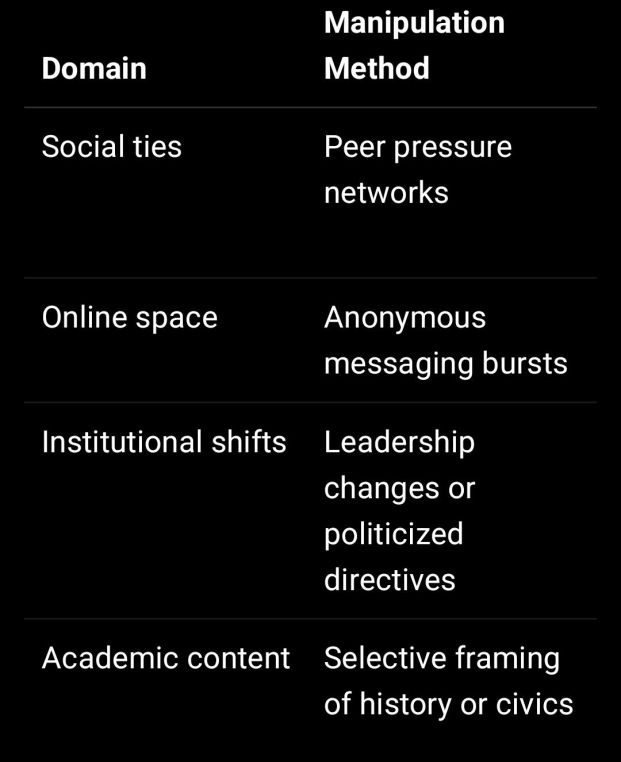
A strong educational environment grows when leaders teach students to analyze claims, identify tricks, and think ahead. Protective strategies grow from transparent communication, open discussion, and steady training that prepares students to spot influence patterns before those patterns shape their beliefs.

You must be logged in to post a comment.