


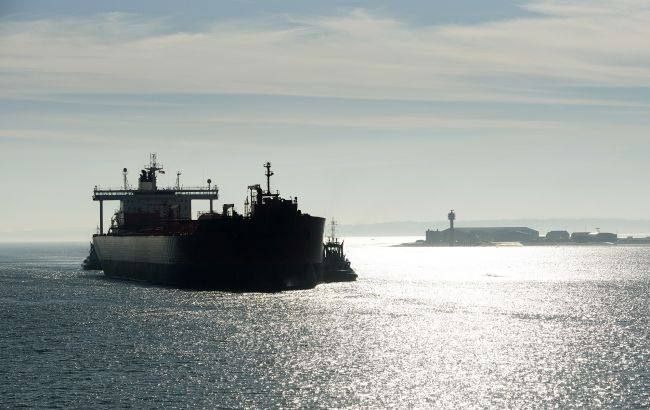
Assessment anchors on two linked facts supported by primary Scandinavian and NATO-aligned reporting. Danish authorities publicly recorded multiple unauthorized drone incursions over military sites and near airports from 22–27 September, followed by a nationwide civil-drone ban from 29 September to 3 October. Defence Command Denmark and the Defence Ministry published short operational updates acknowledging drone observations and deployment of counter-UAS support, while the National Police documented hundreds of drone reports and activated the national operative staff. Transport authorities posted the dispensation process and the formal ban period. France then boarded the crude tanker Boracay off Saint-Nazaire and arrested two senior officers in a judicial probe into a suspected sanctions-evasion “shadow fleet” vessel, with Reuters confirming the timeline, boarding, and arrests; French and European press add the allegation that investigators are exploring links to the Denmark drone wave.
Facts judged reliable. Denmark’s Defence Command notice confirms drones observed at several installations and warns that forces may take down drones based on risk; Danish authorities refrain from attributing origin in official text. The Transport Ministry and Danish Transport Authority provide the legal ban window and procedures. The National Police report more than 500 drone-related calls in one day and announce interagency posture. Reuters’ several pieces fix dates and scope, and note allied support during the EU meetings, while AP echoes the Defence Ministry’s language. Those sources meet evidentiary needs for event existence and government response.
Facts judged relevant on the vessel. Reuters reports that Boracay, already UK- and EU-sanctioned and previously detained by Estonia for flag irregularities, departed Primorsk on 20 September and later anchored off the French coast under naval shadowing before boarding; the Brest prosecutor opened the case and the French Prime Minister announced two arrests. Maritime Executive collates registry churn and identity changes since 2022, consistent with shadow-fleet tradecraft. The Guardian and regional outlets describe investigative interest in whether drones launched from ships near Denmark; those allegations remain unproven by primary Danish statements.
Analytic judgments. A proximity-in-time link between Boracay’s track through Danish waters and the drone incidents invites a hypothesis that a ship in the Baltic/North Sea supported sorties. Official Danish texts do not name a platform or country. Reuters quotes allied officials referring to “state actors” while keeping attribution open. French law-enforcement actions target registry non-compliance and sanctions evasion first; the drone vector appears a line of inquiry, not an official conclusion. Confidence in the drone-incident record: high. Confidence that Boracay directly launched drones: low-to-moderate pending forensic recovery of UAS components, RF telemetry, launch-platform residues, or crew communications. Confidence that Boracay belongs to a sanctions-evasion network: high given sanction listings, flag/name churn, and prior detention.
Indicators that would raise confidence in a maritime launch hypothesis include synchronized AIS gaps with over-land sightings, unusual station-keeping near restricted areas, RF emissions consistent with C2 links in 1.2–1.3 GHz or 2.4/5.8 GHz ISM bands recorded by coastal sensors, thermal or optical evidence of deck activity, recovered UAV parts with maritime contaminants, satellite tasking that captures deck layouts with portable launch rails, and seized crew devices showing mission planning apps with geofences around Danish sites. None appear in official Danish postings to date.
Corroborating Scandinavian sources broaden context. Sweden’s Omni and Norway’s VG cover the ban, reserve call-ups, and German anti-drone support, reflecting regional security convergence around Copenhagen summit week. Those accounts align with Danish ministries’ notices and NATO-adjacent vigilance.
Gaps and collection plan. Priority one involves fusing open AIS with SAR and optical satellite tracks for Boracay between 22–25 September, overlaying Danish drone sighting times. Priority two involves COMINT and spectrum logs from Danish sensor grids during sightings to identify uplink/downlink signatures that match commercial or modified VTOL/fixed-wing UAVs. Priority three involves French judicial disclosures, which may include device forensics, voyage data recorder pulls, cargo pump logs that reveal deck-power draw, and crew comms. Priority four involves Estonian port-state-control documents and footage from the May incident to map shipboard spaces amenable to UAS staging. Maritime Executive summaries indicate extensive identity churn; direct registry files would confirm shell-owner sequences and ISM managers.
Risk picture. Drone overflights of Karup, Skrydstrup, Aalborg, Billund, and other sites during an EU summit period present hybrid-pressure signaling against NATO airpower nodes and political forums. A maritime launch option offers plausible deniability, mobile staging, and short flight legs across littoral approaches while exploiting air-law gray zones. Danish counter-UAS posture scaled quickly, including legal authorities to remove drones and allied anti-drone contributions. Further sorties that penetrate near-base restricted airspace during high-level events would escalate response thresholds and invite attribution steps at the alliance level.
What the evidence does not show. Danish government posts do not tie Boracay to launches, name Russian services, or publish recovered UAS hardware. French authorities have not published technical findings from boarding, beyond arrests for nationality non-compliance and obstruction. Media claims of ship-launched drones remain investigative hypotheses until official reports, RF logs, or hardware appear. Reuters’ language remains most conservative and should anchor interim judgments.
For your workspace today, two items are ready. A Denmark-to-France event timeline and a source-credibility matrix appear in the shared tables above, built only from official Danish outlets and high-reliability wires. A small milestone chart visualizes the sequence from initial airport disruptions to the French boarding. Use those artifacts as your running register while new releases land.
Cited sources for verification and further reading: Defence Command Denmark notice on drone observations; Danish Defence Ministry on allied anti-drone support; Danish National Police notices on national posture and 500+ reports; Transport Ministry civil-drone ban and Danish Transport Authority dispensation procedures; Reuters coverage on Denmark drone disruptions, national ban, and French Boracay probe and arrests; AP report on repeated observations at military sites; Maritime Executive dossier on Boracay’s identity churn and sanctions history; The Guardian summary of the French boarding and investigative scope; Scandinavian media snapshots from Omni and VG on reserve call-ups and the ban.
Bottom line. Authorities in Denmark and France took concrete steps that align in time but not yet in causation. Drone incursions over Danish military and airport sites triggered a nationwide civil-drone ban and allied counter-UAS support. France then boarded and arrested two officers from a sanctioned tanker with a shadow-fleet profile that transited near Denmark during the window of drone activity. Evidence supports a sanctions-evasion case with high confidence. Evidence tying Boracay to drone launches remains provisional. Further multi-source fusion—RF telemetry, satellite tasking, French seizure reports, and Estonian inspection archives—will decide the maritime-launch hypothesis.


You must be logged in to post a comment.