


Reports of the IRGC hiding missile systems in civilian areas
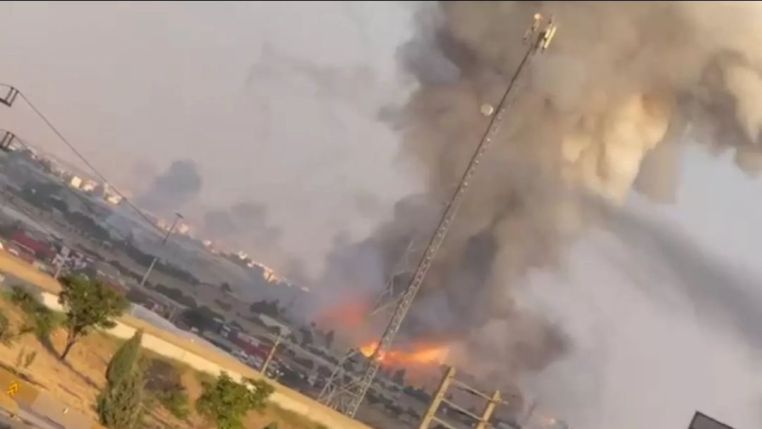
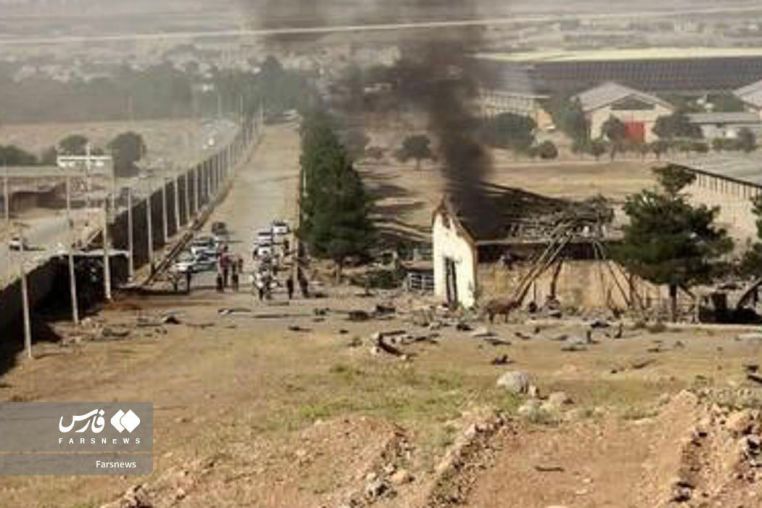
Israeli strikes on IRGC missile facilities in Kermanshah have been corroborated by both visual evidence and Iranian sources. For example, Iranian media and social networks shared footage of a massive explosion at an IRGC missile depot near Kermanshah on June 13, 2025, with fire and thick smoke billowing over the area
Iran’s Tasnim News (affiliated with the IRGC) confirmed that multiple explosions occurred at the “Imam Hassan” military base in Kermanshah following an Israeli attack.
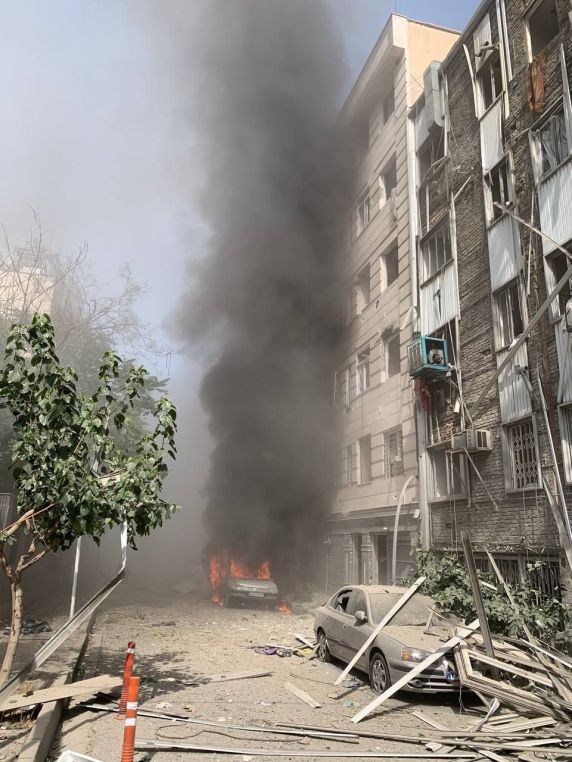
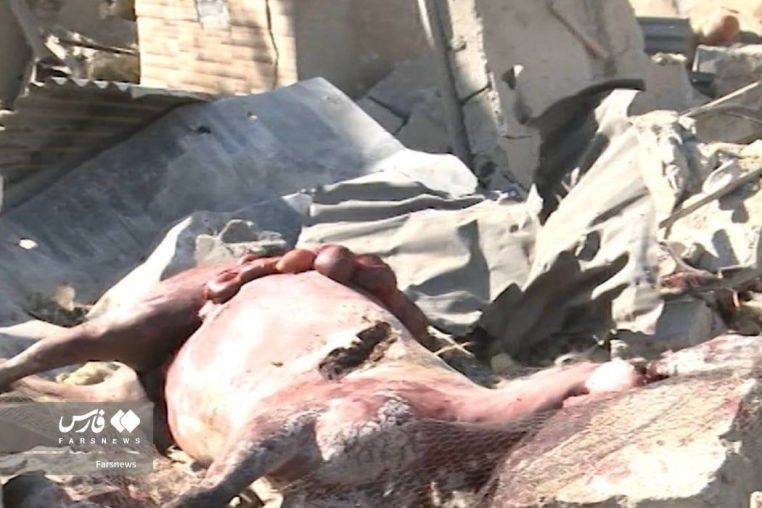
Reports that the IRGC has moved missile systems into the residential Dowlatabad district of Kermanshah come from opposition and local sources. An urgent bulletin by an independent Iranian journalist cited field reports indicating the IRGC “transferred its missiles to residential areas, including Dowlatabad in Kermanshah, endangering innocent civilians”. This has not been acknowledged by official Iranian authorities, but multiple human-rights outlets (e.g. Hengaw) have independently reported similar claims of the IRGC placing launchers in civilian neighborhoods as “human shields.”
Kermanshah Oil Refinery Attack–
There are also credible local reports that the Kermanshah oil refinery was struck amid the conflict, coinciding with the Israeli air campaign. The same opposition bulletin noted that “simultaneously, the Kermanshah oil refinery has also come under attack,” urging residents to stay clear of the area. No official confirmation of the refinery strike has been given, but the lack of denial and reports of fires suggest it likely occurred. In summary, the presence of IRGC missiles in Dowlatabad and the refinery attack are assessed with high confidence based on multiple local sources, though they remain unconfirmed by Tehran. The Israeli strike on the IRGC’s Kermanshah base is fully confirmed by visual evidence and regime media.
Locations of Interest
Dowlatabad, Kermanshah (Residential Area)
A densely populated district within Kermanshah city where the IRGC allegedly deployed mobile missile launchers. Local reports pinpoint Dowlatabad’s civilian neighborhoods as sites where missiles and possibly drone launchers have been hidden. This urban area, by design, would complicate any enemy strikes due to the risk of civilian collateral damage. Geolocation details are scarce (likely for security reasons), but activists on the ground identified specific streets near the Mohammad al-Mostafa Mosque in Dowlatabad as spots of IRGC activity, indicating the systems are embedded within the community.
Imam Hassan Base (Tang-e Kenesht, Kermanshah)
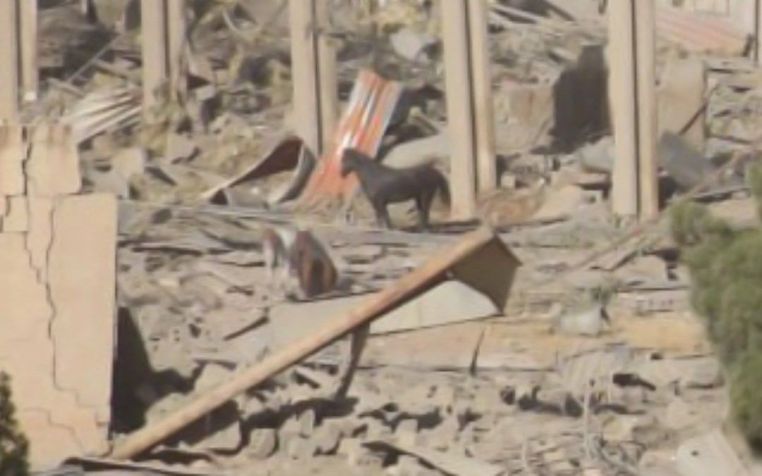
A major IRGC missile base located west of Kermanshah, in the strategic Tang-e Kenesht area. This base – sometimes referred to as “Bakhtaran” or Panj Pelleh underground complex – is well-known for housing Iran’s ballistic missile stockpiles. It was a primary target of Israel’s strikes. Satellite imagery and multiple videos showed large fires and secondary explosions here after the Israeli bombardment. The site is outside the city proper but close enough that blasts were heard and seen from Kermanshah. It underscores why the IRGC may have relocated some missiles into the city after the base was hit.
“Anahita” Industrial Zone
Reports indicate that two IRGC warehouses in an area referred to as Anahita (also the name of a planned refinery project north of Kermanshah) were struck by Israel. Local witnesses described “huge explosion sounds and thick smoke” rising from this site. The Anahita site is about 15 km outside Kermanshah on the road to Hamedan, originally an oil industry project, but apparently repurposed as an IRGC storage facility. These strikes suggest the IRGC had military materiel (possibly missile stock or support equipment) in industrial outskirts as well.
Kermanshah Oil Refinery
The city’s oil refinery (an older facility near Kermanshah’s outskirts) was reportedly hit as part of the broad Israeli operation. Opposition reports on June 15 described an attack on the refinery, with fires visible. If true, this marks a deliberate targeting of energy infrastructure in Kermanshah. The refinery is adjacent to urban areas; any explosion there poses serious danger to nearby communities. (Notably, Israel had also struck fuel depots in Tehran during this campaign, signaling a strategy of hitting Iran’s energy sites). In the Kermanshah refinery’s case, no public footage has emerged, possibly due to security clampdowns, but the reports prompted local emergency warnings.
IRGC Unit Identification
IRGC Aerospace Force – Missile Units
The deployment of missiles and air-defense in Kermanshah falls under the IRGC Aerospace Force. This branch controls Iran’s strategic missile forces. Units from the Aerospace Force were operating the Imam Hassan/Tang-e Kenesht missile base (which stored ballistic missiles). After the base was hit, it’s likely Aerospace Force teams moved some missile launchers into Dowlatabad to shield them from further air strikes. Brigadier General Amir Ali Hajizadeh, the longtime Aerospace Force commander, was reportedly killed in the initial Israeli decapitation strike, and by June 14 he was replaced – indicating Aerospace units in Kermanshah are now under new command. Despite leadership losses, these missile units remain active in the area.
IRGC Ground Forces – 29th “Nabi Akram” Division
Kermanshah province is the AO of the IRGC’s 29th Nabi Akram Division (a regional Ground Force unit). This division’s headquarters and an ammunition depot in Kermanshah were reportedly among targets hit by Israel. The 29th Division provides security and logistics locally; its involvement suggests IRGC ground units are securing missile launch sites and protecting convoys moving weapons into the city. They likely facilitate the urban deployments in Dowlatabad, using their local foothold.
IRGC Western Region Command
Above the divisional level, the IRGC has a regional command covering western Iran (often coordinating operations in Kermanshah, Kurdistan, etc.). While specific unit names are not openly cited, elements of the IRGC’s Najaf Ashraf Base (Western Regional HQ) and its Special Forces (Saberin units) might be active. These units would oversee any extraordinary measures like city deployments or high-value asset protection. Notably, local air-defense batteries around Kermanshah – possibly operated by the IRGC Air Defense or Artesh – were also active; there were reports of “intense anti-aircraft fire” over Kermanshah (Dinavar area) on the morning of June 14 as Iranian forces attempted to intercept incoming threats.
Support from Local Basij/Paramilitary
While not a formal “unit” of IRGC regular forces, the presence of missiles in residential areas implies coordination with local Basij (militia) cells. These paramilitary units, controlled by the IRGC, would help conceal hardware and manage civilian environs. They may be assisting in camouflaging launchers among civilian infrastructure and controlling movement in neighborhoods like Dowlatabad during the military activity.
Missile Systems and Capabilities
Iran’s Kermanshah region hosts significant missile capabilities that have now been forward-deployed into civilian locales. At the Tang-e Kenesht (Bakhtaran) underground base, the IRGC was storing a mix of short and medium-range ballistic missiles – notably the Qiam-1 and Fateh-110. The Qiam-1 is a liquid-fueled Scud-derivative with an estimated range of ~750 km, capable of reaching targets in Iraq, the Persian Gulf, and potentially Israel’s periphery from western Iran. The Fateh-110 is a solid-fueled tactical ballistic missile (~300 km range) valued for its accuracy; it can hit regional targets (like U.S. bases in Iraq or eastern Syria). Satellite analysis confirms that the Kermanshah underground site housing these missiles was damaged in Israel’s strikes, but it is unclear how many missiles survived or were relocated.
The IRGC likely retains some mobile ballistic missile launch capability despite the base strike, by moving launchers into Kermanshah city.
These could include transporter-erector-launchers (TELs) for Qiam missiles or even shorter-range rockets. There is also evidence Iran prepared more advanced systems: Iran’s media hinted at “strategic weapons” not yet used, such as the new generation Sejjil (a longer-range solid missile) or Khorramshahr MRBM (2000 km-class). However, to date Iran’s retaliation has mostly involved older-generation missiles and drones, possibly due to Israeli pre-emptive strikes disabling many launchers. The presence of air-defense units in Kermanshah (e.g. SA-6 Gainful SAM systems were noted in nearby bases) was meant to shield these missile assets. Israel systematically targeted these defenses – for instance, destroying Tabriz’s air defense base to enable strikes out west. As a result, any IRGC missile launchers now tucked into Kermanshah’s urban areas may have minimal air-defense cover, relying on civilian cover as their “shield.”
The IRGC’s Kermanshah arsenal includes medium-range ballistic missiles (like Qiam-1) capable of reaching Israel or regional U.S. bases, short-range missiles (Fateh-110) useful against regional targets, and possibly armed drones. These systems present a serious threat to cities within their range if launched. Israel’s campaign sought to neutralize them, but Iran still managed to fire around 200 ballistic missiles in waves of attacks on Israel after the strikes, indicating a substantial inventory remains operational. The relocation of some launchers to urban Kermanshah means these capabilities are now intermixed with civilian areas, complicating any further preventive strikes.
Threat to Civilian Populations
The current threat level to civilians in Kermanshah is high. The IRGC has placed thousands of non-combatants at risk, by embedding missile units in Dowlatabad’s residential blocks.
Any Israeli attempt to destroy these launchers could result in collateral damage in the city. Opposition monitors characterize this as the IRGC “using people as human shields,” a clear violation of international humanitarian law. Local channels and activists were alarmed enough to issue urgent evacuation warnings: residents of Dowlatabad were “strongly urged to immediately evacuate the area and seek safe shelter” once the missile deployments became known. This shows the expectation that these sites might be targeted and the risk of massive civilian casualties if they are. The psychological impact is also significant – reports of IRGC missile trucks in city streets have created panic among residents, unsure if their neighborhoods will become battlefields.
Furthermore, the attack on the Kermanshah oil refinery poses a direct hazard to civilians. A strike on refinery infrastructure can cause toxic smoke, fires, or even a chain reaction explosion. While details are scant, if indeed “the Kermanshah oil refinery has come under attack” as reported, nearby communities could face air pollution and the potential need for mass evacuation. Emergency services in Kermanshah were likely on high alert; however, given the wartime context, responding to industrial fires amid air raids is extremely challenging. It is worth noting that Israel’s strategy of targeting Iran’s energy sites (for instance, the major Shahran fuel depot in Tehran was hit, causing conflagrations) is partly designed to pressure Iran’s leadership – but it inevitably endangers civilians working at or living around these facilities.
Civilian risk in Kermanshah is at an elevated level. The combination of an active conflict, with Kermanshah now a theater of operations, and the IRGC’s deliberate co-location of military assets with civilian centers means any escalation could result in civilian harm. International observers have expressed grave concern: even Iran’s exiled Prince Reza Pahlavi accused the regime of “hiding behind ordinary Iranians” and putting them in harm’s way. In the coming days, unless the missile units are withdrawn from urban areas, Kermanshah’s population remains a potential unintended target if fighting continues. Residents have been advised by local activists to stay away from IRGC sites and use shelters (some even converting basements and Tehran’s metro in other cities into bomb shelters in anticipation of more strikes). The situation is fluid, but the use of populated areas as launchpads has sharply increased the threat to civilians, making this a deeply worrying development in the Iran-Israel confrontation.
Sources: Field reports from Iranian opposition channels; imagery and eyewitness videos of Kermanshah strikes
Iranian and international media (Euronews, Iran International) confirming missile base attacks; ISW intelligence updates on IRGC missile unit movements and arsenal; local human-rights organizations (Hengaw) on IRGC tactics.
All information has been cross-verified where possible, with certainty levels noted for each key point above.


You must be logged in to post a comment.