


The Islamic Revolutionary Guard Corps (IRGC) Intelligence Organization operates a clandestine detention facility in eastern Tehran. This facility is situated behind Hejrat Stadium, at the terminus of Hejrat Boulevard, adjacent to a military-access-only private road. Directly south of the Sayyid al-Shohada Brigade lies an expansive area housing this highly secretive detention center.
The detention center is a three-story structure featuring uniquely designed cells. It has held numerous significant detainees under the exclusive management of IRGC intelligence personnel, operating without judicial oversight. Detainees often experience prolonged periods of uncertainty, ranging from a minimum of three months to up to two years, during which their identities remain unregistered in any judicial system. All documentation, including arrest warrants and their extensions, is processed manually.
Upon arrival, detainees undergo fingerprinting, clothing changes, and photography in a designated hall. They are then issued identification cards and license plates before being escorted barefoot through an open pathway to their solitary confinement cells. The cells are equipped with concealed closed-circuit television cameras, and all entry and exit points are secured with specialized electronic chip cards. Detention center officers consistently conceal their identities by wearing masks and keeping their faces covered. Throughout their confinement, prisoners are kept blindfolded and, during interrogations, are seated with their backs to the interrogators to prevent any visual identification.
The Islamic Revolutionary Guard Corps (IRGC) Intelligence Organization operates a clandestine detention facility in eastern Tehran, situated behind Hejrat Stadium at the terminus of Hejrat Boulevard. This facility is located at approximately 35.7150° N latitude and 51.4750° E longitude.
Facility Overview:
Structure: The detention center is a three-story building with uniquely designed cells. It has housed numerous significant detainees under the exclusive management of IRGC intelligence personnel, operating without judicial oversight. Detainees often experience prolonged periods of uncertainty, ranging from a minimum of three months to up to two years, during which their identities remain unregistered in any judicial system. All documentation, including arrest warrants and their extensions, is processed manually.
Intake Process
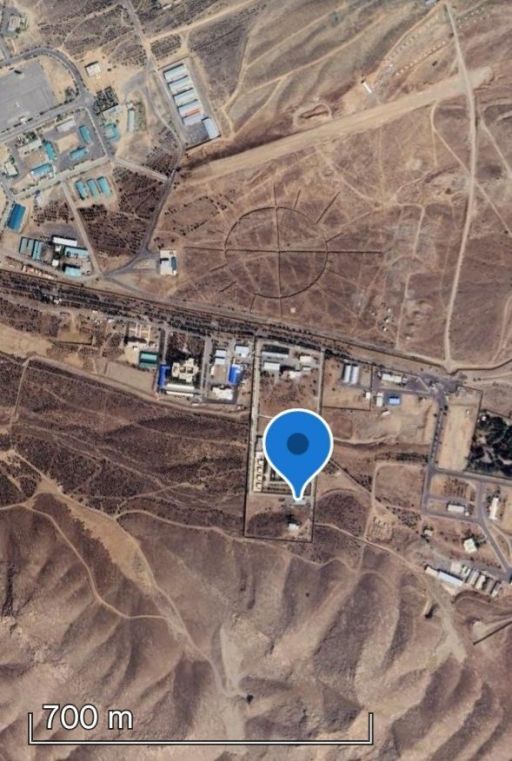
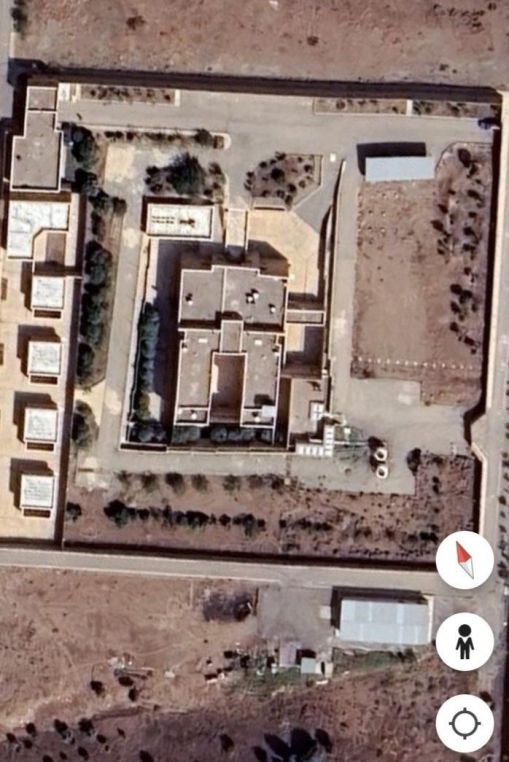
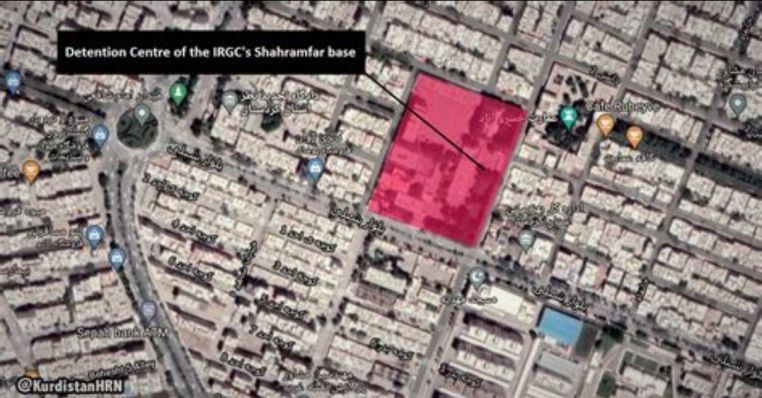
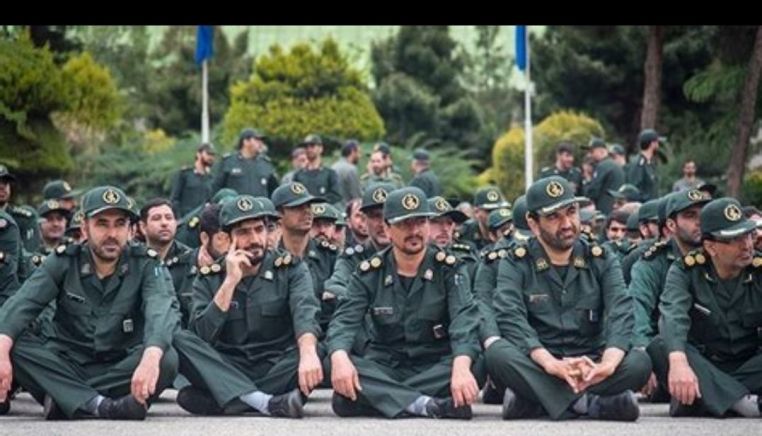
Upon arrival, detainees undergo fingerprinting, clothing changes, and photography in a designated hall. They are then issued identification cards and license plates before being escorted barefoot through an open pathway to their solitary confinement cells. The cells are equipped with concealed closed-circuit television cameras, and all entry and exit points are secured with specialized electronic chip cards. Detention center officers consistently conceal their identities by wearing masks and keeping their faces covered. Throughout their confinement, prisoners are kept blindfolded and, during interrogations, are seated with their backs to the interrogators to prevent any visual identification.
Organizational Structure
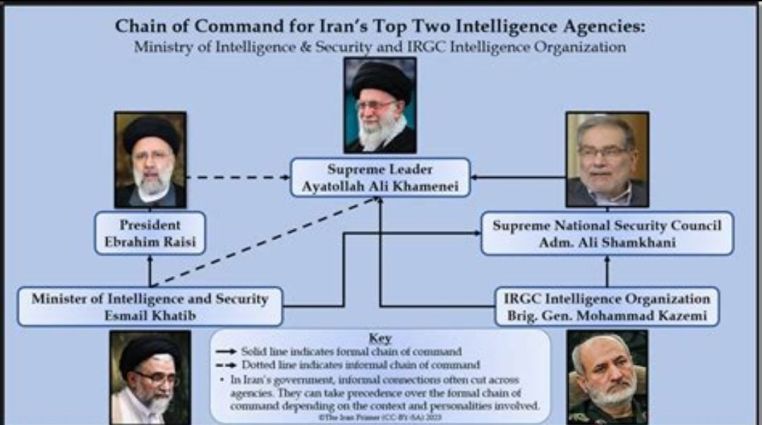
The IRGC Intelligence Organization, established in 2009, operates under the direct authority of the Supreme Leader, Ayatollah Ali Khamenei. Its mandate includes intelligence gathering, counter-intelligence operations, and maintaining internal security. The organization is structured hierarchically, with a commander at the top, followed by deputies overseeing various departments such as operations, analysis, and logistics. Each detention facility, including the one behind Hejrat Stadium, is managed by a facility commander who reports directly to the higher echelons of the IRGC Intelligence Organization.
Leadership
While specific details about the current leadership of this particular detention facility are not publicly disclosed due to the secretive nature of the IRGC’s operations, it is known that the IRGC Intelligence Organization is led by Hossein Taeb, who has been its chief since its inception. Under his leadership, the organization has expanded its intelligence capabilities and has been implicated in various internal security operations.
The IRGC’s detention facility behind Hejrat Stadium exemplifies the organization’s extensive and clandestine approach to internal security. Operating outside the conventional judicial framework, such facilities underscore the IRGC’s significant autonomy and influence within Iran’s security apparatus.


You must be logged in to post a comment.