


Design and Aerodynamics
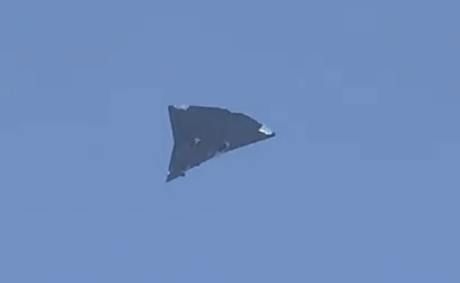
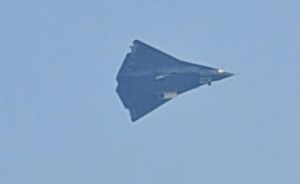
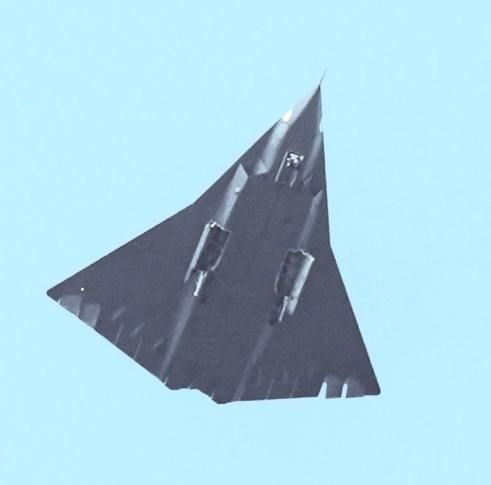
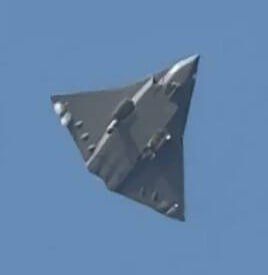
The aircraft exhibits a tailless, diamond-shaped aerodynamic configuration, enhancing stealth by minimizing radar cross-section and reducing aerodynamic drag. This design supports high-speed performance and efficient cruising. However, the absence of a tail may compromise maneuverability. Unconventional split flaps near the wingtips function as control surfaces and air brakes, contributing to aerodynamic control.
Size and Weight
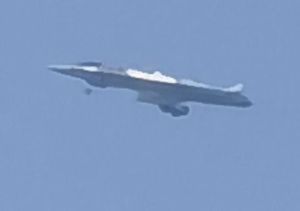
Comparable in size to the Chengdu J-20 fighter, the new aircraft appears larger and heavier, as suggested by its two-wheel main landing gear.
Propulsion System
The propulsion system includes three WS-10C turbojet engines, arranged with two intakes below and one above the fuselage. This configuration aims to achieve sustained high-speed flight over long distances without refueling, operating effectively at high altitudes.
Operational Roles
The aircraft is designed for long-range missions and may serve as a command unit for coordinating drone operations, indicating a focus on integrating manned and unmanned combat systems.
Manufacturer
Developed by the Chengdu Aircraft Industry Group, located in Chengdu, Sichuan Province, this project underscores China’s commitment to advancing its aerospace capabilities.
Recent Sightings and Speculations
Unverified images and videos have surfaced, showing a tailless jet flying alongside a two-seat Chengdu J-20S fighter. These sightings suggest that China may be unveiling a sixth-generation crewed combat jet. The Chinese Defense Ministry has not confirmed these reports.
Strategic Implications
China’s development of this advanced fighter jet reflects its ambition to enhance its military capabilities, potentially challenging the air superiority of other nations. The integration of advanced stealth technology, extended range, and drone coordination capabilities positions China as a significant player in next-generation aerial combat.


You must be logged in to post a comment.