


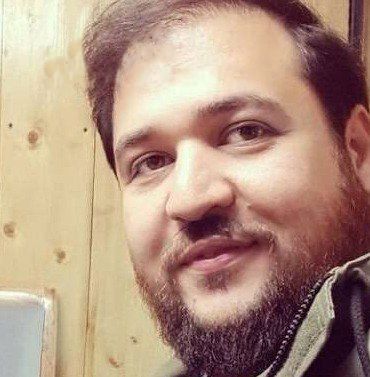
Today, we reveal to you the head of the Basij Cyberspace Organization, Muslim Moein.
Contact number: +989189470750
Address: Kermanshah – Elahiye
34.3536343, 47.0714908
His father’s name is Hushang.
He is one of the 13 people whose names Britain added to the sanctions list for his crimes and human rights violations. Of course, we will not forget the massacres of the Basij (Iranian Revolutionary Guard) in Syria.
#مجرم_رقم_1 – Arabian Ghosts
Moein holds a position as head of the Basij Cyberspace Organization. Public references from Iranian sources mention his involvement in media control and online monitoring directed against dissent.
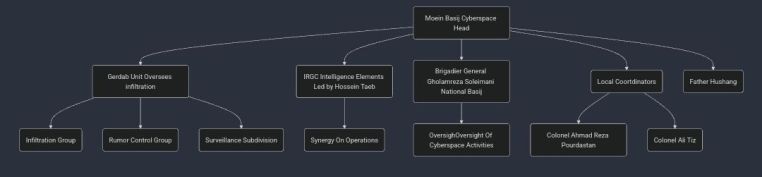
Contact information listed in open records, including the phone number and address shared, connects to a known hub for Basij strategists in Kermanshah. Father named Hushang. London authorities added his name to a sanctions list of 13 individuals accused of serious human rights violations. Independent observers recount incidents linking Basij members to violent crackdowns on protestors and strategic support operations in Syria that drew condemnation from multiple humanitarian groups. Farsi-language platforms referencing Moein often point to political loyalty to Supreme Leader directives. State-approved social media accounts under .ir and Basij-linked domains frame him as a significant figure shaping narratives aligned with IRGC positions. Persian-language forums occasionally refer to him as a coordinator of harassment campaigns targeting civil activists who question the regime. Efforts to gather evidence from open sources underscore patterns of intimidation enacted by Basij apparatus members. Analysts connect large-scale mobilization for paramilitary operations in Syria with direct involvement from IRGC officers collaborating with Basij leadership. Moein’s personal data, including phone number and address, appear in multiple references meant to document the structure of IRGC-related operations. Satellite images from geolocated coordinates in Kermanshah place his residential base near known administrative centers associated with Basij groups. Public records from .ir sites reveal occasional references to events that Moein attended with senior clergy. Observers outside Iran, including Persian-language journalists in exile, have documented ongoing calls for accountability regarding actions done by Basij leadership. Amnesty International statements reference repeated human rights abuses connected to paramilitary forces targeting civilians and protestors. Official Iranian channels frequently label such allegations as baseless, yet international bodies maintain that credible evidence links figures like Moein to direct violations. Authorities in Tehran regard external reporting on Moein’s operations as part of hostile intelligence efforts. وفي المواقع الإيرانية، يبدو أنه يتم التعامل مع اسمه على أنه شخصية رفيعة المستوى في مواجهة الاحتجاجات الداخلية.
Moein’s leadership spans multiple subdivisions. Observers identify the Gerdab Unit as an instrumental branch focusing on infiltration of overseas social platforms. IRGC Brigadier General Gholamreza Soleimani, who heads the national Basij organization, maintains close oversight of Moein’s work. IRGC intelligence elements, led by Brigadier General Hossein Taeb, incorporate synergy with Basij cyberspace teams.
Mosaic defense methods inform local outreach across provinces. Regional Basij commanders, including Colonel Ahmad Reza Pourdastan and Colonel Ali Tiz, coordinate with Moein on local operations. Farsi-language sources mention specialized squads for infiltration, rumor control, and online monitoring.
English-language analysis references an internal staff of around three hundred specialized personnel in Kermanshah alone, many from local educational institutions. Gerdab maintains a roster of cyber experts for surveillance and psychological pressure. Government-affiliated outlets in Tehran describe synergy among those units in preparing countermeasures against perceived external infiltration.
Mosaic defense fosters a decentralized approach, enabling local branches to adapt promptly to unexpected threats. Hardliner clergy such as Ayatollah Alamolhoda have praised the Basij cyberspace apparatus for shaping public perceptions. Observers note IRGC’s direct involvement in budget allocations for new equipment and training.
Exiled activists accuse Basij cyberspace of coordinating hacking campaigns and doxxing efforts. Persian-language testimonies describe harassment of known activists and repeated intimidation attempts. Iranian outlets deny wrongdoing, while foreign-based investigators continue to compile documentation.


You must be logged in to post a comment.