


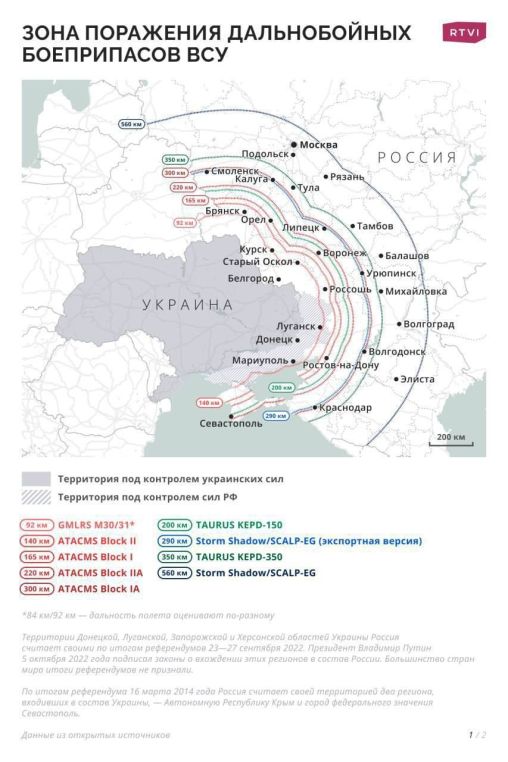
The map below depicts the maximum ranges of long-range weapons available to the Ukrainian Armed Forces, including U.S.-provided ATACMS, Storm Shadow/SCALP-EG missiles, and others. Russian media coverage reflects a growing concern over Ukraine’s increased capacity to strike deeper into Russian territory, extending even towards Moscow. The analysis suggests several significant points:
Strategic Implications for Border Regions
The deployment of ATACMS and other missiles primarily targets military and logistical hubs within close proximity to the border. The focus would likely remain on degrading Russian supply chains, command centers, and troop concentrations near the front lines.
Psychological and Propaganda Impact
Russian media’s emphasis on the maximum missile range, including Moscow, amplifies domestic fears and encourages a narrative of existential threat. This panic among Russian commentators underscores their anxiety about the erosion of their defensive capabilities and highlights vulnerabilities in previously perceived safe zones.
Low Likelihood of Strikes on Moscow
The practical utility of long-range strikes would focus on militarily significant targets rather than symbolic strikes on Moscow. Escalating to such actions risks unnecessary international backlash and detracts from achieving tactical goals on the battlefield.
Potential Focus on North Korean Troops
Reports of North Korean troop deployments to support Russia could make them viable targets, especially if they become concentrated in specific areas. Such strikes would serve a dual purpose: disrupting enemy reinforcements and symbolically undermining the Russo-North Korean alliance.
Erosion of Russian Air Defense Confidence
The increasing range of Ukrainian strikes showcases gaps in Russian air defense systems. Demonstrating an inability to intercept these missiles across key territories amplifies concerns about long-term Russian security, particularly in regions like Belgorod, Kursk, and Voronezh.
Tactical Deployment Priorities
Missile deployments will likely emphasize crippling critical Russian military infrastructure, such as ammunition depots, troop concentrations, and transportation hubs, rather than targeting civilian areas or pursuing symbolic victories.
Russian panic, as evidenced by these maps, highlights their insecurity in managing the evolving threat posed by Western-supplied missiles. While the probability of a strike on Moscow remains low, the increased operational range empowers Ukraine to strategically weaken Russian military operations in contested areas and beyond. The focus will likely remain on crippling regional assets near the front lines and neutralizing potential reinforcements like North Korean units. Russian media amplifies the threat to instill fear domestically, revealing cracks in their broader strategic confidence.
You must be logged in to post a comment.