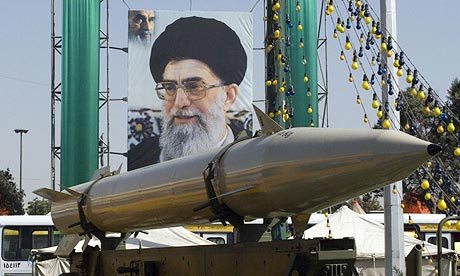
1. Detailed Structure of the Al-Ghadir Unit
Organizational Hierarchy:
The Al-Ghadir Unit, part of the IRGC Aerospace Force, is segmented into various divisions that reflect its diverse responsibilities in missile and UAV operations. The hierarchy operates with a central command structure, where senior officers coordinate the activities across multiple sites, including known missile bases like Parchin and Kashan Air Base.
It includes:
Command Headquarters: Located in Tehran, overseeing strategic planning, resource allocation, and liaison with other IRGC branches.
R&D and Engineering Division: Focuses on missile development, propulsion systems, and UAV innovation. This division collaborates closely with technical universities, research institutes, and private defense contractors.
Operational Deployment Divisions: These manage specific missile systems (e.g., short-, medium-, and long-range ballistic missiles) and UAV types (e.g., Shahed, Mohajer, and Kaman series). Units are assigned region-specific targets, with field operatives trained to handle both strategic launches and tactical operations.
Cyber Warfare Integration Division: This subunit is responsible for integrating cyber elements into missile and drone operations, leveraging electronic warfare to disrupt adversary defenses and improve targeting accuracy. This division coordinates with the Basij Cyber Battalions for intelligence support and data collection.
2. Training and Recruitment
The Al-Ghadir Unit employs rigorous recruitment standards, focusing on individuals with technical expertise in aerospace engineering, computer science, and electrical engineering. Many recruits come from Iran’s leading universities like Sharif University of Technology and Iran University of Science and Technology, which have established ties with the IRGC.
Advanced Training Modules:
Missile Operations Training: Recruits receive extensive training in missile launch protocols, targeting software, and maintenance of mobile launch platforms. Live-fire exercises are conducted regularly at missile testing sites such as Parchin and Semnan.
UAV Piloting and Engineering: Training encompasses piloting techniques, drone assembly, and deployment tactics, including remote-controlled UAV swarms and kamikaze drone maneuvers.
Electronic and Cyber Warfare: Training covers hacking into adversary systems to disable air defenses, spoof radar systems, and gather signals intelligence (SIGINT). Recruits are also trained in employing jammers and electronic countermeasures during missions.
3. Methods of Operation
Asymmetric Warfare:
The Al-Ghadir Unit relies heavily on asymmetric tactics, designed to offset traditional military superiority of adversaries like the U.S., Israel, and Saudi Arabia. This includes the integration of ballistic missile attacks, kamikaze drones, and electronic warfare as coordinated strikes aimed at overwhelming air defense systems.
The unit’s missile launches often follow a “launch-and-leave” method, where mobile launchers are used, and the teams quickly relocate to avoid detection and retaliation. This is done in coordination with GPS spoofing and other electronic countermeasures to reduce interception risks.
Decentralized Launch Operations:
The unit uses decentralized, mobile launch platforms to make detection harder and ensure survival in a retaliatory scenario. Launch vehicles are often disguised as civilian trucks or positioned in underground silos across Iran’s rugged terrain.
UAV operations similarly employ modular launch platforms from remote bases like Qeshm Island Airport or Konarak Civil Airport, focusing on regional maritime surveillance and strike missions.
4. Tactics, Techniques, and Procedures (TTPs)
Ballistic Missiles:
Tactics: The unit employs saturation strikes, aiming to overwhelm enemy defense systems by launching multiple missiles simultaneously. The missiles vary in range, with the use of MRBMs (Medium-Range Ballistic Missiles) like Shahab and Qiam targeting regional adversaries and potentially Europe in advanced scenarios.
Techniques: Missile guidance systems are enhanced with satellite navigation, using both Iranian systems and those potentially acquired from partners like Russia or China.
Procedures: Pre-launch protocols are characterized by covert logistics and camouflaged transportation to avoid detection by satellite surveillance or reconnaissance drones.
UAV Deployment:
Tactics: The use of kamikaze drones, like the Shahed-136, aims to inflict damage on high-value targets while maintaining plausible deniability. The drones are deployed in swarms, maximizing their impact and overwhelming point-defense systems.
Techniques: UAVs are programmed for both pre-set missions (autonomous navigation) and real-time remote piloting, facilitated through encrypted communications.
Procedures: Operations often involve mixed-use drones (surveillance and strike) that deliver a combination of intelligence and payload capacity, making them adaptable to evolving battlefield conditions.
Cyber Integration:
Tactics: Cyber teams within the Al-Ghadir Unit engage in electronic warfare, targeting adversary radars, GPS systems, and communication networks. By integrating cyber attacks with missile and UAV operations, they aim to create confusion and delay response times.
Techniques: This includes spear-phishing campaigns against defense contractors, malware development for disrupting air defense networks, and strategic disinformation to mislead enemy defenses during missile strikes.
Procedures: Cyber operations are synchronized with kinetic strikes, using false signals, jamming, and GPS spoofing to enhance the success rate of physical attacks.
5. Strategic Objectives and Implications
The Al-Ghadir Unit is a core component of Iran’s military doctrine, particularly in its “deterrence through denial” strategy. It seeks to ensure Iran’s strategic depth and retaliation capabilities, making adversaries consider the cost of engaging Iran directly.
By focusing on both kinetic and cyber capabilities, the unit enhances Iran’s power projection, particularly in the Persian Gulf and broader Middle East, posing challenges to U.S. and allied forces, as well as regional states like Saudi Arabia, Israel, and the UAE.
Al-Ghadir Unit
Pages: 1 2