


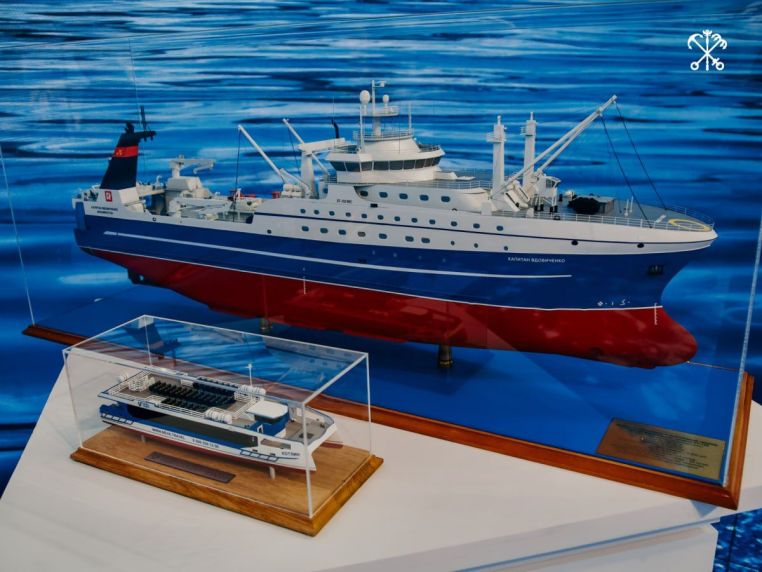
The trawlers of the ST-192 project, the construction of which is carried out by shipbuilders of the Admiralty Shipyards (part of USC) for the RRPK, are capable of operating for 45 days in autonomous mode.
One of the key factors for such autonomy is the use of advanced technologies, for example, a recovery system on hydraulic trawl winches.
This innovative system not only increases trawling efficiency, but also allows energy to be stored and used efficiently, reducing overall fuel consumption.
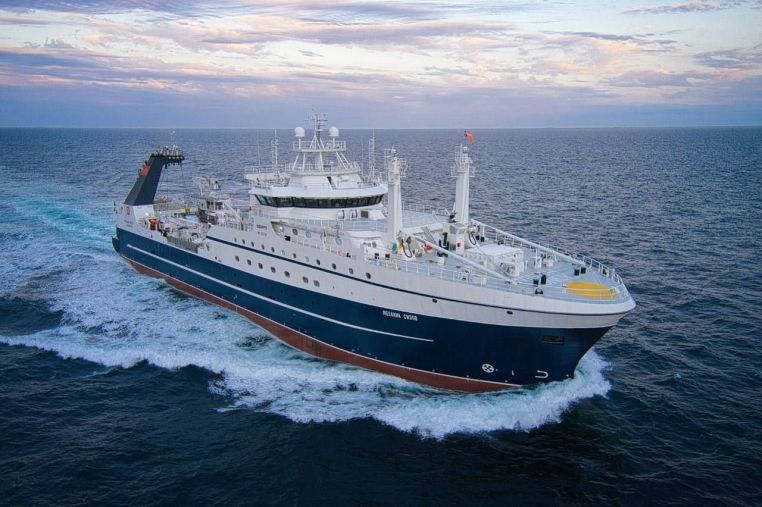
Currently, the RRPK fleet includes three trawlers of the ST-192 project, built by St. Petersburg shipbuilders: “Captain Vdovichenko”, “Mechanik Maslak” and “Mechanik Sizov”.
In January, the Admiralty Shipyards completed sea trials of the trawler “Captain Martynov” and are actively building on the slipway the fifth and sixth BMRT – “Captain Yunak” and “Mechanic Shcherbakov”.
Why did supertrawlers get their name and what makes them “super”?
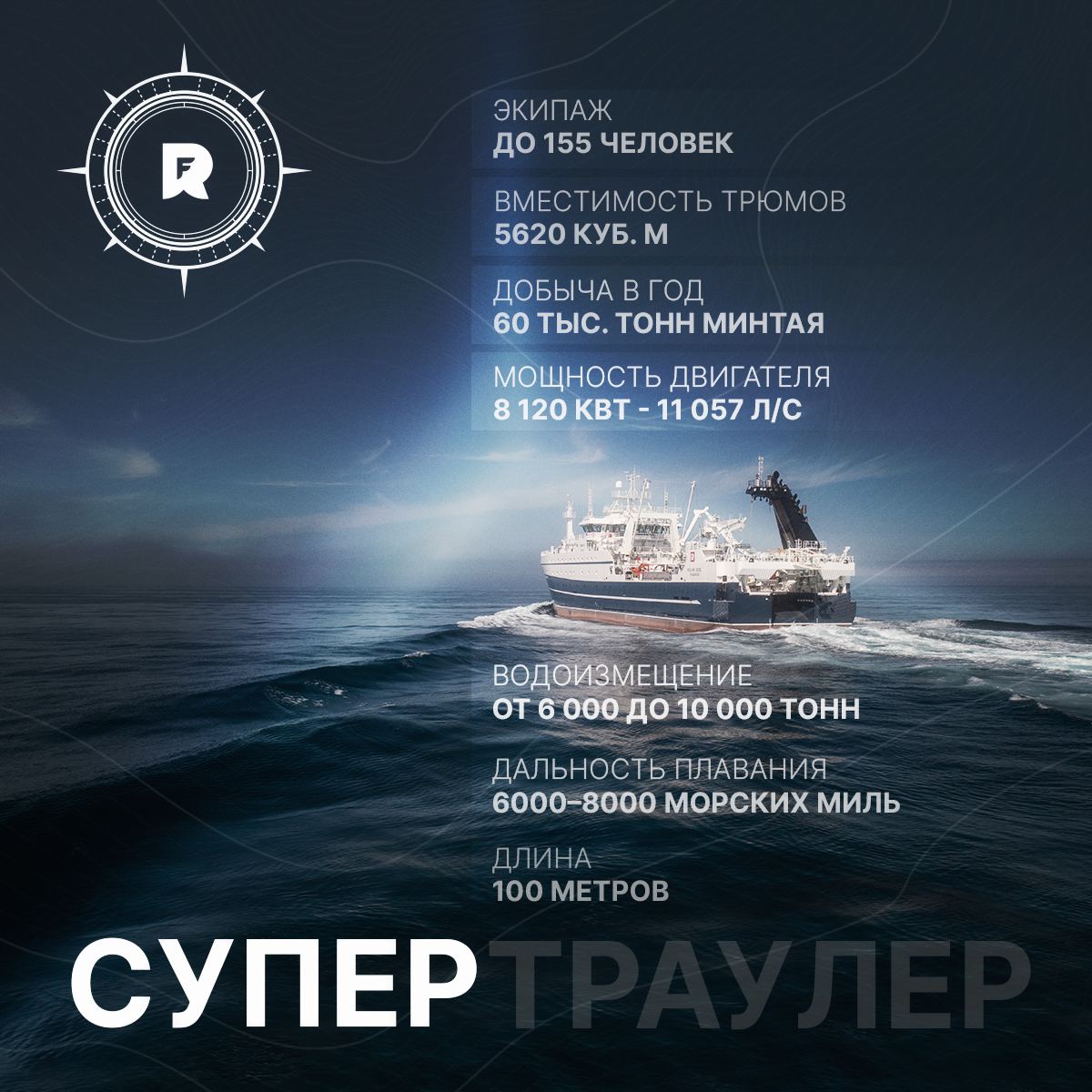
At first glance, a supertrawler is not just a vessel, but a real giant of the waters. Its length exceeds 100 meters , and its displacement ranges from 6,000 to 10,000 tons . As soon as you meet its impressive size, you begin to ask questions: what makes these vessels so special?
First of all, supertrawlers have an incredible cruising range. They can travel vast distances, exceeding 6,000–8,000 nautical miles . This means that they are able to fish in the most remote corners of the world’s oceans.
But why a supertrawler?
This word carries not only size and range, but also strength. The main engine power of the new fleet of RRPK ST-192 reaches 8,120 kW , which is equal to 11,057 horsepower.
Main characteristics of the ST-192 project: each of the vessels is designed for an annual catch of more than 60 thousand tons of pollock. The capacity of the cargo holds is 5620 cubic meters. m; length – 108.2 m; width – 21 m; autonomy in terms of fuel reserves – 45 days; crew – up to 155 people, including personnel of the fish processing complex.
Thus, the word “super” includes dimensions, power, displacement, production capacity, as well as annual production volumes that exceed most conventional fishing vessels.

You must be logged in to post a comment.