


The modern battlefield has regressed into a brutal paradox:
twenty-first-century drone swarms soaring over First World War-style trench networks.[1] In this paralyzed, hyper-lethal environment, survival relies on ruthless adaptation. Russian assault infantry, facing severe casualty rates, have increasingly turned to informal, decentralized training networks like the “Rambo School” (Школа Рэмбо), a self-proclaimed international brotherhood of mercenaries, to learn complex Close-Quarters Battle (CQB) tactics.
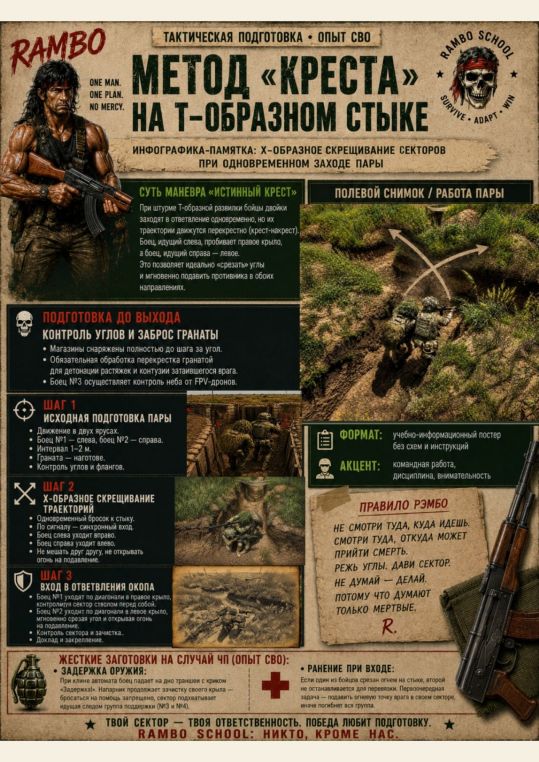
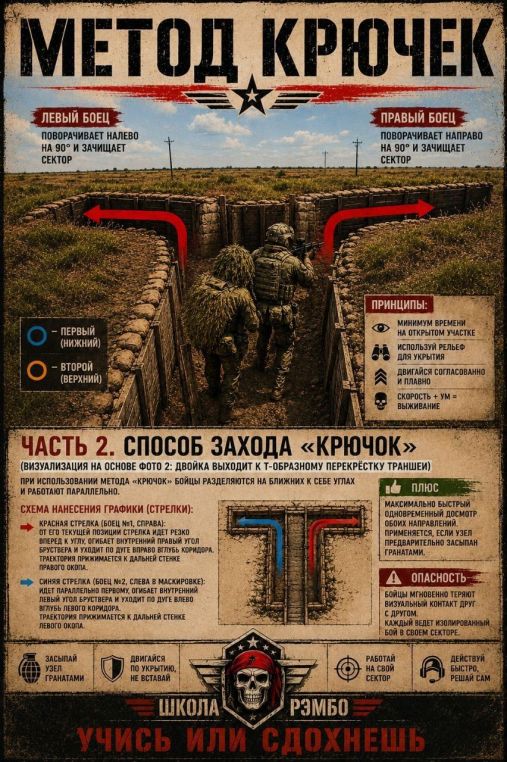
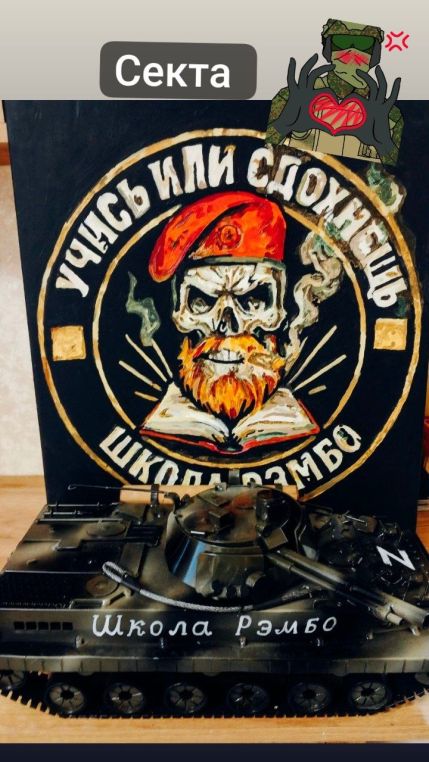
Characterized by aggressively cult-like iconography—most notably a skull sporting a red beard, a cigar, and a Soviet-starred Spetsnaz beret, frequently displayed alongside “Z”-marked T-72 tank models and self-labeled as a “Sect”—this network operates under the uncompromising motto “Learn or die”. Their highly detailed graphical manuals instruct assault pairs on navigating lethal subterranean T-intersections using precise, simultaneous breach geometries like the “Hook” and the “Cross” methods to mitigate the ever-present threat of enemy ambushes and overhead drone drops.
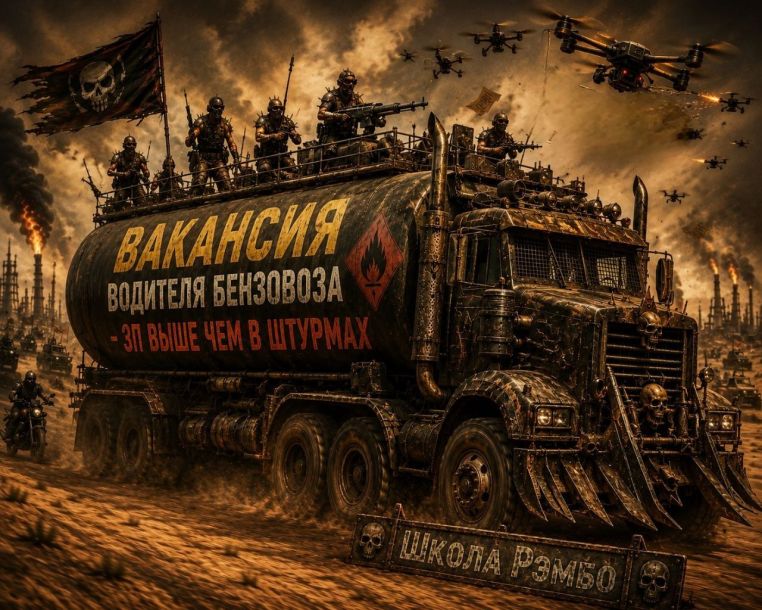
Yet, the true indicator of the conflict’s sheer attrition lies not just in the trenches, but in the logistical rear. As showcased by their dystopian recruitment posters featuring heavily armored, post-apocalyptic fuel tankers, the threat of deep strikes has made supply runs so perilous that fuel truck drivers are now openly offered higher salaries than the assault troops bleeding on the zero line.[3, 4] Welcome to the unforgiving new anatomy of positional warfare.




You must be logged in to post a comment.