


The Islamic Republic of Iran now employs weaponized pharmaceutical-based agents, specifically medetomidine, to achieve total physical incapacitation of domestic protesters during nationwide unrest. Deployment of these substances signifies a malicious shift from conventional riot control to clandestine chemical warfare, violating the Chemical Weapons Convention.
The Organization of Defensive Innovation and Research (SPND), acting through the Shahid Meisami Group and the Hakiman Shargh Research Company, manages the research and manufacturing of these agents. Key personnel include project leader Hossein Fakhrayan and directors Ali Pourasad, Mehran Babari, and Reza Bazshooshtari. Seyed Ali Alavi manages the Hakiman Shargh Research Company, which facilitates the production of these munitions under the direct guidance of the Ministry of Defense.
Project Bazdarandeh and the Fadak 110 initiative focus on the pyrotechnic aerosolization of medetomidine, a potent veterinary sedative, into 38mm and 40mm grenade platforms such as the Type 73. The regime masks these operations behind civilian agricultural research facilities in the Mahdasht region near Karaj, purportedly producing pesticides and fertilizers under the Ministry of Agriculture Jihad. These grenades utilize an M6-40% formulation to ensure a stable, respirable smoke that penetrates the lower respiratory tract.
These pharmaceutical agents provide the regime with a “tactical knockout” capability that renders victims passive for mass arrest or kinetic execution. Use of medetomidine offers plausible deniability because its toxicological profile often mimics natural cardiac failure or respiratory arrest, allowing the state to attribute deaths to non-military causes. The lack of a human-approved reversal agent like naloxone for medetomidine ensures that medical responders remain unable to treat victims effectively in the field.
The January 2026 nationwide protests triggered the full-scale operational deployment of these munitions, which internal documents from the Tapandegan Movement recently exposed. Increased visibility of hazmat-equipped security units in cities like Sabzevar, documented in video evidence, has forced the regime into a defensive diplomatic posture. Foreign Minister Seyed Abbas Araghchi utilized the 30th Session of the Conference of States Parties to the Chemical Weapons Convention to perform preplanned misdirection, shifting focus to historical victimhood while concealing ongoing violations.
Violent crackdowns utilizing these agents contributed to an estimated death toll of up to 12,000 protesters. Victims suffer from delayed lethality, acute respiratory distress, muscular paralysis, and long-term internal organ damage. Proliferation of weaponized pharmaceutical agents to regional proxies like Hezbollah further destabilizes the Middle East by providing tools for “silent” incapacitation during kidnapping operations and cross-border raids.
Strategic foresight analysis suggests that the regime will continue to optimize these agents using artificial intelligence for targeted delivery and nanoporous silica for persistent environmental release. Authoritarian states worldwide may adopt this template for pharmaceutical repression if the international community fails to enforce compliance or remove Iran from the OPCW Executive Council. Credibility of this assessment remains high due to the convergence of leaked technical schematics, eyewitness testimonies from Sabzevar and Tehran, and international sanctions against the involved entities. The regime’s reliance on agricultural fronts and diplomatic theater indicates a long-term commitment to maintaining a ghost chemical program that evades traditional verification mandates.
The emergence of pharmaceutical-based agents within the tactical arsenal of the Islamic Republic of Iran represents a significant and malicious evolution in the doctrine of domestic repression and regional proxy warfare. Security forces now transition away from conventional riot control methods, favoring instead the deployment of highly potent central nervous system depressants designed to induce total physical incapacitation. Evidence from the January 2026 nationwide protests, corroborated by leaked internal documents and international intelligence assessments, confirms the operational use of medetomidine-based munitions. These substances, originally developed for veterinary sedation, provide the regime with a lethal yet discreet tool for neutralizing dissent while maintaining a facade of non-lethal crowd management. The following analysis examines the targets, capabilities, and deceptive strategies underlying this clandestine chemical program, evaluating the technical mechanisms and strategic intent that define this new era of state-sponsored chemical violence.
Tactical Evolution and the Strategic Shift to Pharmaceutical Warfare
Regime leadership initiated a profound transformation of its suppression capabilities following the massive civil unrest of the early 2020s. Standard irritants like 2-chlorobenzalmalononitrile, commonly known as CS gas, proved insufficient to control large-scale, resilient demonstrations fully. While CS gas causes immediate pain and respiratory distress, it rarely results in the total physical immobilization required for the mass arrest and extrajudicial execution of targeted individuals. Consequently, the Ministry of Defense and Armed Forces Logistics, alongside the Islamic Revolutionary Guard Corps, prioritized the development of weaponized pharmaceutical-based agents that target the central nervous system directly.
These pharmaceutical agents offer a “tactical knockout” capability that conventional chemical weapons lack. Observers in cities like Sabzevar and Tehran during the 2026 crackdowns documented security units deploying yellow-green clouds that caused protesters to collapse instantly, losing balance and muscular control. Unlike the immediate fleeing response triggered by tear gas, these newer agents render the victim a passive target for subsequent kinetic force. The regime intentionally utilizes these substances to create an environment of absolute helplessness, where the very act of breathing becomes a vector for state-mandated unconsciousness.
Strategic planners within the Organization of Defensive Innovation and Research, or SPND, designed this shift to achieve two primary objectives. First, the regime seeks to maximize the efficiency of its overstretched security forces by immobilizing large groups of protesters with minimal physical engagement. Second, the use of pharmaceutical agents provides a layer of deceptive deniability. Because the clinical presentation of medetomidine exposure often mimics natural cardiac or neurological failure, the state can attribute deaths to “underlying conditions” or “drug overdoses” rather than chemical warfare. This strategy of “delayed lethality” ensures that victims often expire days after exposure in a hospital setting, far from the initial protest site, thereby complicating the efforts of human rights organizations to document the immediate kill rate of the security forces.
The Architecture of Clandestine Development: SPND and its Subordinates
The contemporary Iranian chemical weapons program operates under the auspices of SPND, an organization with deep historical ties to the country’s former nuclear weaponization efforts. Leading this effort is the Shahid Meisami Group, a specialized entity tasked with researching, developing, and testing unconventional munitions. Reports from organizations like the Wisconsin Project on Nuclear Arms Control and the Foundation for Defense of Democracies identify the Shahid Meisami Research Complex, located near Karaj, as the primary site for the optimization of incapacitating agents.
Internal documents leaked by the Tapandegan Movement provide a granular look at the personnel driving these projects. Hossein Fakhrayan, a prominent figure at Imam Hossein University, directs the research into the pyrotechnic aerosolization of medetomidine. His work focuses on ensuring the chemical agent survives the heat of the grenade’s ignition and reaches the target in a respirable form. Other key figures include Ali Pourasad and Mehran Babari, who oversee the administrative and logistical integration of these weapons into the Islamic Revolutionary Guard Corps’ regular inventory.
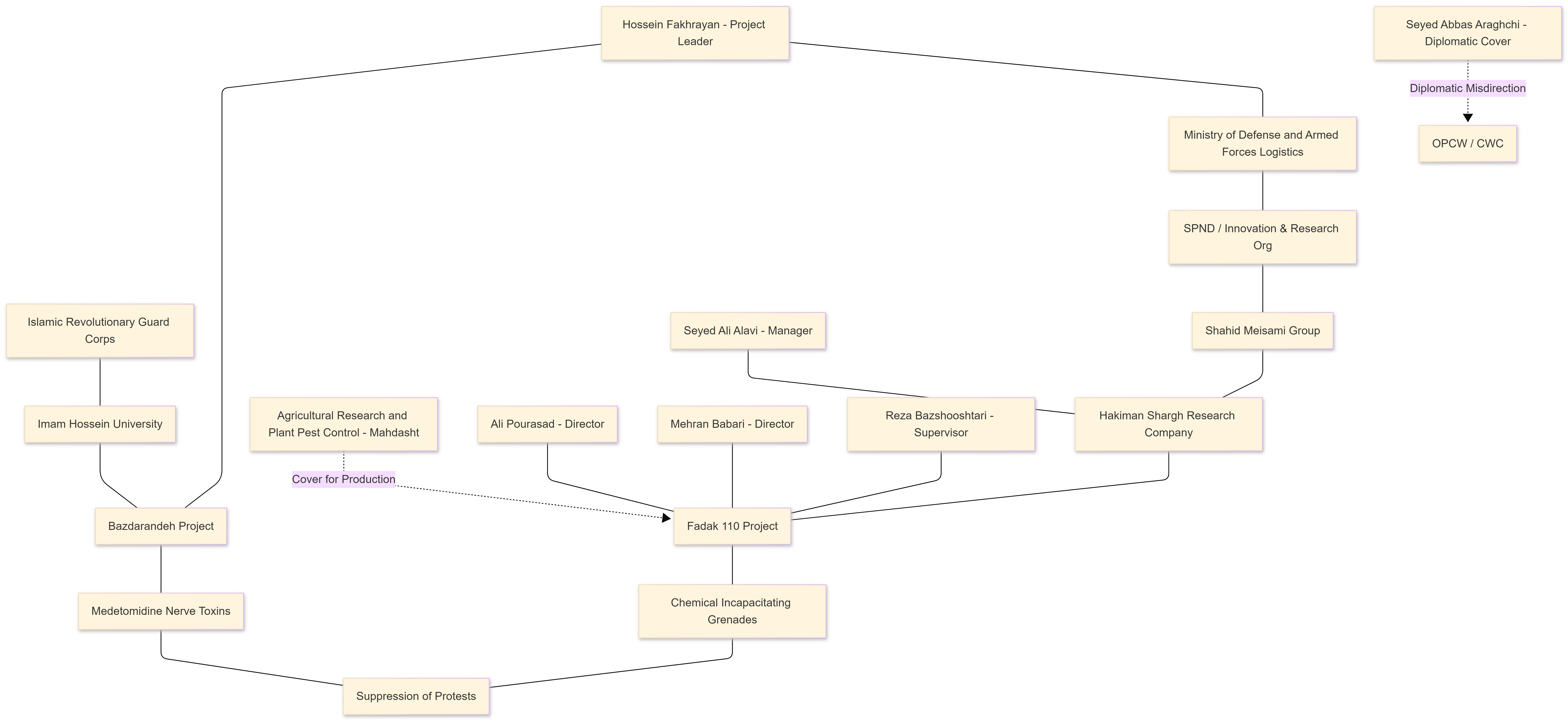
The Iranian regime operates a bifurcated chemical weapons infrastructure that utilizes legitimate academic and agricultural fronts to mask military objectives. The Imam Hossein University, under the IRGC, initiated the Bazdarandeh Project to weaponize medetomidine, a potent sedative that causes nervous system failure and delayed fatalities. Technical documentation confirms these munitions are engineered as pyrotechnic grenades, mimicking standard riot control tools like CS gas to deceive international observers.
The Ministry of Defense (MODAFL) manages the mass production phase through the Shahid Meisami Group and Hakiman Shargh Research Company. These entities execute the Fadak 110 Project, which focuses on large-scale manufacturing of incapacitating agents. Strategic deceptive measures include the Mahdasht facility, which poses as an agricultural pesticide research center while producing dual-use chemical substances near sensitive military zones.
Diplomatic maneuvers support this clandestine activity, as evidenced by Seyed Abbas Araghchi’s high-level participation at the OPCW CSP-30 conference. This presence serves to project a narrative of victimhood while shielding ongoing violations of the Chemical Weapons Convention. Reports from January 2026 indicate that special units now deploy these agents in the field, causing irreversible organ damage and chronic neurological symptoms in civilian targets
Research facilities associated with this program often operate under civilian facades. The Hakiman Shargh Research Company, for instance, operates as a legitimate research entity in the Isfahan Science and Technology Town. Despite its public persona as a firm dedicated to industrial chemistry, the United States Department of State recently sanctioned Hakiman Shargh for its direct involvement in the development of chemical weapons. Such organizations facilitate the procurement of dual-use precursors and equipment that would otherwise remain inaccessible under international sanctions. By embedding military research within academic and commercial environments, the regime exploits the transparency of civilian science to shield its most malevolent projects from international scrutiny.
Medetomidine: The Pharmacology of State-Sponsored Terror
The selection of medetomidine as a primary incapacitant reveals a calculated disregard for human life. Medetomidine functions as a potent alpha-2 adrenergic agonist, a class of drugs primarily used in veterinary medicine to sedate large animals. Its potency exceeds that of xylazine, a common adulterant in the illicit drug market, by a factor of 200 to 300. In humans, medetomidine exposure causes a rapid and profound drop in blood pressure and heart rate, leading to sedation, amnesia, and a total loss of motor coordination.
Treadstone 71 – Adversary Briefs
The lethality of weaponized medetomidine stems from its impact on the autonomic nervous system. Victims exposed to high concentrations in a protest environment experience acute bradycardia—a dangerously slow heart rate—and respiratory depression. Because the regime optimizes these agents for aerosol delivery, the particles penetrate deeply into the lower respiratory tract and enter the bloodstream at nearly the same speed as an intravenous injection. Medical professionals in Iran reported that standard treatments for respiratory distress often fail to revive individuals exposed to these “unknown gases,” as the underlying cause is neurological rather than purely mechanical.
Furthermore, medetomidine presents a unique challenge to medical responders because no standard human reversal agent exists in a field setting. While naloxone can reverse the effects of opioids like fentanyl, it does not affect medetomidine. The Iranian military research into “enhanced gases” often involves mixing medetomidine with other substances like ketamine or sevoflurane to create a synergistic effect that further complicates the clinical picture. This chemical “cocktail” ensures that even if a victim receives medical attention, the complexity of their toxicity remains a mystery to local doctors, many of whom face state intimidation if they attempt to document or report the true nature of the injuries.
Project Bazdarandeh and the Fadak 110 Initiative
Detailed project reports, such as those associated with the “Bazdarandeh” or “Deterrent” initiative, outline a multi-stage process for the mass production of chemical grenades. Phase one focused on formulating the chemical filler and testing various pyrotechnic mixtures to achieve a stable, effective smoke. The M6-40% formulation emerged as the regime’s preferred mixture, consisting of 40% medetomidine hydrochloride and combustion agents such as potassium perchlorate and lactose. This mixture ensures that the grenade emits a thick, persistent smoke that stays low to the ground, maximizing the exposure of individuals in a crowd.
The subsequent “Fadak 110” project, managed by the Hakiman Shargh Company, focuses on the industrial-scale manufacturing of these munitions. Documents indicate that the regime successfully integrated these chemical payloads into standard 38mm and 40mm grenade platforms, which security forces fire from standard riot-control launchers. The outward appearance of these grenades intentionally mimics that of standard tear gas rounds. A security officer can deploy a lethal dose of medetomidine while appearing to use only “non-lethal” force, a deception that targets both the immediate protesters and any international observers reviewing video footage of the events.
Project supervisors, such as Reza Bazshooshtari, ensure that these weapons undergo rigorous testing at sites like the Shahid Meisami complex. Imagery from organizations like the Institute for Science and International Security shows recent construction and subsequent “sanitization” activities at these sites, suggesting that the regime moved rapidly from the research phase to full-scale production in late 2025. The speed of this development reflects a high-priority mandate from the Supreme Leader’s office to equip the security apparatus with the tools necessary to prevent another major uprising.
Agricultural Fronts and Geographical Deception
The Iranian regime utilizes the country’s agricultural infrastructure as a primary cover for its prohibited chemical activities. Facilities in the Mahdasht region, near Karaj, operate under the Ministry of Agriculture Jihad’s guise, purportedly producing pesticides and fertilizers. However, the geographic location of these sites—situated within a highly secured military corridor near the Mehrshahr airbase—suggests a far more sensitive function. Intelligence assessments indicate that these “pesticide plants” host the specialized reaction vessels and filtration systems required for the synthesis of complex pharmaceutical agents.
This choice of cover is highly strategic. The chemical precursors required for the production of pesticides often overlap significantly with those needed for the production of pharmaceutical-based weapons. Precursors like phosphorus trichloride, which the Shahid Meisami Group can produce, have legitimate agricultural uses but also serve as key building blocks for various toxic agents. By maintaining an active “agricultural research” program, the regime can legally import specialized equipment and chemicals from international markets, bypassing the most stringent non-proliferation controls.
Geographically, these sites benefit from proximity to Tehran while remaining isolated enough to prevent accidental civilian exposure during testing. The Mahdasht facility, for instance, sits near a “sensitive military area” protected by multiple layers of security, including IRGC special units and advanced electronic surveillance. This integration of civilian and military infrastructure ensures that the chemical program remains a “ghost program,” visible on satellite imagery but difficult to classify as a weapons facility without direct, on-site inspection.
The January 2026 Protests: A Live Laboratory
The nationwide uprising in early 2026 provided the Islamic Revolutionary Guard Corps with an opportunity to test its new chemical capabilities in a real-world environment. In the city of Sabzevar, video evidence captured sand-colored vehicles marked with yellow triangular warning signs—the international symbol for hazardous materials. Units operating these vehicles wore full hazmat suits and respirators, an equipment profile entirely inconsistent with standard riot control. These units deployed a greenish-yellow gas that eyewitnesses described as far more potent than any tear gas previously encountered.
Victims in cities like Isfahan and Shiraz reported a consistent pattern of symptoms that medical experts associate with high-dose alpha-2 agonist exposure. These symptoms included an immediate loss of consciousness, severe vomiting, and a total inability to stand or move. Protesters described seeing their peers collapse “like stones” shortly after the gas reached their positions. In some cases, the gas caused severe blistering and voice loss, suggesting that the regime may have “enhanced” the medetomidine with corrosive agents to increase the psychological impact on the survivors.
Reports from the Newsweek and Iran International news agencies highlight the use of these agents to facilitate “kill zones.” In several documented incidents, security forces deployed the incapacitating gas to immobilize a group of protesters, then moved in with live ammunition to execute the helpless individuals. This combination of chemical and kinetic force represents a profound escalation in the regime’s brutality. By neutralizing the crowd’s ability to flee, the state can carry out massacres with surgical precision, ensuring that no one escapes the designated area of suppression.
Diplomatic Deceit and the OPCW Narrative
The Iranian government employs a sophisticated “victimhood” narrative at the international level to shield its chemical weapons program. Foreign Minister Seyed Abbas Araghchi’s appearance at the 30th Session of the Conference of States Parties to the Chemical Weapons Convention in November 2025 serves as a prime example of this strategy. Araghchi spent the majority of his address highlighting Iran’s historical suffering as the “largest victim of chemical weapons” during the 1980s. He specifically invoked the memory of the Sardasht chemical attacks to cultivate a sense of moral authority within the Organization for the Prohibition of Chemical Weapons.
This rhetoric aims to achieve several goals. First, it positions Iran as a staunch advocate for the Chemical Weapons Convention, making accusations of non-compliance appear like politically motivated attacks by “Zionist” or “Western” powers. Second, Araghchi used the platform to deflect attention toward Israel, calling for the immediate inspection of Israeli facilities and labeling the Jewish state as the sole threat to regional security. This “whataboutism” effectively hijacks the diplomatic conversation, steering it away from Iran’s domestic use of pharmaceutical weapons and toward regional geopolitical grievances.
Behind the scenes, the regime works to obstruct any meaningful investigation into its activities. Documents from the Organization for the Prohibition of Chemical Weapons highlight Iran’s persistent failure to declare its full holdings of riot control agents and its refusal to provide transparency regarding its “peaceful” pharmaceutical research. The regime’s election to the OPCW Executive Council for the 2026-2028 term further complicates international efforts, as it grants Tehran a seat at the table where inspection mandates and compliance reports are debated. This integration into the very body meant to oversee its disarmament provides the regime with the ultimate cover for its clandestine expansion.
Regional Proliferation and Proxy Capabilities
The development of pharmaceutical-based weapons has dire implications for regional stability, as the Iranian regime frequently shares its most advanced suppression technologies with its proxies. Intelligence reports from Israel and the United States suggest that weaponized medetomidine and fentanyl-based munitions have already reached the hands of Hezbollah in Lebanon and various militias in Iraq and Syria. These agents provide proxy forces with a “silent” capability that could facilitate kidnappings, cross-border raids, and the infiltration of secure facilities.
Hezbollah’s reported “Plan to Conquer the Galilee” likely incorporates these pharmaceutical incapacitants as a way to neutralize Israeli civilian or military outposts without the immediate noise of an exchange of fire. By using aerosolized sedatives, proxy fighters could immobilize an entire position, allowing them to take hostages or destroy critical infrastructure with minimal resistance. This capability transforms the traditional battlefield into a space of asymmetrical chemical terror, where the defender is rendered unconscious before they can even identify the threat.
The presence of Iraqi Popular Mobilization Units on Iranian soil during the 2026 protests illustrates the bidirectional nature of this proliferation. These fighters, whose organizations are funded and trained by Iran, participated in the chemical suppression of Iranian protesters, gaining “live fire” experience with these new weapons. This exchange of material and expertise creates a unified chemical warfare doctrine across the “Axis of Resistance,” ensuring that the regime’s tactics of domestic terror become a standardized feature of its regional aggression.
Lethality, Maliciousness, and the Intent of the State
The Iranian leadership’s decision to weaponize veterinary sedatives demonstrates a clear and malicious intent to maximize human suffering for the sake of regime survival. By choosing substances that lack any human medical application and cause long-term neurological damage, the state signals that it views its own population as a biological target rather than a group of citizens with rights. The use of these agents against schoolgirls in 2022 and 2023, which targeted the youngest and most vulnerable members of society, serves as a chilling precursor to the mass deployments of 2026.
This program is not merely a tool for crowd control; it is a manifestation of a doctrine that prioritizes absolute dominance over all forms of dissent. The “delayed lethality” of these chemicals allows the state to kill its opponents while avoiding the immediate international repercussions of a “Tiananmen-style” massacre. By the time a victim dies from respiratory failure in a prison hospital or a private clinic, the initial protest has faded from the global news cycle, and the regime has successfully consolidated its control.
Furthermore, the state’s efforts to deceive its own medical professionals and the international community show a high level of sophistication in its psychological operations. The regime does not just use chemical weapons; it uses the uncertainty of those weapons to instill a deeper sense of terror. When a protester sees their comrade collapse without a visible cause, the psychological impact is far greater than that of a visible bullet wound. This “weaponized mystery” is designed to break the resistance’s will, convincing the population that the state possesses an invisible, inescapable power that can reach into their very lungs.
Credibility and Validity of the Evidence
Assessing the credibility of these claims requires a careful examination of the various sources that have brought this program to light. The Tapandegan Movement, while an opposition group, has a history of releasing documents that international intelligence agencies later verify as authentic. The specific names of organizations and individuals provided in their 2023 and 2025 leaks—such as the Shahid Meisami Group and Hossein Fakhrayan—perfectly align with the details found in Western sanctions lists and academic publications from Imam Hossein University.
Corroborating evidence from international media outlets such as Newsweek and The Jerusalem Post adds further validity to reports of chemical use. These outlets cited “credible Iranian-Kurdish sources” and interviewed former British officials who had reviewed intelligence reports on the 2026 crackdown. While the Iranian government routinely dismisses such reports as “Zionist propaganda,” the consistency of the symptoms described by thousands of unrelated victims across dozens of cities makes the official denial statistically impossible to believe.
Chemical Supply Chain
The Iranian chemical precursor supply chain operates as a decentralized, transnational network that exploits dual-use commercial channels to bypass international sanctions and Chemical Weapons Convention (CWC) oversight. This illicit architecture relies on state-orchestrated front companies that procure industrial-grade precursors under the guise of agricultural development and medical research.
Precursor Procurement and Industrial Infrastructure
Current intelligence identifies a robust flow of chemical precursors from foreign entities, primarily based in the People’s Republic of China (PRC), to sanctioned Iranian defense contractors. For instance, large-scale shipments of sodium perchlorate—a critical oxidizer for solid propellants and pyrotechnics—have been documented arriving at Iranian ports as recently as late 2025.
The Mahdasht facility, operating under the deceptive title of Agricultural Research and Plant Pest Control, serves as a primary site for testing and stabilizing these precursors for military use. While the Ministry of Agriculture Jihad provides the administrative cover, the facility is strategically located near the Mehrshahr military zone to facilitate rapid transfer to the Shahid Meisami Group (SMG) and Hakiman Shargh Research Company.
Key Precursors for Pharmaceutical-Based Agents (PBAs)
Weaponizing medetomidine requires specialized pyrotechnic mixtures to ensure effective aerosolization without degrading the active pharmaceutical agent. Leaked documents from the Bazdarandeh Project confirm that the IRGC utilizes a specific “M6-40%” formulation:
-
-
- Medetomidine Hydrochloride (40%): The primary incapacitating agent sourced through pharmaceutical front companies.
- Potassium Perchlorate: A high-energy oxidizer procured via illicit industrial channels.
- Lactose and Silica: Fuel and anti-caking agents used to regulate burn rates and smoke volume.
- Aluminum Oxide and Tartaric Acid: Supporting agents used to maintain thermal stability during combustion.
-
Transnational Supply Chain Dynamics
The regime employs the Islamic Republic of Iran Shipping Lines (IRISL) to transport bulk chemicals, often disabling automated tracking systems to disguise maritime movements. Within Iran, the Organization of Defensive Innovation and Research (SPND) coordinates the distribution of these precursors to specialized labs like the Shahid Meisami Research Center. Recent satellite imagery suggests these sites are actively engaged in “clean-up” operations to hide evidence of prohibited chemical research from potential OPCW inspections.
Finally, satellite imagery analyzed by the Institute for Science and International Security provides the physical “smoking gun.” The imagery shows the rapid construction of specialized buildings at the Shahid Meisami complex, followed by their destruction shortly after the program’s existence was leaked. This pattern of “build and burn” is a classic signature of a clandestine weapons program attempting to hide its tracks. When combined with the high-level diplomatic maneuvers of officials like Araghchi, the evidence points toward a massive, state-sponsored effort to develop and use prohibited chemical weapons against civilian targets.
Future Outlook and the Doctrine of Permanent Suppression
The Iranian regime appears committed to the long-term integration of pharmaceutical-based agents into its permanent security doctrine. Future protests will likely face even more sophisticated chemical challenges, as the regime continues to research new delivery mechanisms and more potent toxicological combinations. The development of “nanoporous silica” delivery systems, which can release lethal doses of chemicals over an extended period, suggests that the regime is moving toward the capability for “persistent suppression,” in which an area can remain uninhabitable for protesters for days or even weeks.
Strategic Financial Analysis
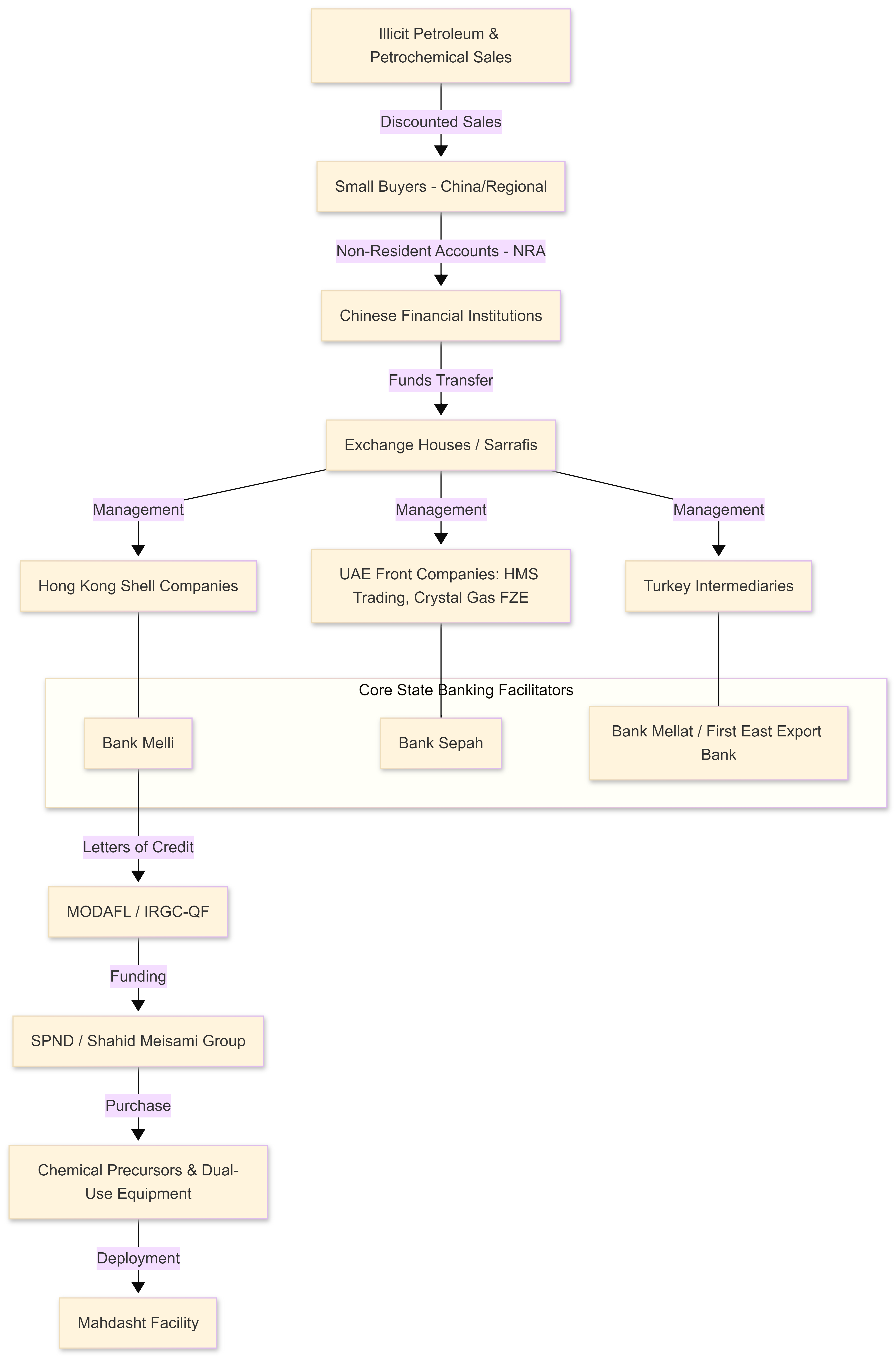
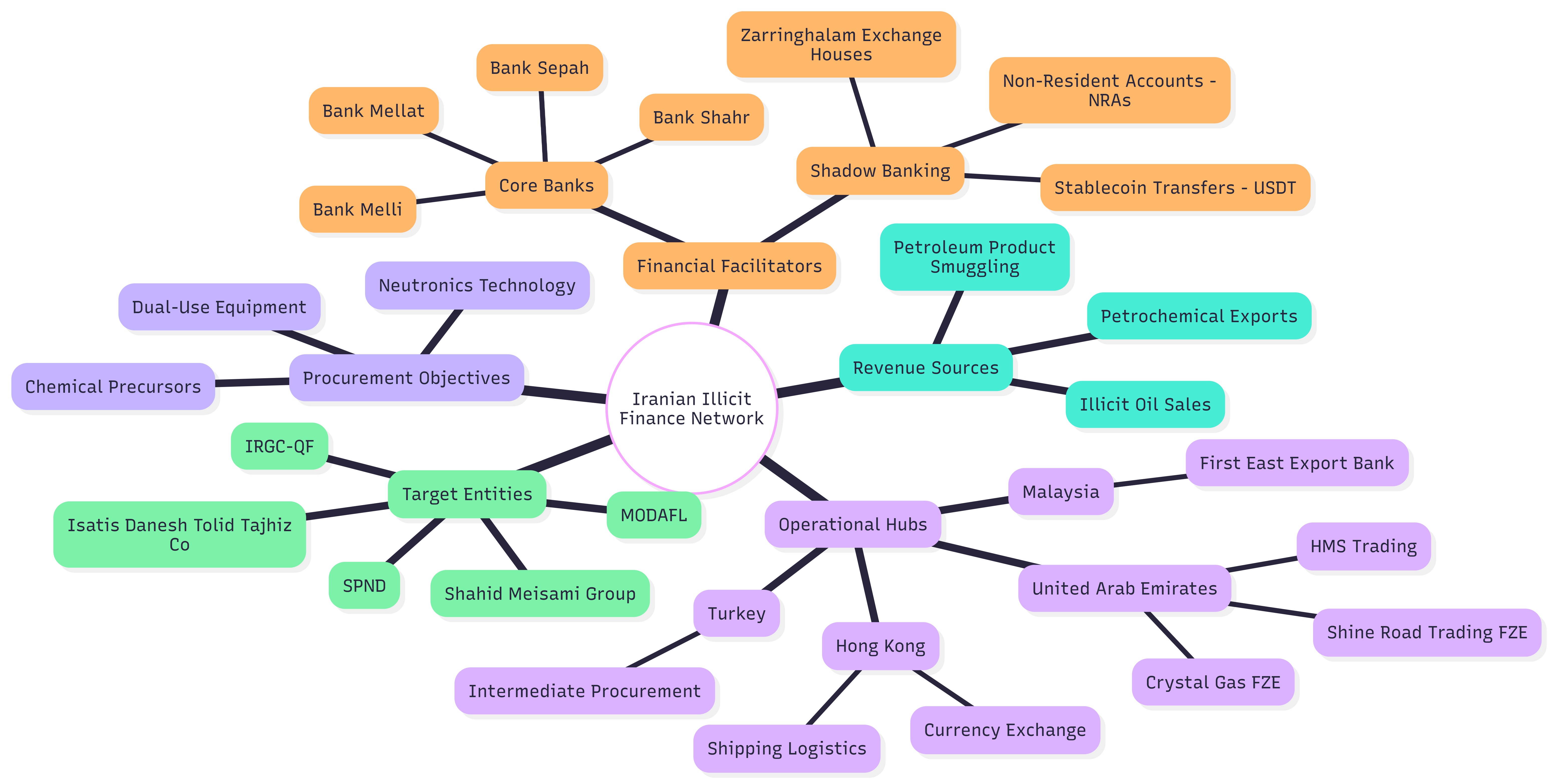
The Iranian regime manages a robust financial infrastructure that utilizes a multi-layered approach to fund prohibited chemical programs. MODAFL and the IRGC-QF generate the necessary capital through discounted petroleum sales, primarily to Asian markets, bypassing standard global tracking. These funds move through a network of Exchange Houses and Non-Resident Accounts to maintain anonymity and avoid direct links to sanctioned Iranian banks.
The Zarringhalam brothers and their associated exchange houses facilitate the movement of millions of dollars through front companies in Hong Kong and the UAE. Entities such as Crystal Gas FZE and Shine Road Trading FZE act as legitimate commercial faces for the procurement of dual-use materials. This layering process ensures that funds reach suppliers of precursors for the Shahid Meisami Group while the regime publicly maintains a facade of treaty compliance.
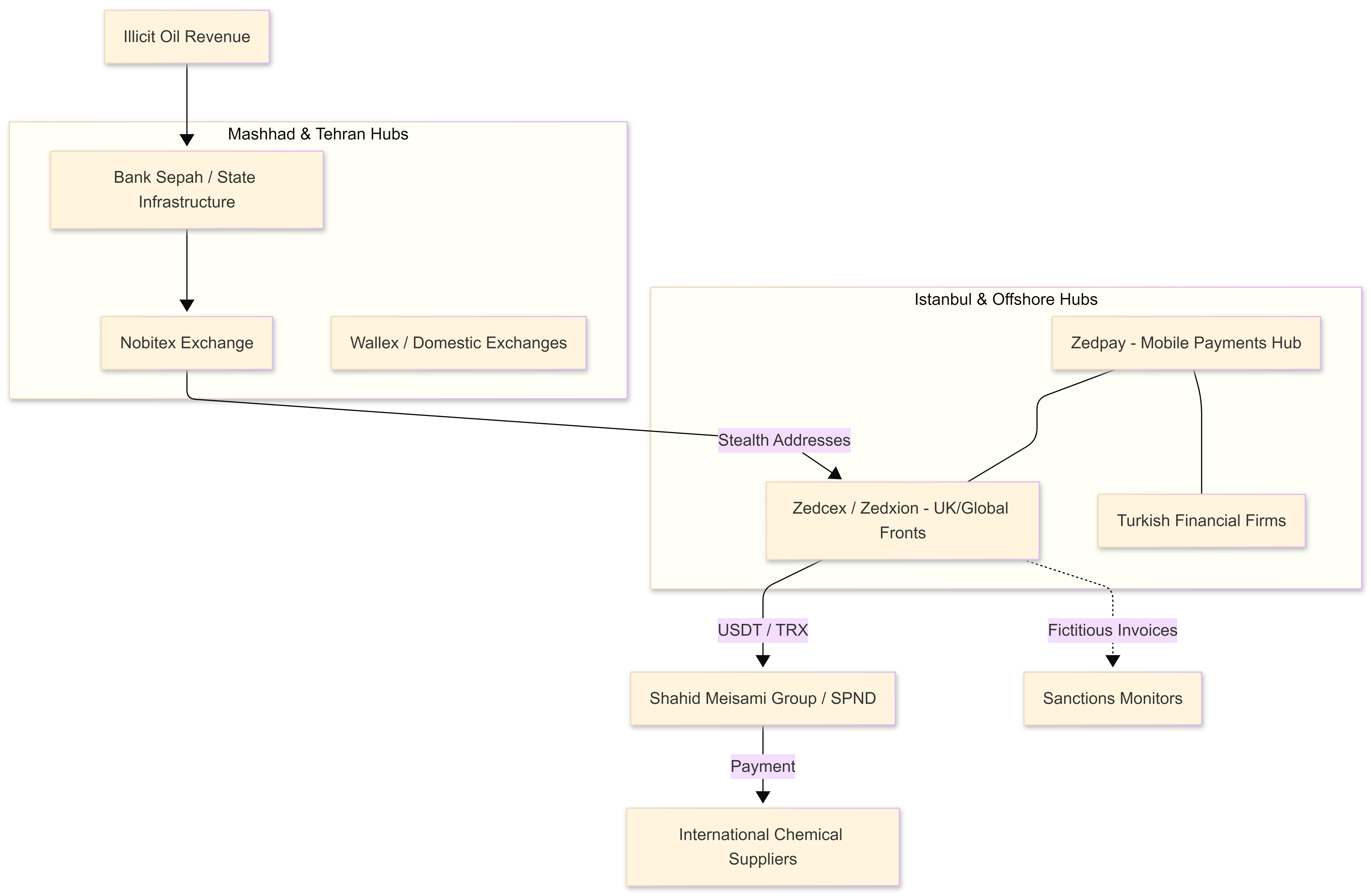
Recent shifts in the network include a heavy reliance on USDT (Tether) moved through unregulated exchanges in Mashhad and Istanbul to settle high-value transactions instantly. Furthermore, SPND leverages European-based nodes like Isatis Danesh Tolid Tajhiz Company to source precision equipment that the regime cannot produce domestically. This adaptive lifecycle ensures the continued operation of projects like Fadak 110 despite international pressure.
Crypto-Liquidity and Tactical Management
Digital asset management within this network relies on high-volume liquidity pools often shielded by the anonymity of regional hubs. While the Zarringhalam brothers oversee the strategic direction of the network, the day-to-day management of crypto-wallets and peer-to-peer transfers involves a specialized layer of financial operatives.
-
-
-
- Zarringhalam Brothers: These individuals exercise central authority over the exchange houses and define the primary procurement objectives for MODAFL and the IRGC.
- Regional Liquidators: These operatives reside in Istanbul and Mashhad, where they leverage local cryptocurrency exchanges to convert fiat currency from oil sales into USDT (Tether).
- Wallet Managers: Specialized technicians maintain the security and obfuscation of the network’s digital wallets, utilizing “mixing” services to break the traceability of funds before they reach international suppliers.
- Front Company Liaison: These individuals manage the interface between the crypto-wallets and the shell companies in Hong Kong and the UAE, ensuring that payments for chemical equipment appear as legitimate commercial transfers.
-
-
Strategic Influence on Chemical Procurement
The ability to move over $400 million in stablecoins annually provides the regime with a “strike fund” for acquiring sensitive technology on short notice. This liquidity directly supports the Shahid Meisami Group by allowing them to outbid other buyers or pay premiums for restricted precursors that require discrete shipping. The integration of Tether into the procurement lifecycle ensures that even under “snapback” sanctions, the regime retains the financial capability to sustain the Fadak 110 project and other prohibited chemical initiatives.
The reliance on stablecoins reflects a trend toward decentralized finance as a tool for state-sponsored proliferation. By utilizing these digital corridors, the Zarringhalam network bypasses the traditional SWIFT system entirely, making it nearly impossible for international monitors to freeze funds before they are utilized.
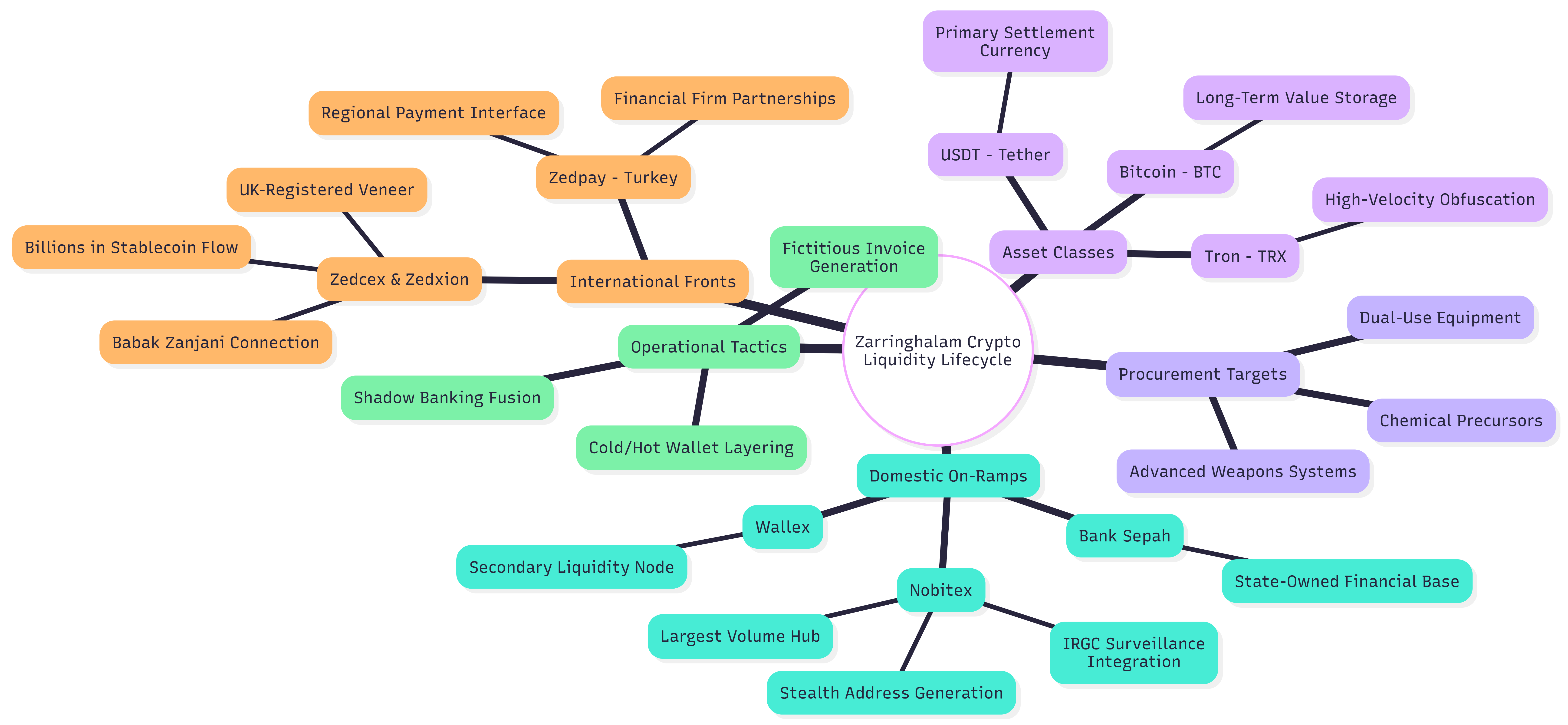
Strategic Mindmap of the Zarringhalam Crypto-Lifecycle
This evolution poses a direct challenge to the international non-proliferation regime. If the Iranian government can successfully weaponize pharmaceuticals under the guise of “peaceful research” or “riot control,” other authoritarian states may follow suit. The Chemical Weapons Convention, while a landmark treaty, currently lacks the teeth to handle the rapid shift from traditional nerve agents to these “grey area” pharmaceutical weapons. Without a major overhaul of the international inspection regime and a clear, unified response from the global community, the “Iranian model” of chemical suppression could become a global standard for the next generation of dictators.
Primary Vessels Identified in Proliferation Networks
The IRISL operates container ships that have been directly flagged for transporting chemical precursors from China to Bandar Abbas. Specifically, the boxships Golbon and Jairan carried 1,000-ton shipments of sodium perchlorate—a dual-use chemical vital for solid-fuel propellants and potentially adaptable for pyrotechnic chemical munitions. These vessels rely on deceptive reporting and ship-to-ship (STS) transfers to mask the origin of their cargo.
| Vessel Name | IMO Number | Key Activities (2025-2026) | Flag / Management |
| Golbon | N/A | Transported 1,000 tons of sodium perchlorate from China. | IRISL (Sanctioned) |
| Jairan | N/A | Linked to the Golbon in moving chemical precursors. | IRISL (Sanctioned) |
| Sea Bird | 9088536 | Transported LPG and petrochemicals to East Asia. | Palau / Horizon Harvest |
| Longevity 7 | 9240885 | Shadow fleet tanker moving clean condensate and methanol. | Unknown / Longevity Shipping |
| Cesaria | 9251602 | VLCC moving millions of barrels of crude oil since late 2025. | Palau / Galeran Service Corp |
| Keel | 9176929 | Transported hundreds of thousands of barrels of naphtha. | Comoros / Trade Bridge Global |
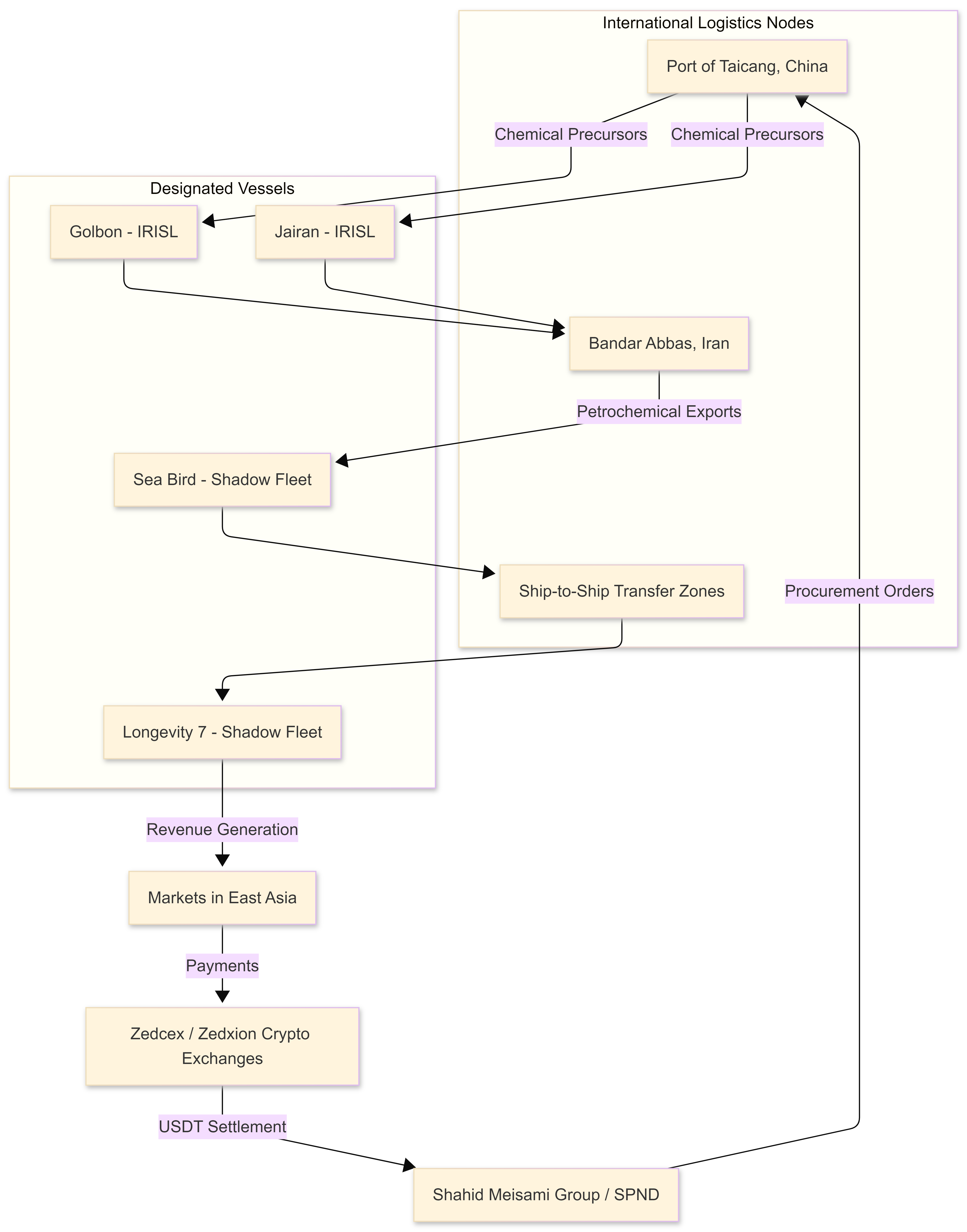
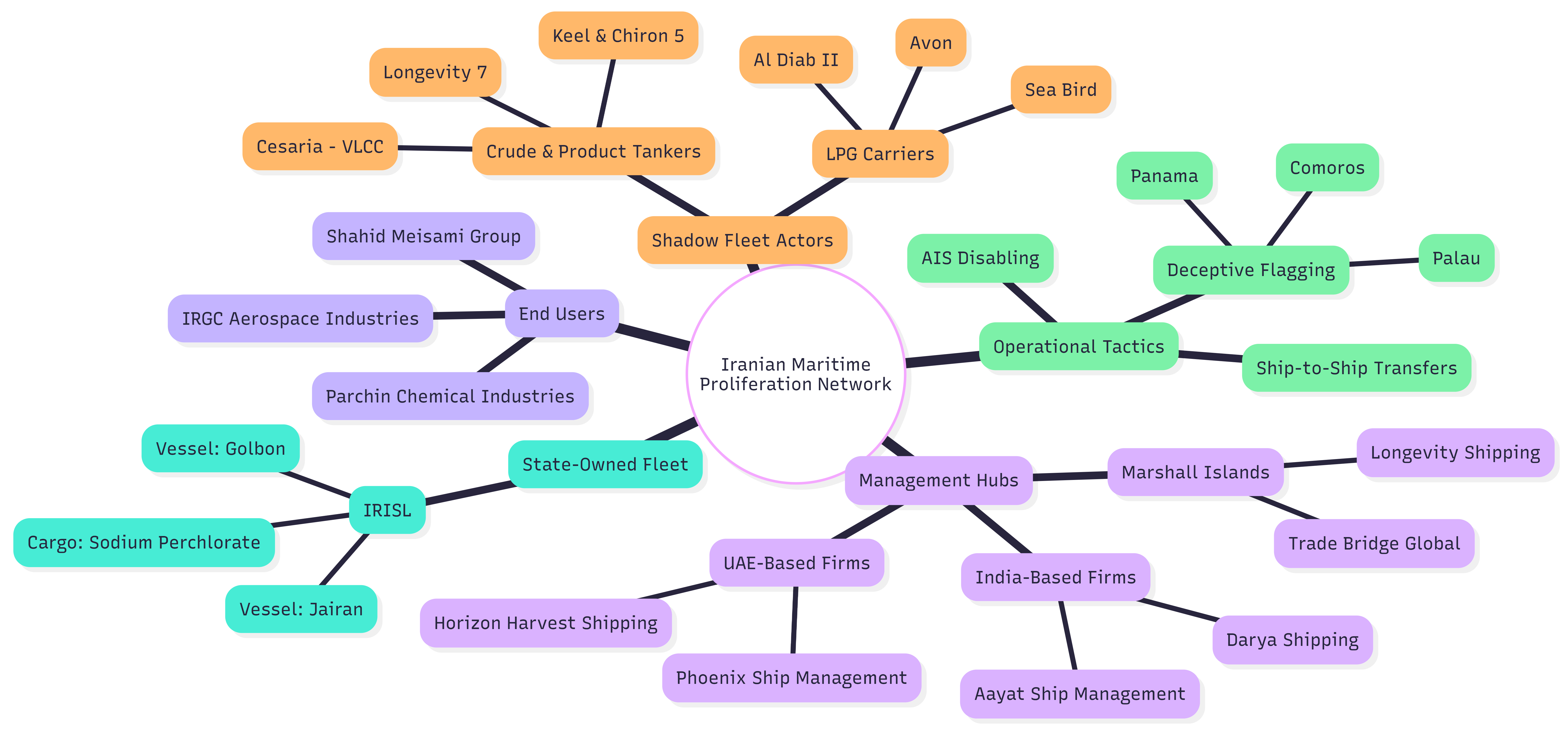
The regime’s maritime strategy relies on extreme corporate fragmentation. Companies like Horizon Harvest Shipping and Trade Bridge Global are often established for the sole purpose of managing a single vessel, allowing the broader network to survive when individual ships are blacklisted. By integrating these physical shipping routes with the Zedcex and Zarringhalam crypto-financial corridors, the regime ensures that the Fadak 110 project maintains a steady flow of raw materials despite the current “maximum pressure” campaign.
Adversary Dossiers and Reports
The people of Iran remain the primary victims of this technological tyranny, but the ripple effects extend far beyond the country’s borders. As these weapons proliferate to proxies and become standardized features of regional conflict, the threshold for the use of chemical warfare continues to drop. The international community must move beyond diplomatic condemnation and take concrete steps to dismantle the Iranian chemical apparatus. This includes targeted sanctions on the technical and administrative leaders of the program, a complete embargo on the chemical precursors used in these agents, and a formal investigation by the United Nations into the crimes against humanity committed in early 2026. Only a sustained and aggressive international response can hope to contain the spread of this new and deadly form of state-sponsored chemical violence.


You must be logged in to post a comment.