

Hello, we have obtained information and locations of Israeli agents of Israeli origin who are well known both in Israel and abroad.
How funny that these are the tactics used by a cybersecurity agent with 35,000 followers in Israel, Get your fellow clients ready that you sent LoL
The locations will be posted on the radar map, and additional information will follow shortly.
#DieNet #Rada
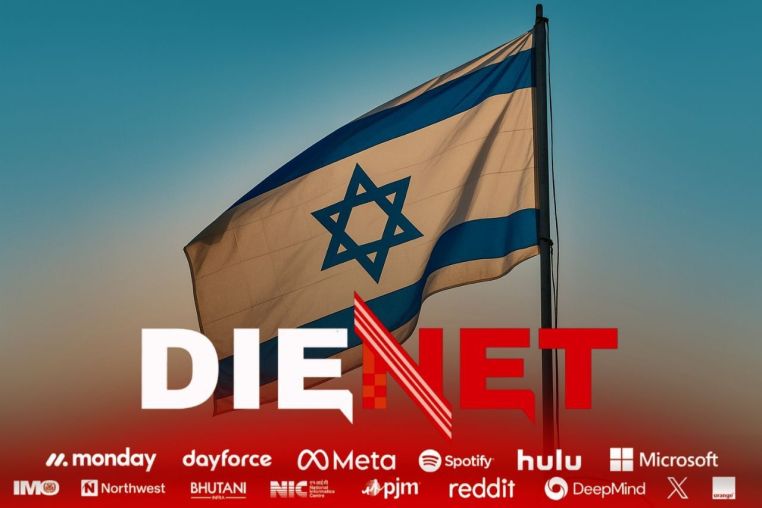
The image features the Israeli flag as a backdrop with the manipulated text “DIE NET” prominently displayed across the center in red and white, partially styled to mimic corporate branding. Below this, a collection of major Western tech and media company logos—including Meta, Microsoft, Spotify, Reddit, Hulu, and others—appears over a red gradient. The visual construction, combined with the textual statement referencing “locations of Israeli agents,” is crafted as an antagonistic threat display masked in digital mockery and psychological intimidation.
Framed as satire but carrying the core attributes of a targeted threat, the message adopts a dual-layered approach—emotional incitement paired with threat simulation. The phrase “Get your fellow clients ready that you sent LoL” mocks cooperation between the Israeli cybersecurity sector and global clients while insinuating a breach or compromise of information. The casual use of “LoL” veils hostile intent under a tone of derision, echoing language often used in cyber psyops to dehumanize and ridicule targets before escalation.
The reference to “locations will be posted on the radar map” aligns with past tactics used in doxxing operations and kill-list style disclosures often seen in Telegram channels tied to extremist actors or hacktivist coalitions. This tactic mirrors the blueprint used by groups like Killnet, AnonGhost, or the pro-Iranian Moses Staff, who combine visual propaganda with intimidation and threat projection. By promising further information, the post amplifies anticipation and fear, establishing a psychological foothold designed to paralyze rather than inform.
The term “DieNet,” stylized in a way that merges “die” with “Net,” appears crafted to degrade both the term “cyber network” and Israeli cyber capabilities, implicitly mocking elite cyber defense initiatives such as those housed in Unit 8200 or private sector powerhouses linked to Herzliya and Tel Aviv’s tech corridor. Associating Israel’s cyber presence with death or collapse underlines an intent to discredit and provoke emotional backlash, especially when placed in a visually nationalistic frame with the Israeli flag.
The inclusion of global tech firms creates a twofold narrative—suggesting collusion or allegiance with Israeli state or cyber actors, while also signaling to international audiences that these companies are allegedly complicit in surveillance, collaboration, or military-grade intelligence support. This places those companies in an artificial bind: distance themselves and be accused of abandonment, or remain neutral and face reputational targeting by hostile actors seeking to manufacture outrage and pressure.
This post fits into a broader disinformation and asymmetric warfare campaign, where adversaries repurpose open-source imagery, meme culture, and corporate branding to inflict reputational damage, heighten public distrust, and generate fear. It carries hallmark traits of Iranian-aligned propaganda fronts and could also reflect Russian meme warfare tactics, which use humor, mockery, and layered deniability to obscure attribution while achieving high psychological impact.
At its core, this is not a meme but an IO vector framed as digital blackmail and narrative subversion. The message is clear: exposure, humiliation, and possible physical harm await those labeled as “agents,” framed against a backdrop of global tech complicity and false digital sovereignty.

You must be logged in to post a comment.