


Russian military forces have incorporated Starlink satellite internet terminals into their battlefield infrastructure despite Starlink’s official prohibition of service in Russia. These terminals, intended for civilian and authorized governmental use, have been diverted through grey and black-market channels into the hands of Russian operators, where they are employed for command and control, drone integration, precision targeting, secure messaging, and real-time ISR coordination in active combat zones. The procurement, configuration, and continued usage of these devices reveal the limitations of Starlink’s enforcement mechanisms and expose gaps in the platform’s geofencing and authentication architecture.
starlinksvorussia
Терминалы Starlink от 30 тысяч. Тариф от 13 тысяч. Работаем с Юрлицами. Канаш/Чувашская республика
Starlink’s architecture and business model prioritize global market penetration and ease of use over stringent control, accountability, or ethical safeguards. The system was designed to be plug-and-play: quick to deploy, simple to configure, and scalable in rural, underserved, or crisis regions. That philosophy enabled rapid growth, but it also created an inherently insecure platform in conflict zones and authoritarian environments.
STARLINK
Оплата тарифов
Регтариф 11000р
Глобтариф 35000р
—
Активация 2500р + оплата тарифа
—
Есть также новые терминалы чистые
V3 34300р от 10 штук
Mini kit 37500p от 10 штук
—
Разблокировка STARLINK:
23% шанс что можно сделать
Стоимость 15600р
—
При обращение сразу указывайте какая именно ошибка, блок терминала или снос аккаунта
The terminal hardware lacks tamper-proof geolocation enforcement, making it easy to spoof location data and operate in denied or sanctioned areas. User identity verification is practically nonexistent. Anyone can create a Starlink account using false credentials and pay through anonymized or third-party financial channels. Once activated, the terminal becomes hardware-agnostic—no further verification links it to the rightful user, region, or purpose.
Starlink’s network-level controls are reactive, not proactive. The company tracks suspicious patterns but avoids automated shutdowns to prevent collateral disruption, especially in active warzones where adversaries and allies operate in close proximity. That hesitation effectively gives adversaries like Russian forces a free operational runway, knowing enforcement thresholds remain high to avoid friendly fire—both literal and digital.
Commercial incentives drive platform expansion. The more terminals sold, the broader the satellite utilization, and the more influence Starlink gains over global communications infrastructure. That growth-first model leaves little room for ethics enforcement unless pushed externally by governments or regulators. Even in the Ukrainian conflict, the company has only intervened when forced by political pressure, third-party exposure, or public backlash.
In practice, Starlink acts as a neutral vector—not by design, but by negligence. The infrastructure allows any actor, including sanctioned militaries, private mercenary groups, and transnational smugglers, to access broadband-grade satellite comms with minimal oversight. The result is an asymmetric system that empowers both liberation movements and war criminals with the same technology, without distinction.
Starlink’s failure to embed security-by-design principles—such as hardware-bound geofencing, user attestation, and transactional audits—transforms it into a communications commodity detached from consequences. The system was never built to differentiate between humanitarian aid and battlefield coordination. That omission reflects a deliberate absence of moral architecture. In the absence of legal compulsion or international norms, the technology evolves as a business tool, not a responsible platform.
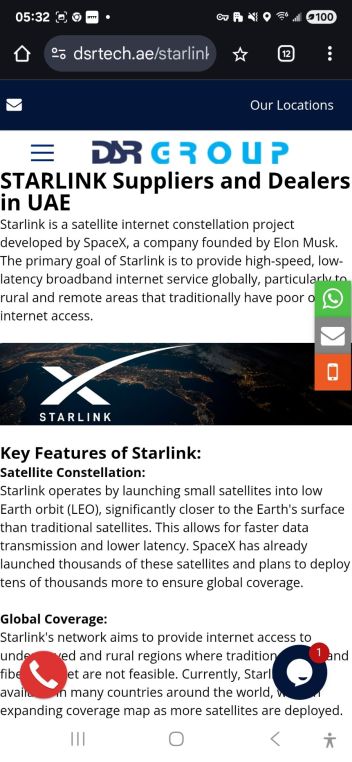
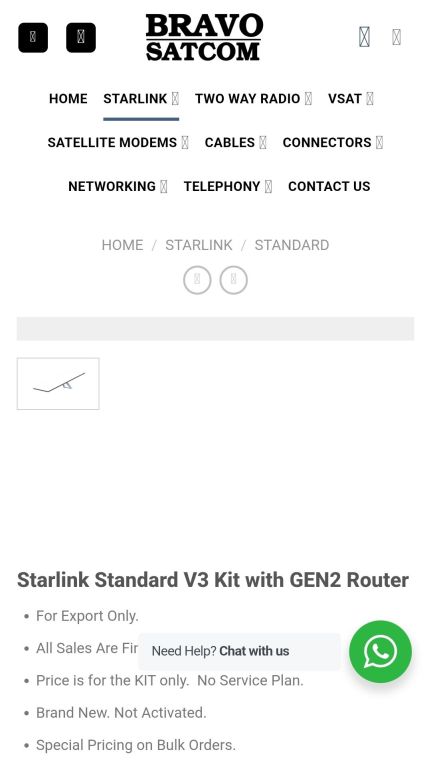
Starlink terminals reach Russian users through layered intermediaries and loosely monitored resale markets. Devices are typically purchased legally in permissive jurisdictions such as the United Arab Emirates, Armenia, Kazakhstan, or Turkey—locations that permit private access to Starlink and do not scrutinize terminal exports. Once acquired, terminals are shipped into Russia or occupied Ukrainian territories via private courier services or are physically transported by hand through porous borders. These shipments often include pre-configured user terminals, power units, routers, and SIM-card-based two-factor authentication kits registered to non-Russian IP ranges, with billing accounts tied to Polish, Lithuanian, or Georgian credit cards.
Once inside Russia or a Ukrainian combat zone under Russian control, the terminal is physically deployed and pointed at the satellite constellation using either default self-alignment or smartphone-guided applications. The user modifies the GPS data in the application layer by spoofing location services to match the registration country. This manipulation tricks the system into validating service from a supposedly legal geography. Starlink’s backend checks the service region and billing address but relies heavily on the software-reported GPS signal, which can be tampered with using location spoofing tools or hacked firmware.
Starlink cannot reliably determine the identity of the terminal operator or their real location for several reasons. The system authenticates user terminals based on account credentials and regional activation rules, but it does not deploy hardware-level geolocation that binds physical location to service eligibility. In other words, Starlink terminals do not include a secure GNSS chip that ties operation to the actual device location. The constellation can observe terminal IPs and routing nodes but struggles to precisely geofence terminals when operators falsify metadata. Russian users also prevent detection by routing traffic through VPNs or proxies tied to activation countries. This removes obvious flags from backend monitoring systems and prevents Starlink from distinguishing between a Polish user and a Russian user pretending to be Polish.
Starlink has no reliable mechanism to verify who is physically operating a terminal. End-user identity verification is not enforced beyond the setup stage, and account creation involves only minimal documentation. Even if a suspicious pattern is detected, Starlink hesitates to mass-disable accounts from certain regions due to the risk of affecting Ukrainian users operating close to the front lines. Ukrainian forces deploy Starlink extensively, often operating only hundreds of meters from Russian positions. This proximity creates a targeting ambiguity, making it impossible for the provider to block Russian use without risking a cutoff to legitimate Ukrainian assets. As such, Russian units benefit from this operational gray zone, knowing they are unlikely to face deactivation unless directly exposed.
Russian units often assign signal technicians or IT-savvy contractors to manage configuration. They clone account templates, recycle billing information, and duplicate router settings from previously activated terminals. Many Russian-speaking forums and private Telegram groups distribute manuals, scripts, and cracked software for Starlink terminal modification. They also share troubleshooting advice and firmware patches to prevent forced updates or unexpected deactivation.
The devices are often mounted on mobile command vehicles, SUVs, or prefabricated shelters that maintain line-of-sight with the satellite constellation. To reduce RF signature and evade electronic warfare detection, operators may throttle signal output, shield emissions with directional antennas, or relocate terminals frequently. Russian combat engineers have also begun experimenting with drone-portable Starlink kits to enable forward reconnaissance elements to livestream intelligence without relying on military-grade SATCOM assets, which are either overloaded or unavailable.
The use of Starlink by Russian forces illustrates a systemic problem with commercial-off-the-shelf dual-use technology operating in high-conflict environments. Starlink’s speed, low latency, and ease of setup make it indispensable for real-time battlefield coordination. At the same time, the very properties that make the system valuable—mobility, limited geofencing, account-level abstraction—also make it impossible to control or restrict effectively. Until Starlink embeds tamper-proof location binding and mandatory biometric or two-factor user authentication tied to fixed jurisdictions, its services will remain exploitable in contested regions, and its hardware will continue crossing borders in violation of official policies.


You must be logged in to post a comment.