


Operation Sadeq-2 represented a substantial test of Iran’s capacity to degrade high-value strategic military installations with medium-range ballistic missiles. Navatim Air Base, with its dual military logistics and fifth-generation combat aircraft roles, offered a textbook target for measuring Iran’s strike precision, warhead effectiveness, and operational strategy under contested conditions. Five months and 23 days later, updated satellite analysis not only confirms the scale of the attack but also exposes clear shortcomings that cannot be brushed aside by propaganda or rhetorical declarations of deterrence.
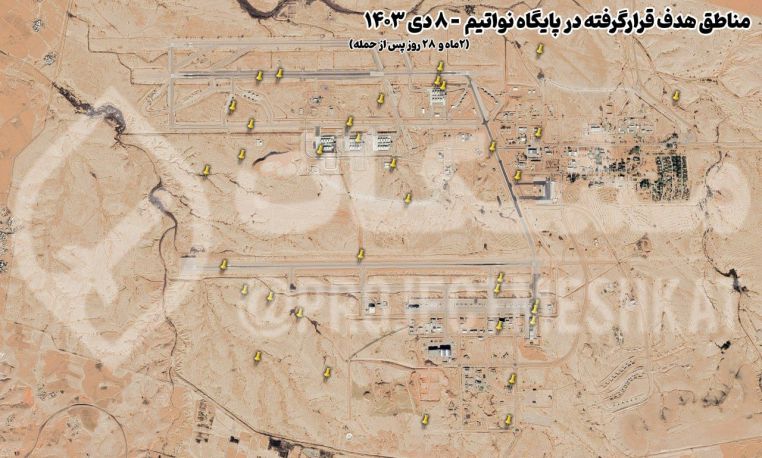
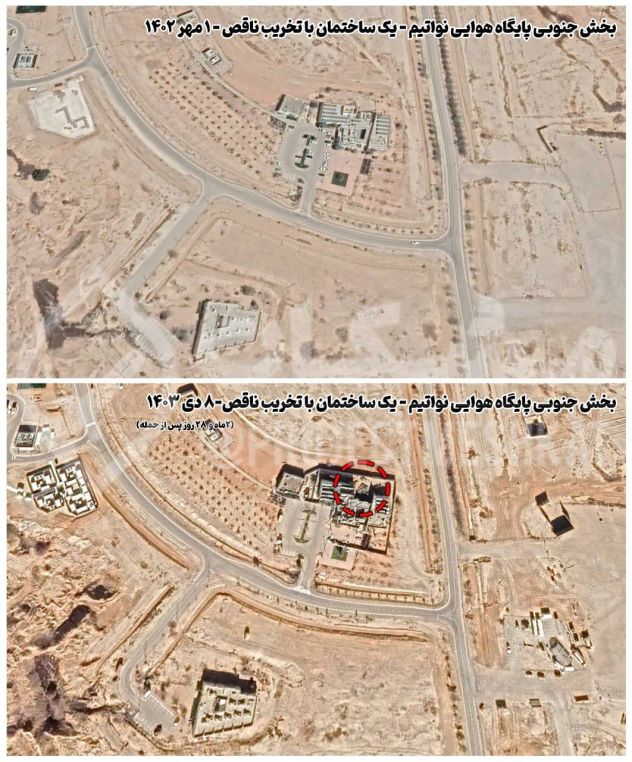
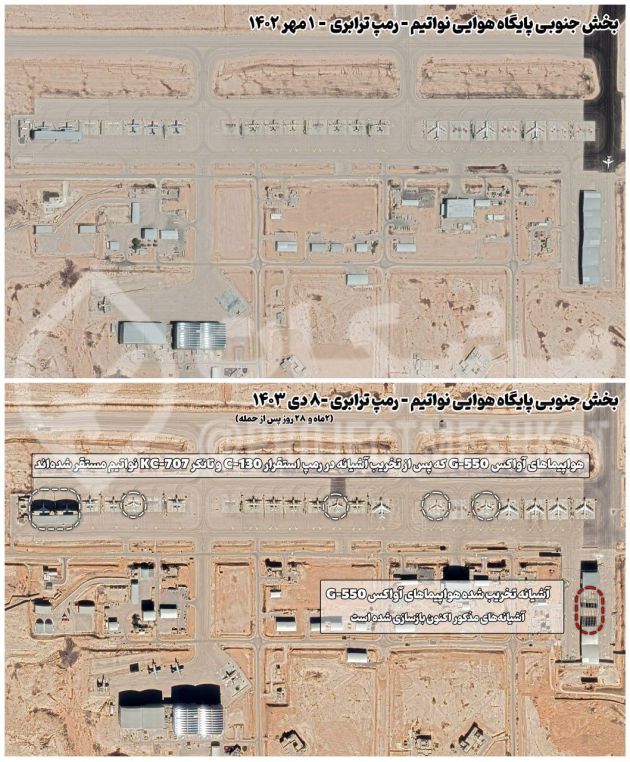
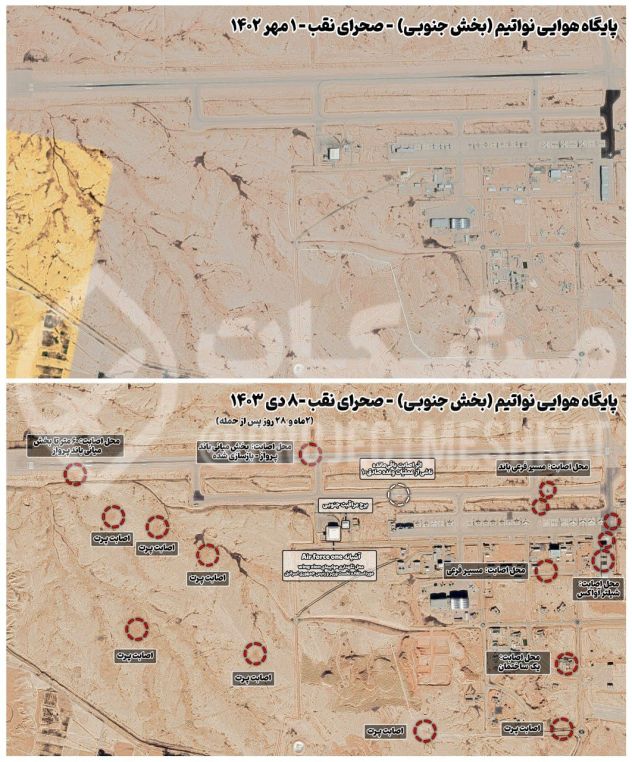
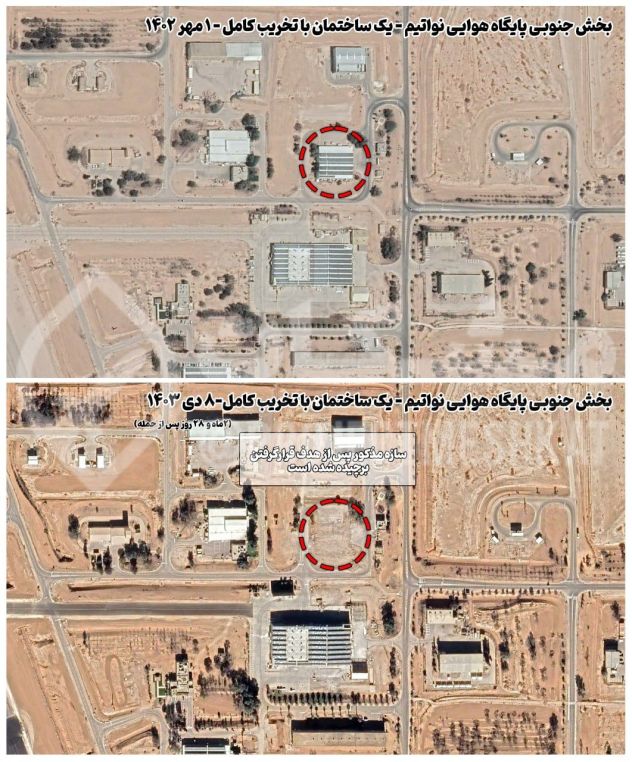
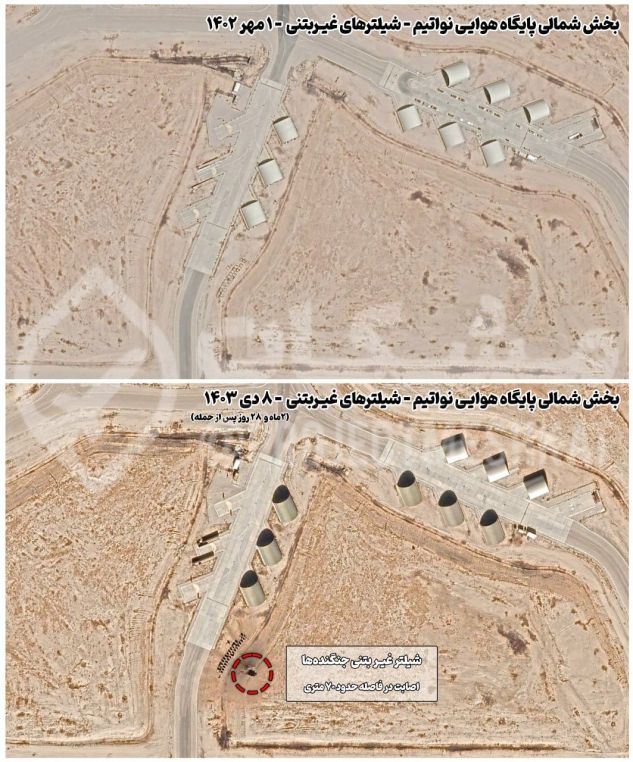
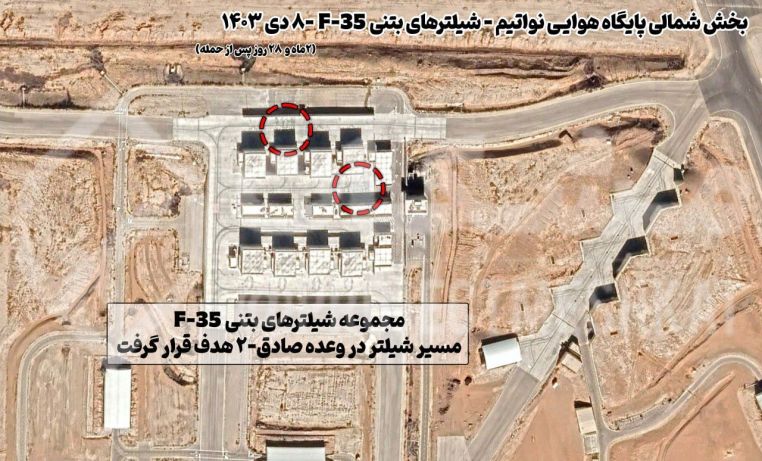
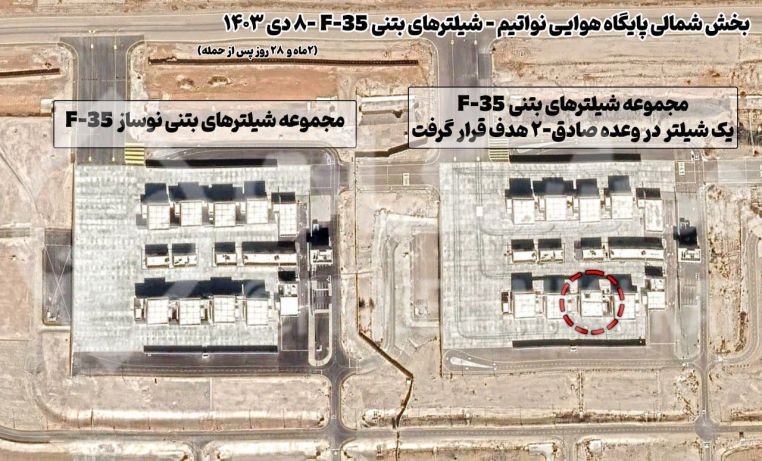
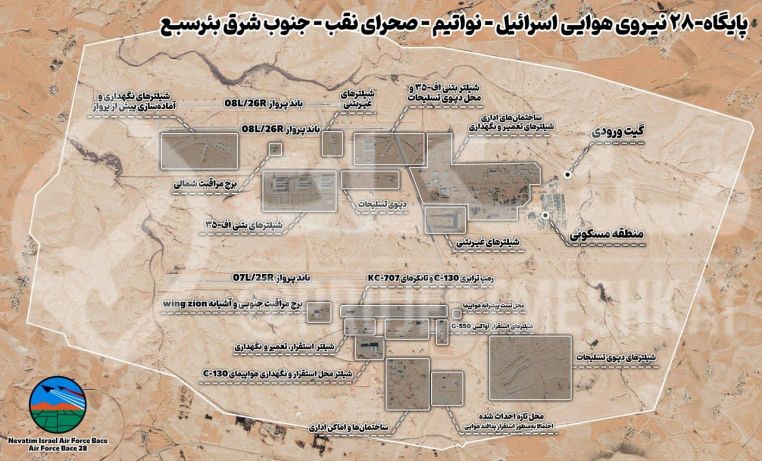



Satellite imagery now confirms 36 impacts on Navatim: 16 in the southern section, and 20 in the northern area. The southern section houses tankers, transport aircraft, and the G-550 AWACS fleet—assets central to Israel’s regional power projection and extended air operations. Among those 16 strikes, 7 missed their marks by large margins. One missile cratered a runway. Another damaged a non-concrete shelter, likely housing an AWACS, significantly—yet this was more an accident of structural vulnerability than a measure of missile lethality. One building showed only minor superficial damage. Despite clear access to vulnerable targets, including ramped aircraft and mobile command structures, Iran refrained from escalating the scale of destruction. Precision submunitions or follow-on strikes against fuel storage and avionics support bays were conspicuously absent.
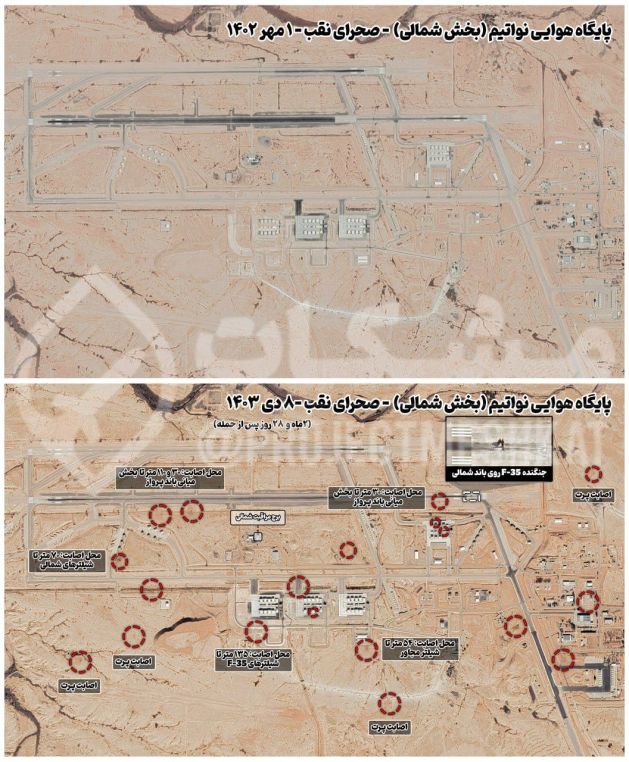
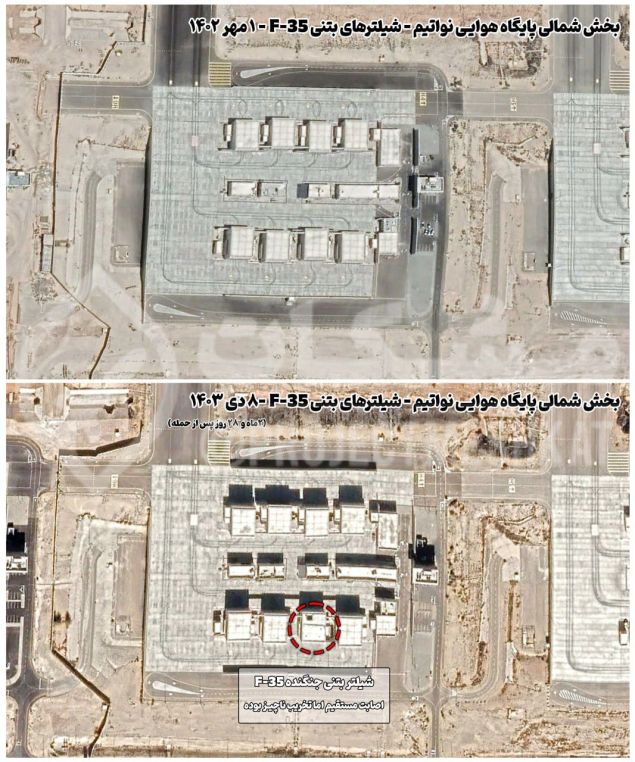
In the northern zone—where F-35I Adirs are based—20 missiles struck, 6 of which landed far from high-value assets. One concrete shelter absorbed a direct hit with little structural compromise. Two missiles landed near shelters, again without penetrating reinforced fortifications. Only one building sustained visible, severe structural damage. The most glaring operational oversight lay in ignoring the northern runway control tower, a soft target whose loss could have paralyzed takeoffs and landings across the entire base quadrant. Instead, missiles struck access roads and peripheral infrastructure—high in symbolic value but low in operational consequence.
Accuracy continues to reflect a significant challenge for Iranian missile forces. Of the 36 impacts, 14 registered as clear misses. Most others showed proximity errors of 70 to 80 meters. For fixed military targets, such deviation renders a large share of impacts ineffective. Even where strikes neared intended objectives, structural damage proved minimal, raising uncomfortable questions about warhead yield, detonation timing, and explosive composition stability during re-entry. Despite recent progress—particularly with the Khyber-Shakan’s terminal maneuvering capability—the warheads themselves lack the mass or penetration depth to inflict meaningful destruction on hardened targets.
Iran’s strategic intent appears split between deterrence and calibration. Damage was inflicted but not maximized. Facilities were struck, but core operations resumed quickly. AWACS and tankers remain in the air, and F-35I deployments continue. The Israeli Air Force’s rapid recovery, including the arrival of new F-35Is and the completion of hardened shelters, undermines Tehran’s intended messaging. Worse, it strengthens the opposing narrative: Iran’s missiles may reach targets, but they do not neutralize them.
Contradictions between rhetoric and battlefield outcomes have created a credibility gap. Iranian state media heralds decisive blows to Zionist air power, yet satellite images show limited, recoverable damage. The myth of immediate operational paralysis at adversary airbases—used extensively in Iranian doctrinal projections—collapsed under the weight of real-world data. Navatim remains functional, fortified, and active.
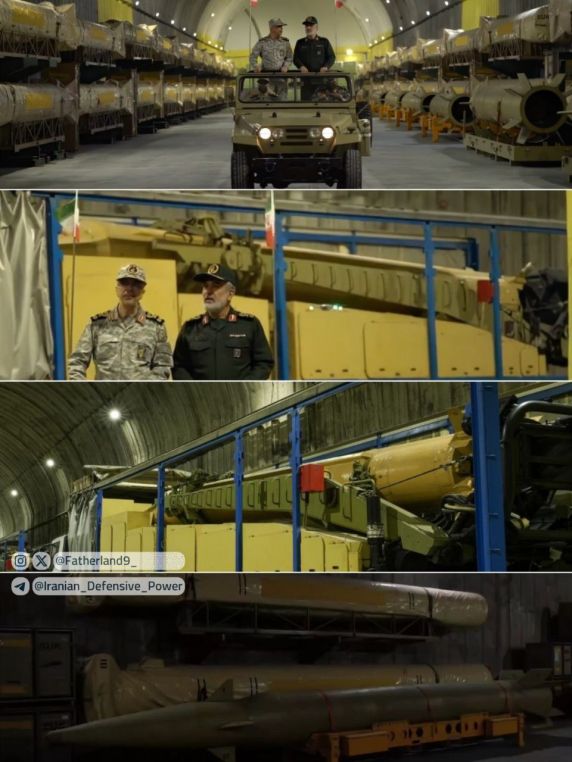
The unveiling of new missile cities—now housing hundreds of Khyber-Shakan, Hajj Qasem, Qadr, Sejjil, and Paveh systems—reflects an ambition to expand Iran’s strategic strike envelope. Video analysis of the underground complexes shows improved logistics for missile preparation, transporter-erector-launcher (TEL) concealment, and quick sortie capability. Crucially, the appearance of unburned Khyber-Shakan launchers during recent unveilings points to either a significant expansion in missile readiness over the past six months or a shift in reserve doctrine. The presence of fresh launch assets—painted, unscarred, and likely not involved in Sadeq-2—signals untapped reserves and possibly a phased deployment strategy.
Rezvan’s reappearance also signals a layered doctrine: use older, unguided missiles to saturate air defenses, followed by more precise strikes from newer generations. Given Rezvan’s long prep time and lack of terminal guidance, it fits a role more aligned with overwhelming Iron Dome or David’s Sling interceptors than pinpoint destruction. The contrast between Khyber-Shakan’s maneuvering re-entry and Rezvan’s simplicity hints at a dual-phase doctrine: open with salvo saturation, follow with terminally guided penetrators. Still, performance in Sadeq-2 failed to demonstrate such sequencing.
Operational doctrine inside the IRGC Aerospace Force appears to be at a strategic crossroads. Recent underground base unveilings suggest doctrinal evolution in readiness, mobility, and massed fire strategies. But Sadeq-2’s results show a continued disconnect between available capability and applied battlefield effectiveness. Shelters remain standing, control towers remain upright, runways remain functional. The core functions of a key adversary base remain unharmed, even after 36 inbound ballistic strikes.
Iranian engineers and doctrinal planners face an obvious technical ceiling. Solid-fuel missiles like Khyber-Shakan offer rapid launch capability, mobility, and stability. But insufficient warhead mass, coupled with underperforming explosive compounds, renders even successful hits tactically shallow. Concrete shelters resist penetration; non-hardened structures absorb shock but avoid destruction. The problem lies not only in CEP but in kinetic energy transfer and blast concentration—physics, not politics.
Retaining credibility will require more than a vast underground arsenal. Precision improvements must extend beyond CEP into terminal guidance stability, warhead integrity, and target selection logic. Sadeq-2 struck widely but not deeply. Navatim Air Base continues operations. Deterrence, in strategic terms, demands not just threat, but demonstrated incapacitation. Without that, adversaries will see warnings as bluffs—and treat Iranian missile arsenals as loud but manageable risks.
Future operations—whether against hardened airbases, radar arrays, or power infrastructure—must exhibit refinement in targeting doctrine. High-value, soft-skinned assets should not be bypassed in favor of wide-area demonstration. Terminal-phase maneuverability means little when coupled with underloaded warheads. Strategic consequences hinge not on volume of fire, but on effects achieved. Navatim became a stage for testing Iranian precision, but also a mirror exposing enduring limitations. Iran’s missile program has evolved, but the doctrine guiding its application continues to lag behind its hardware.
Success will not depend on volume or spectacle. Success will rest on consistent, measurable incapacitation of strategic enemy functions. Anything less will recycle the failures of Sadeq-2.


You must be logged in to post a comment.