


Abu Ali Haidar, whose real name is Muhammad Haidar, is considered one of the most prominent military leaders in the Lebanese Hezbollah. He was born in 1959 in the town of Qabrikha in southern Lebanon, and studied in religious seminaries between Lebanon and Iran, specializing in strategic planning. He began his career at Middle East Airlines. He served as a member of the Lebanese Parliament representing the Marjeyoun-Hasbaya district between 2005 and 2009. He is considered one of the main founders of Hezbollah’s security apparatus, where he assumed responsibility for the military operations room, making him one of the most prominent military leaders in the organization. He was also a member of the “Jihad Council”, which is considered one of the most important strategic bodies in the party.
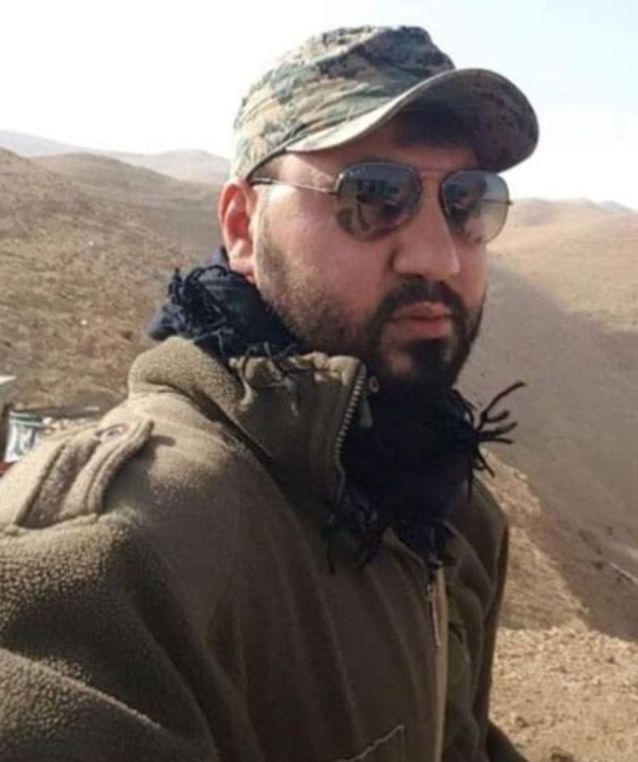
He has strong ties with prominent leaders in the party, such as Muhammad Afif and Wafiq Safa, which strengthened his position within the organization. After the assassination of military leaders Imad Mughniyeh in 2008 and Mustafa Badreddine in 2016, his influence within the party increased, as he became one of the three most prominent figures in the “Jihad Council”, along with Talal Hamieh and Khader Youssef Nader. It is noteworthy that Israel attempted to assassinate him on August 25, 2019, by bombing two drones near the southern suburbs of Beirut, but failed.
As for Unit 8030 of the Iranian Revolutionary Guard, it is a secret unit operating on the eastern coast of the Mediterranean Sea, and is responsible for deploying fast-attack boats, anti-ship torpedoes, and sea mines, in addition to planning piracy operations off the coast of Yemen and in the Strait of Hormuz. The activities of this unit are managed by several generals from the Revolutionary Guard, including Ali Khademi and Mohammad Larimi.
Unit 8030 cooperates with Hezbollah in strengthening its naval capabilities. Members of the unit are sent to Lebanon to train Hezbollah fighters in operating naval weapons systems, and members of Hezbollah’s naval unit travel to Iran to conduct tests and training in Unit 8030. In addition, Houthi fighters are sent for professional training in Iran, Lebanon, Syria, and Iraq, where they are trained in operating naval weapons systems and naval warfare capabilities.
Regarding the commanders of the Iranian units that were sending reinforcements to Hezbollah, it is reported that Division 8000, under the command of Hassan Habibi, is responsible for weapons production, training, and the integration of weapons systems between Iranian organizations and militias. The division oversees specialized units that focus on specific areas such as drones, missiles, rockets, and air defense. It is also reported that Unit 3800, established in 2003, is responsible for activities in the Yemeni arena, including training, advising, and supporting Iranian-backed proxy forces. The commander of this unit was Hajj Khalil Yusuf Harb, also known as Abu Mustafa and Sayyid Ahmad. Haidar plays a key role in Hezbollah’s military operations, particularly in naval warfare and missile development. His collaboration with IRGC Unit 8030 focuses on strengthening Hezbollah’s naval and missile capabilities, ensuring the group remains a formidable maritime threat in the region.
1. Naval Warfare Coordination
Unit 8030 is part of the IRGC’s Brigade 8000, specializing in maritime operations, including:
Training Hezbollah’s naval commando units in speedboat tactics, underwater sabotage, and coastal infiltration.
Supplying Iranian-designed anti-ship missiles such as the Noor, Qader, and Ghadir, enhancing Hezbollah’s ability to target Israeli naval assets.
Providing Hezbollah with naval mines, torpedoes, and unmanned surface vessels (USVs) for asymmetric warfare in the Mediterranean.
Haidar oversees these efforts within Hezbollah, integrating the trained operatives and weapons into its military structure. He manages the logistics of Iranian support, ensuring the smooth transfer of weapons, technology, and personnel.
2. Missile Program Development
Unit 8030 assists Hezbollah in enhancing its sea-to-shore and ship-targeting missile programs. Haidar, being one of Hezbollah’s top military strategists, plays a key role in:
Supervising Iranian engineers and Hezbollah’s missile technicians to modify and integrate Iranian missile technology.
Coordinating the establishment of underground missile storage and launch facilities, minimizing exposure to Israeli airstrikes.
Directing missile testing operations conducted in both Lebanon and Iran, ensuring that Hezbollah’s arsenal remains cutting-edge.
3. Joint Training Operations
Hezbollah fighters under Haidar’s command frequently travel to Iran for training with Unit 8030 specialists. This includes:
Simulated naval battles and amphibious assault training conducted in the Persian Gulf.
Learning to operate Iranian-manufactured UAVs and drone boats, which Hezbollah uses for surveillance and attack missions against Israeli ships.
Developing expertise in electronic warfare, including disrupting enemy radars and GPS systems.
Conversely, IRGC naval specialists travel to Lebanon, where they train Hezbollah operatives on site-specific missions, adapting Iranian tactics to Lebanese coastal terrain.
4. Strategic Deployment and Combat Operations
During conflicts, Haidar directs Hezbollah’s naval and missile forces based on Iranian strategic input. IRGC Unit 8030 provides targeting data, operational plans, and real-time intelligence, particularly:
Facilitating the launch of precision-guided anti-ship missiles against Israeli naval assets.
Deploying fast-attack boats and naval mines to disrupt Israeli maritime activities.
Supporting Houthi-Hezbollah cooperation, ensuring the transfer of naval attack drones and missile technology to Yemen.
Abu Ali Haidar serves as the primary link between Hezbollah’s naval and missile programs and Iran’s Unit 8030. His role ensures that Hezbollah remains an effective force in regional naval warfare, with Iranian-trained fighters, advanced missile capabilities, and cutting-edge naval tactics. His deep ties with Iranian commanders in Unit 8030 make him a key figure in Hezbollah’s long-term military strategy, allowing the group to challenge Israel’s dominance at sea.


You must be logged in to post a comment.