


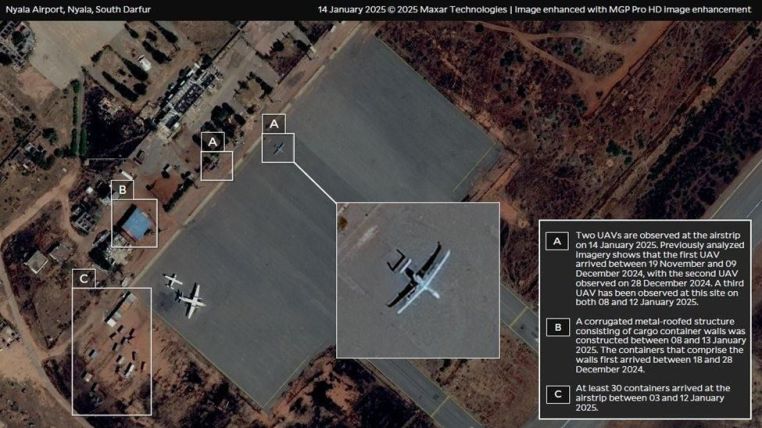
The identification of three FH-95 drones at Nyala Airport in South Darfur controlled by Sudanese security forces signifies a significant escalation in potential capabilities, mission objectives, and threats in the region.
The unmanned aerial systems (UAS) are advanced military technology capable of conducting versatile operations including reconnaissance, targeting, and precision strikes.
Enhanced Surveillance and Reconnaissance
The FH-95’s ability to operate at a 7,000-meter service ceiling, combined with a flight endurance of 24 hours, enables persistent surveillance over a vast area. Their capability poses a threat to any ground forces, armed groups, or civilian populations in the vicinity who may be under observation.
Precision Strike Capabilities
With a 250 kg payload capacity, the FH-95 can deploy precision-guided munitions. This payload is sufficient to carry anti-tank missiles, bombs, or specialized equipment for targeting both fixed and mobile assets.
Extended Operational Reach
Rhe 250 km operational range allows these drones to strike targets across large sections of South Darfur and potentially neighboring regions. The range could influence nearby countries or regions experiencing instability.
Civilian Targeting Risks The presence of these drones in a contested area raises concerns about their use against civilian infrastructure, potentially exacerbating humanitarian crises and increasing collateral damage.
Proxy Engagement and External Influence
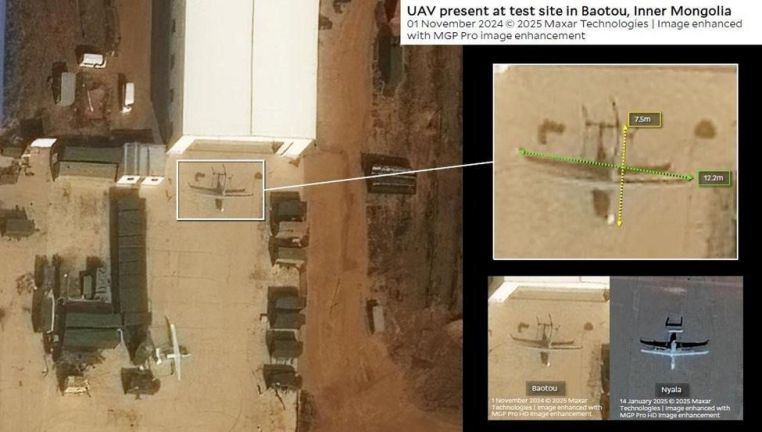
The drones’ deployment suggests external Chinese support, either directly or through an intermediary, like the Sudanese government. Their presence could be part of a broader geopolitical strategy to project influence in Africa or ensure access to critical resources.
Capabilities
Multi-Role UAS
The FH-95 can be employed for both combat and intelligence missions, giving operators flexibility in achieving strategic goals.
Persistent Presence
Long endurance and high-altitude operation enable the drones to maintain presence and situational awareness over targets for extended durations, increasing operational efficiency.
Stealth and Survivability Depending on its design, the FH-95’s ability to evade radar or low visibility may allow it to operate in contested airspace undetected.
Logistics and Command Nodes
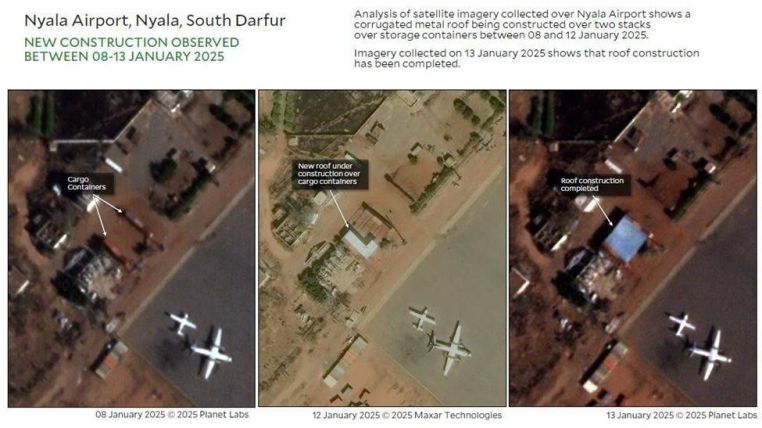
Satellite imagery showing corrugated structures and containerized support systems at Nyala Airport indicates that the drones are supported by a robust operational and maintenance infrastructure. This implies a sustained deployment capability.
Mission Objectives
Regional Stabilization or Deterrence
The drones could be used by Sudanese security forces to deter insurgents or opposing groups, consolidating control over South Darfur.
Resource Protection
They might be tasked with securing vital resource sites, such as oilfields, mineral reserves, or strategic transport routes.
Geopolitical Messaging The deployment could signal China’s growing military-technical influence in Africa, demonstrating its ability to deploy advanced systems through proxies.

Testing Ground for New Systems
Sudan could serve as a testbed for evaluating the operational effectiveness of the FH-95 in a real-world conflict environment.
Targets
Insurgent Groups
Rebel factions or non-state actors opposing Sudanese security forces could be primary targets for reconnaissance and strike operations.
Infrastructure
Targets may include roads, bridges, and communication networks vital to insurgent logistics.
Border Operations Neighboring countries or border regions harboring opposition elements might come under surveillance or attack.
Civilian Areas (Risk)
If employed recklessly, these drones could target areas with significant civilian populations, contributing to humanitarian disasters.
The introduction of FH-95 drones into South Darfur reflects an intersection of local conflict dynamics with international military technology transfer. China’s involvement, direct or indirect, highlights its active engagement in advancing the capabilities of state actors aligned with its interests. The satellite imagery depicting UAV infrastructure and deployment sequences confirms an operational presence designed for sustained missions. The facility’s expansion, including a new roofed structure and container storage, underscores strategic intent for long-term drone operations.


You must be logged in to post a comment.