


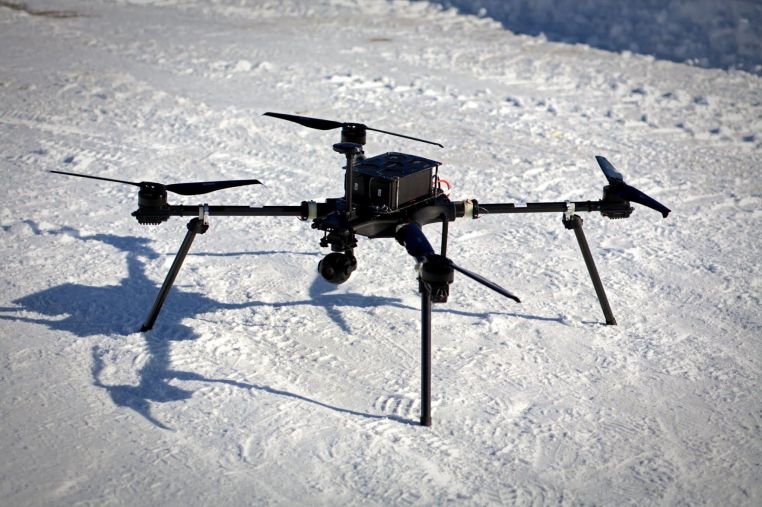
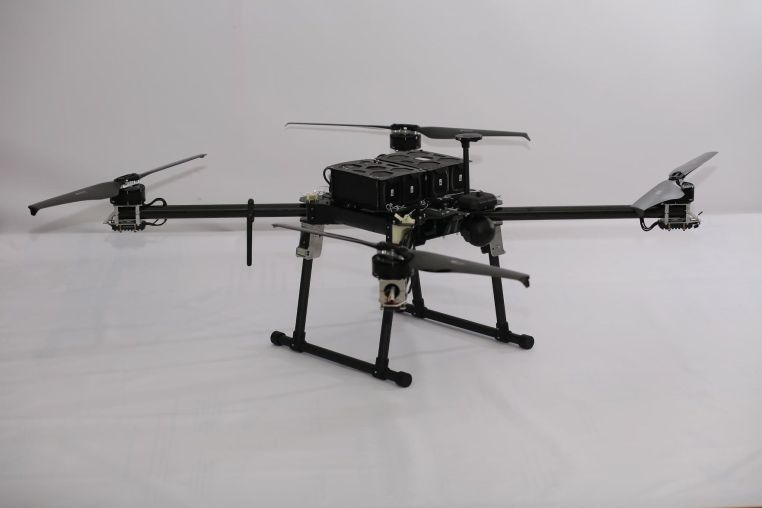
The Russian company “Laboratory of the Future” has unveiled updated versions of its “Fly” and “Ant” drones, each designed to transport various cargo types. The “Fly” drone primarily delivers oil samples from remote areas, though it can assist in search and rescue missions and fire detection. The “Ant” currently transports medical supplies in the Khanty-Mansi Autonomous Okrug (KhMAO) and exhibits improved specifications over the “Fly.” Below is an enhanced analysis of their capabilities and potential applications.
Key Specifications and Analysis of “Fly” Drone
Speed: Exceeding 100 km/h, it offers rapid response capabilities for urgent delivery missions, especially in isolated areas.
Payload Capacity: With a maximum load of 5 kg, the “Fly” is suited for light cargo such as small medical kits, samples, or rescue supplies.
Flight Duration: Up to 35 minutes, allowing for brief yet high-impact missions in a range limited to 15 km.
Environmental Resilience: Functions in temperatures from -30℃ to +50℃ and tolerates winds up to 54 km/h, indicating high adaptability to Russia’s diverse climates and challenging environments.
This drone’s design allows for its use in emergency scenarios, including rapid deployment for reconnaissance, small-scale cargo delivery, and environmental monitoring in hard-to-reach locations.
Key Specifications and Analysis of “Ant” Drone
Payload Capacity: Supports loads of up to 12 kg, offering a higher payload than the “Fly” and thus suitable for larger medical or essential supplies.
Speed: Reaches speeds of up to 110 km/h, allowing quick transit across similar distances, especially critical in time-sensitive situations like medical emergencies.
Flight Range and Duration: Matches the “Fly” with a 15 km range and 33 minutes of flight, balancing performance for high-value or sensitive cargo delivery.
The “Ant’s” enhanced payload and speed make it valuable for more demanding logistics, particularly in health and disaster relief operations where heavier supplies are necessary.
Operational Output and Financial Performance
Currently, the company manufactures up to 100 drones per month. This production rate points to a substantial capability to scale and adapt to market demands or government contracts rapidly. In 2023, “Laboratory of the Future” reported revenue of 317 million rubles, marking a 1319% increase from 2022. This sharp rise suggests significant demand growth, potentially driven by state support, increased utility across industries, or expanded applications in remote logistics, environmental monitoring, and healthcare delivery.
The drones’ adaptability, especially in Russia’s vast and varied terrain, positions “Laboratory of the Future” as a crucial player in specialized UAV applications across critical sectors, aligning with both domestic logistics and state interests in technological advancement.
“Laboratory of the Future” presented updated versions of its unmanned aerial vehicles (UAVs) “Mukha” and “Muravei”, designed for transporting various cargo. “Mukha” specializes in delivering oil samples from hard-to-reach areas, but can also be used to search for people and detect fires. “Muravei” is designed to deliver medicines in the Khanty-Mansiysk Autonomous Okrug (KhMAO).
Characteristics of the Fly UAV:
Speed: over 100 km/h
Load capacity: up to 5 kg
Flight time: up to 35 minutes
Flight range: up to 15 km
Operating temperature range: from -30℃ to +50℃
Wind resistance: up to 54 km/h
Characteristics of the Muravey UAV:
Load capacity: up to 12 kg
Speed: up to 110 km/h
Flight range: up to 15 km
Flight time: up to 33 minutes
The company produces up to 100 drones per month. In 2023, the revenue of the Laboratory of the Future amounted to 317 million rubles, which is 1319% higher than the 2022 figures.
In 2019, the Laboratory of the Future developed the Tightrope Walker UAV for monitoring power grids. The project received funding from the National Technology Initiative Fund and private investors in the amount of 514 million rubles. The Tightrope Walker is designed to diagnose overhead power lines and is planned for use in pilot projects in Russia and Saudi Arabia.
In 2024, Pavel Kamnev, Commercial Director of the Laboratory of the Future, reported that UAVs resistant to electronic warfare (EW) are used in the Kursk direction. These drones use fiber optic cable, which ensures reliable communication and control even in conditions of active use of EW equipment.
These developments demonstrate the desire of the Laboratory of the Future to create innovative solutions in the field of unmanned technologies adapted to the specific needs of various industries and operating conditions.
You must be logged in to post a comment.