



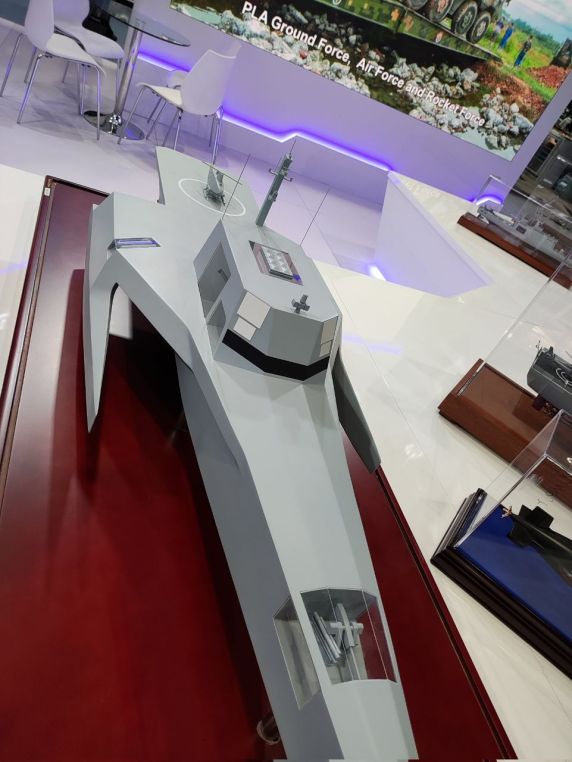
The images reveal a unique and advanced unmanned surface vessel (USV) prototype from China, designed with a stealth-focused hull and a trimaran configuration.
This design significantly reduces radar signature, a feature that indicates an emphasis on evading detection, likely intended for reconnaissance, surveillance, and possibly anti-surface or anti-submarine warfare missions.
The angular and sleek build aligns with stealth capabilities often observed in modern naval designs.
The first image, showing a scale model of the vessel, reveals a structure that is both aerodynamic and hydrodynamic, likely minimizing drag and maximizing speed and maneuverability.
The angular bridge section suggests an emphasis on reducing radar cross-section.
Additionally, the small superstructure with an integrated radar and sensor suite points towards advanced surveillance and monitoring capabilities, potentially suitable for autonomous operations in contested or heavily monitored regions.
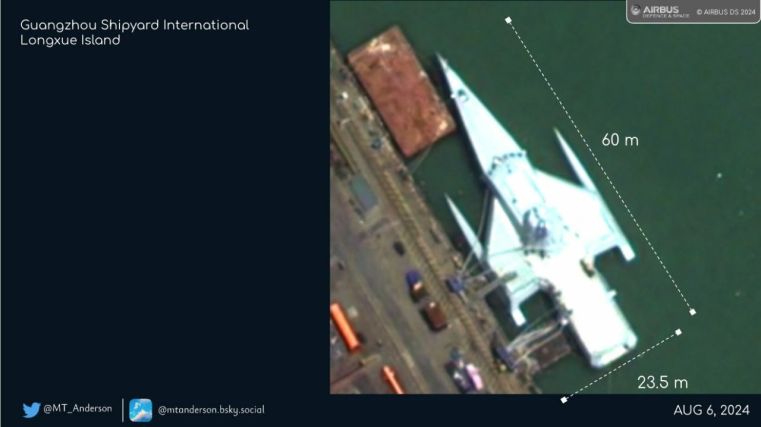
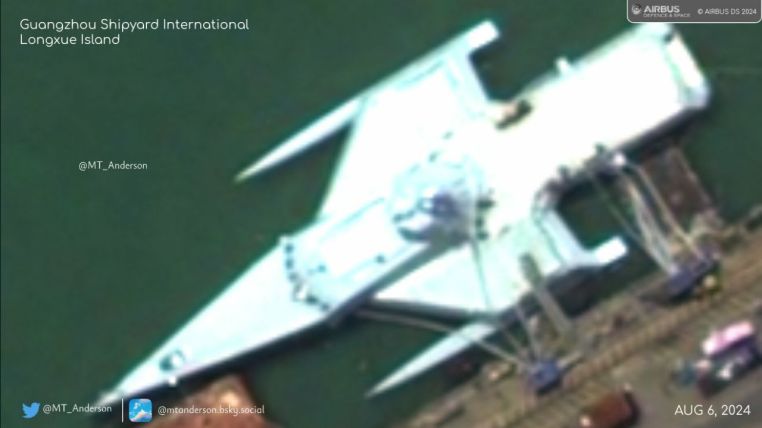
The satellite images (second and third) provide a broader perspective on its size and scale.
The dimensions, approximately 60 meters in length and 23.5 meters in width, suggest a substantial vessel capable of accommodating various weapon systems and sensors.
Its presence at the Guangzhou Shipyard International hints at its strategic significance in China’s naval modernization efforts, possibly signaling intentions for larger-scale production if tests prove successful.
The vessel’s shape and features indicate a focus on multi-domain operations, likely supporting surveillance and monitoring across extensive maritime zones.
Its potential autonomy suggests applications in intelligence gathering, domain awareness, and potentially offensive roles if equipped with missile systems.
The choice of location—Longxue Island, a prominent shipyard—suggests China’s commitment to expanding its autonomous maritime capabilities, potentially increasing its operational reach in areas like the South China Sea.
Further analysis of its armament, autonomy systems, and operational testing will clarify its intended role and China’s strategic intentions regarding unmanned naval assets.


You must be logged in to post a comment.