


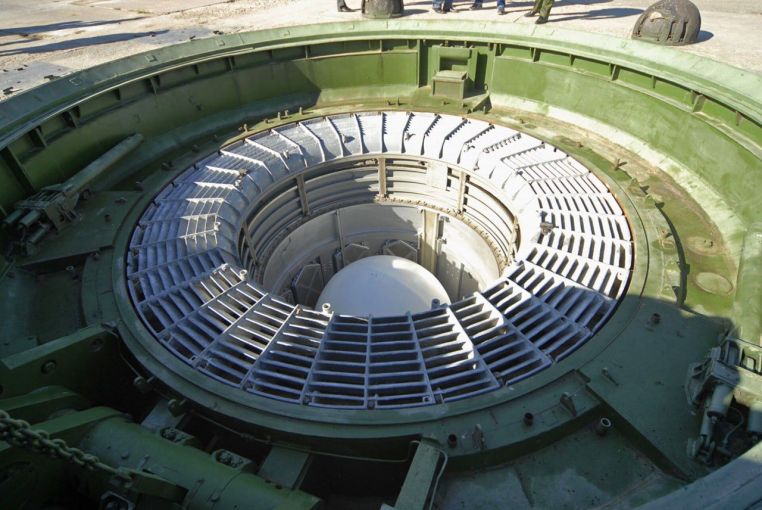
The image depicts the 15P735 missile silo housing the UR-100N UTTKh / 15A35 Intercontinental Ballistic Missile (ICBM), part of Russia’s Strategic Missile Forces arsenal. The UR-100N UTTKh, also known by NATO as the SS-19 “Stiletto,” represents an upgraded version of the earlier UR-100 missile series, designed for enhanced reliability, accuracy, and payload capacity. Development of the missile began at NPO Mashinostroyenia under the direction of V.N. Chelomey, with initial testing at the Baikonur Cosmodrome commencing on October 26, 1977.
The missile complex, designated 15P035, officially entered service following approval by the USSR Council of Ministers in December 1980. The first operational regiment equipped with this system was stationed within the 19th Zaporizhzhya Red Banner Missile Division in Khmelnitsky, Ukrainian SSR, reaching full combat readiness by January 1981. By 1984, the Strategic Missile Forces had deployed 360 such ICBMs across four regions, including Khmelnitsky, Kozelsk, Tatishchevo, and Novosibirsk.
The UR-100N UTTKh features liquid-fueled propulsion and can carry multiple independently targetable reentry vehicles (MIRVs), enhancing its capacity for strategic nuclear strikes. The missile’s design emphasizes high survivability in silos, rapid launch readiness, and improved resistance against enemy defenses, contributing to its role in maintaining strategic deterrence. The 15P735 silo seen in the image, built in the 2000s, represents a modernized structure that facilitates the missile’s storage, launch preparation, and deployment.
Potential threats related to the UR-100N UTTKh include its capability to deliver multiple nuclear warheads over intercontinental ranges, heightening the risk of escalation in a nuclear conflict scenario. Additionally, its MIRV configuration allows it to bypass missile defense systems, presenting a formidable challenge for adversaries. The presence of this missile system within Russia’s nuclear triad underscores its strategic importance in Russia’s defense posture, serving as a key component in preserving second-strike capabilities and projecting nuclear deterrence.

You must be logged in to post a comment.