


#تحلیل :
In response to the assassination of Iranian generals, most scenarios of attacks on occupied Palestine are based on ballistic missiles, cruise missiles, and suicide drones.
But the main challenge in this is to pass the air defense of the Zionist regime.
Israel definitely has one of the strongest protective shields in the world due to its small area and advanced technology and heavy investment in missile/air defense.
Passing this shield requires an attack with high quantity and quality.
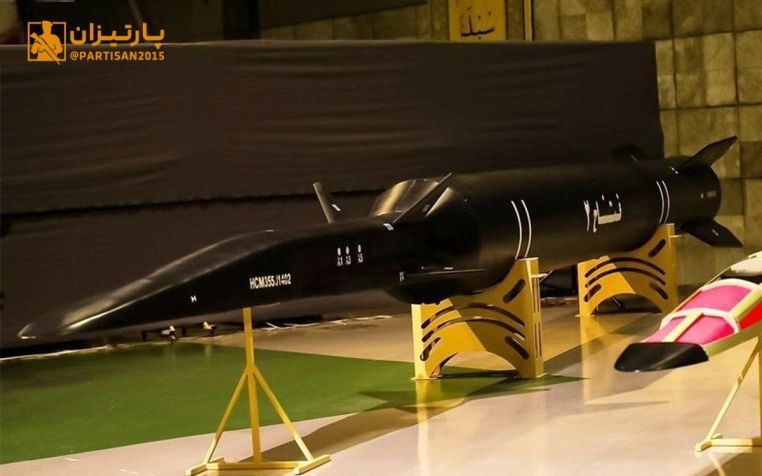
That is, in order to effectively damage the targets, a significant number of projectiles must be used so that the Israeli systems reach their capacity, and projectiles that operate beyond the control range of the Israeli systems in terms of speed, concealment, and maneuverability are needed.
Therefore, the need for extensive use of the most advanced components of Iran’s missile arsenal is raised; otherwise, we will only witness a limited operation with a low hit rate and low destruction.
But there is another challenge in the long term: if Iran resorts to a large-scale missile/drone attack on the occupied Palestinian territory, the Zionist regime will gain a great foundation and benchmark.
Such an operation will both reveal the effectiveness of Iran’s arsenal to a great extent and also determine the way such weapons work.
On this basis, the Zionist regime can eliminate its weaknesses for a bigger conflict in the future.
The success rate of such an operation is also very important in deterring Iran.
High success strengthens deterrence, and less than expected success can greatly reduce foreign caution and fear of Iran’s military power. This issue is probably the current challenge of Iranian commanders.


You must be logged in to post a comment.