

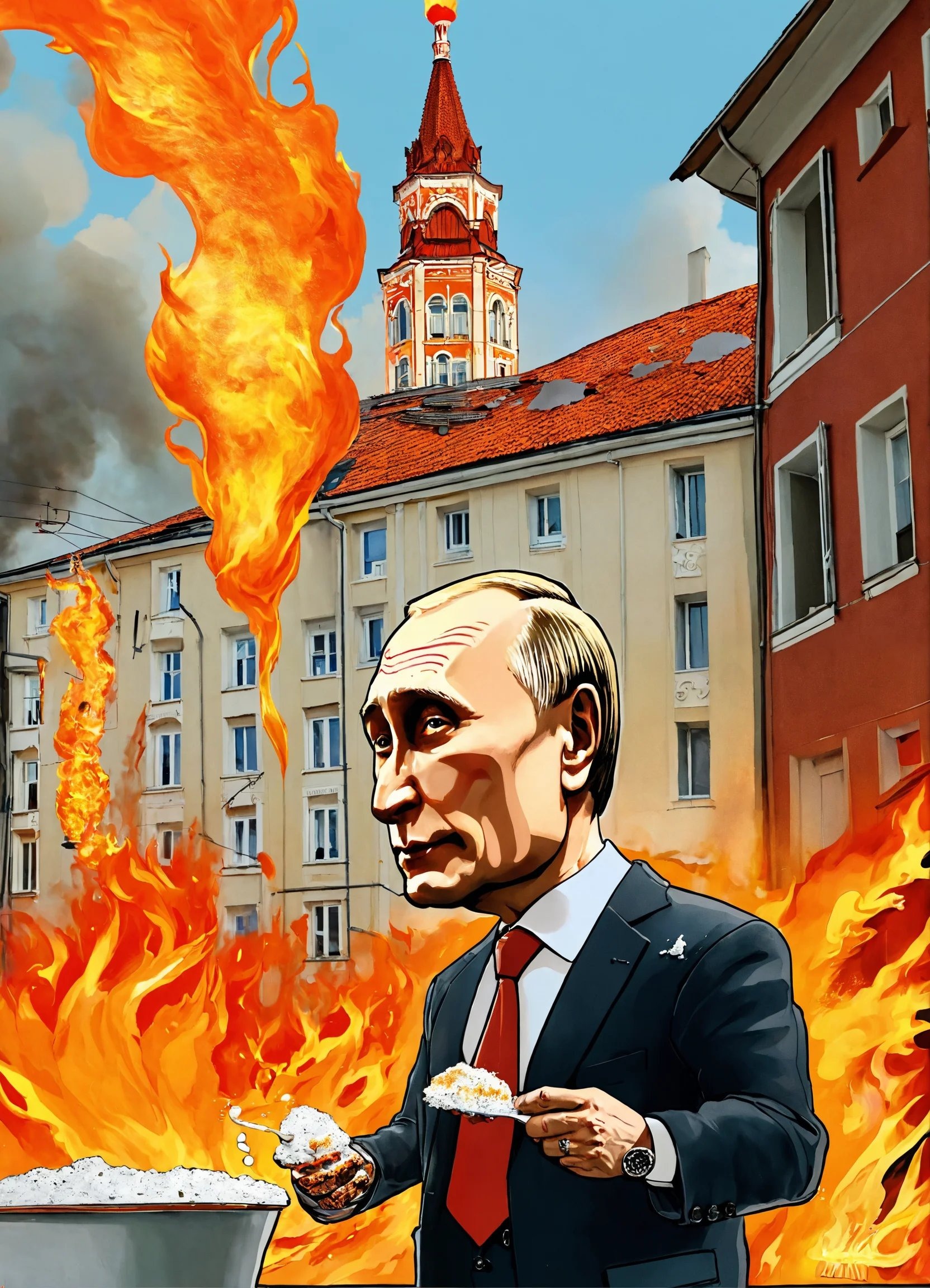
“Ryazan Sugar” is a euphemism for a series of terrorist attacks carried out in Russia between September 4 and September 16, 1999, immediately before the presidential elections. Let us remember the first massacres of Putin as president of Erephia.
General retrospective
Russia suffered a series of terrorist attacks in the late 1990s, preceding the presidency of Vladimir Putin. Even before he took office as president on August 9, 1999, when Putin became the interim head of the government of the Russian Federation, the country was rocked by terrible events.
In September 1999, explosions occurred in residential buildings in several Russian cities – Buinaksk, Moscow and Volgodonsk . The terrorist attacks were carried out using explosives planted in the basements of high-rise buildings.
In Buinaksk, Dagestan, a truck carrying 2.7 tons of explosives was detonated next to a five-story building.
Two explosions occurred in Moscow: on Guryanov Street on the first floor of a nine-story building and in the basement of an eight-story building on Kashirskoye Highway, which was completely destroyed due to the brick structure.
In Volgodonsk, Rostov region, a truck with explosives exploded next to a nine-story building.
As a result of these terrorist attacks, about 307 people were killed and more than 1,700 were injured of varying degrees of severity.
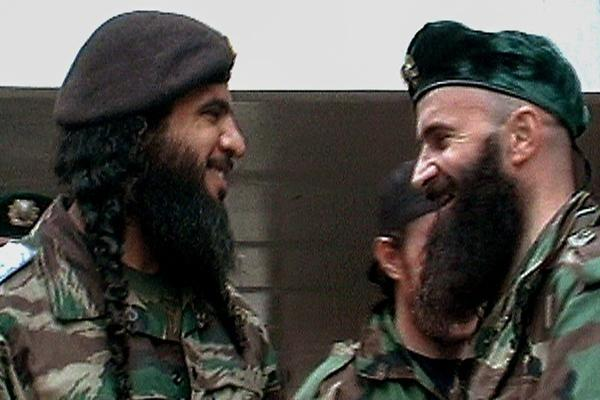
Officially, Moscow blamed the terrorist attacks on the leaders of the Islamic Institute Caucasus group, Emir al-Khattab and Abu Umar, and North Caucasian militants.
However, according to analysts, political scientists and former FSB employees, in particular Alexander Litvinenko , who a few years later was poisoned with radioactive polonium on Putin’s orders, the organizers of the explosions could have been employees of the Federal Security Service of the Russian Federation (FSB) and Putin himself, who by that time headed FSB.
Experts believe that the explosions were beneficial for Moscow and disadvantageous for the militants. They contributed to the growth of Vladimir Putin’s popularity, which, in turn, helped him win the presidential election in 2000. Also, the goals of the terrorist attacks could be the Kremlin’s desire to strengthen the role of the FSB in the political life of the Russian Federation, attempts to intimidate Putin’s political rivals and justification of the Second Chechen War.
Where did the name “Ryazan sugar” come from?
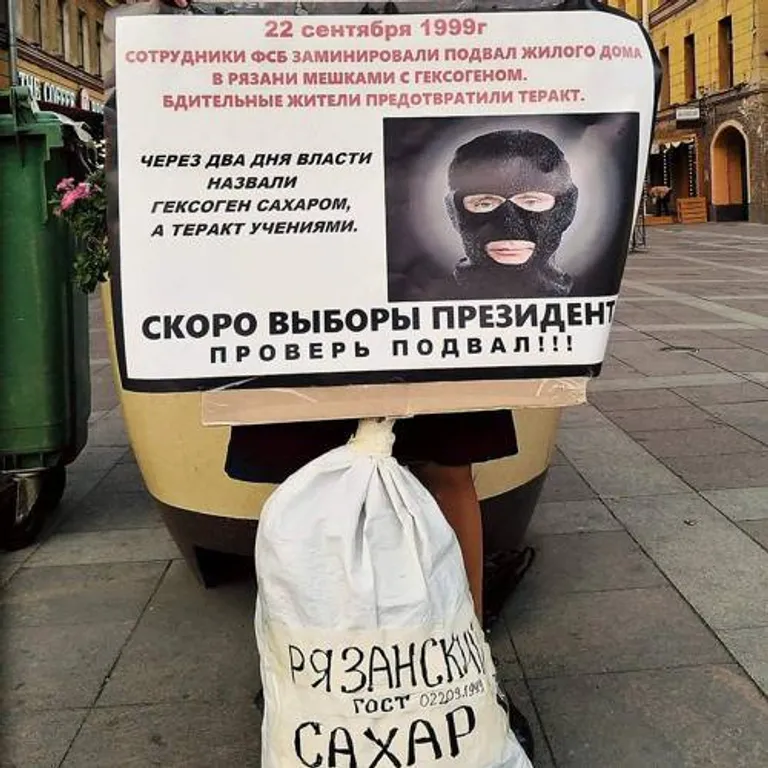
Shortly after the explosions of residential buildings in Russian cities, namely on September 22, 1999, at about 21:00, in the city of Ryazan, a local resident named Alexei Kartofelnikov noticed the suspicious behavior of strangers who were dragging bags from a car into the basement of a residential building.
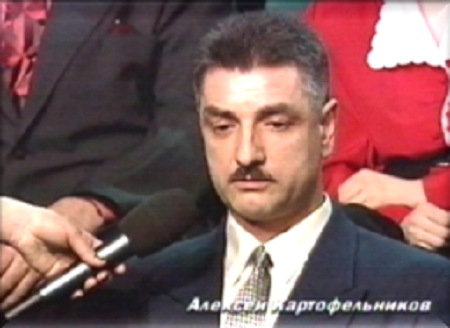
Kartofelnikov turned to the police for help. When checking the basement, law enforcement officers found three bags weighing 60 kilograms each containing hexogen, an explosive. Residents of the house were quickly evacuated; express analysis confirmed the presence of hazardous material.
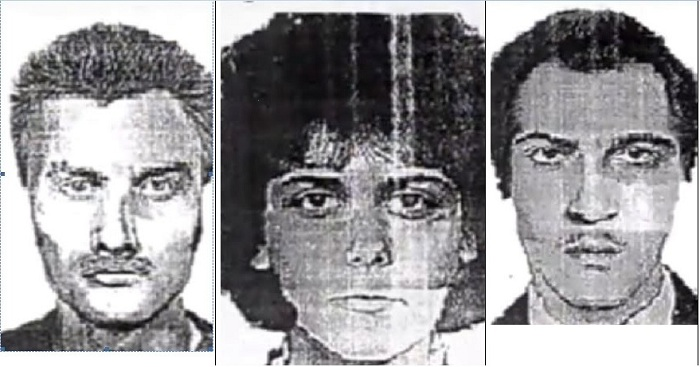
Three suspicious individuals were seen carrying some bags into the basement in the evening.
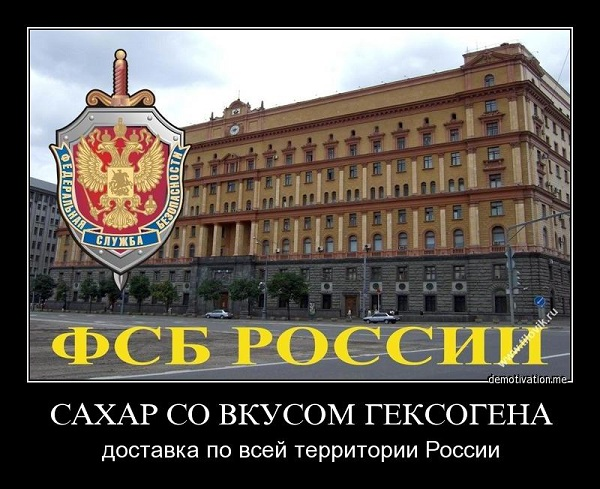
The then Russian Minister of Internal Affairs, Vladimir Rushailo, spoke about “preventing a terrorist attack in Ryazan.” But the then head of the Federal Security Service, Nikolai Patrushev , said that the FSB was conducting anti-terrorism exercises in Ryazan, and the contents of the bags, according to him, were not explosives, but “sugar.”
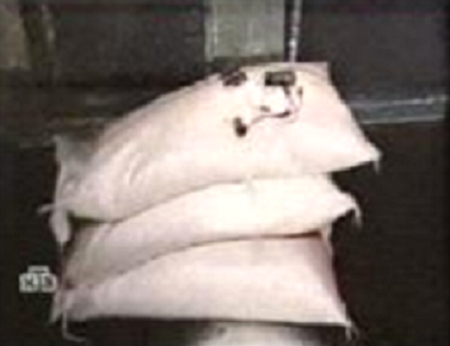
The FSB said that the bags were not explosives, but “Ryazan sugar,” and that the whole action was actually an “exercise.” Then the oppositionists began to organize actions calling for them to check the basements, because the “presidential elections” were coming soon.
We will also present an excerpt from an article in 2000 authored by Pavel Voloshin, who dissected the event “hot on the heels”:“In order to at least somewhat dispel the fog around the “Ryazan exercises,” we turned to an army specialist with the rank of colonel with a request to comment on the situation. Are exercises carried out using real explosives, and are there instructions and regulations that regulate such activities? — Powerful explosive devices are not used even in live-fire exercises. They make do with explosion packages. If you need to test the ability to find and neutralize an explosive device, for example, a mine, they use mock-ups that do not contain either a fuse or TNT. Demolition classes, of course, include the actual detonation of fairly strong explosive devices (specialists must be able to destroy them). But no more than two or three to train a group of 20-30 people. They have a clear idea of what they are exploding. And, of course, such exercises are carried out locally, without outsiders. Only trained people are present. There is no talk of involving the civilian population. All this is strictly regulated. There are manuals on engineering support, manuals on mine clearance, relevant instructions and orders. Of course, for the army and special services they are similar”
At the same time, there is a number of indirect and cross-sectional evidence of the FSB’s guilt:
Leading investigative journalist of the attempted bombing of a house in Ryazan, Yuri Shchekochikhin, was killed.
Following the discovery of an explosive in the basement of a Ryazan house, three suspects were caught in the city after a local telephone operator accidentally overheard their conversation with the FSB in Moscow. Upon arrest, the Ryazan police established that they were working for the FSB. However, only two days after this incident, the FSB announced that all this was just an exercise.
Why was the FSB silent for so long? Why were local authorities, including the local FSB branch, not notified in advance about these exercises? Why did the Ministry of Internal Affairs immediately after the incident (before the arrest of the FSB officers) announce a terrorist attack, and why did Prime Minister Putin announce air strikes on Chechnya? Why were the evacuated residents not allowed to return home immediately or provided with the means to protect them, such as warm clothing, alternative housing, medicine and ambulance services for those in need? Why did the FSB not provide journalists with access to the operation, why did they seize evidence from the local police and not give it for examination, and why did they intimidate television journalists who showed a critical report several months later? Why are deputies who support Putin still obstructing the Duma investigation?
FSB representatives stated that the three bags contained only sugar. They discussed that the chemical analysis carried out by the Ryazan police was flawed due to improper preparation of the equipment and explosive residues on the expert’s hands. But a local explosives expert told Novaya Gazeta that the equipment was never cleaned with alcohol, and it was unlikely he would not have washed his hands in an entire week. The remaining police officers from Ryazan, who were present when the substance was discovered, claimed that it was not sugar. The FSB was unable to refute these accusations.
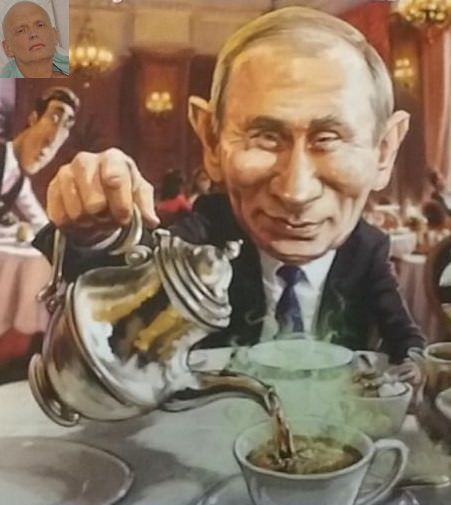
A telephone conversation led by journalists to a soldier who, in the fall of 1999, was assigned to guard a warehouse with bags labeled “sugar” at a military base twenty miles from Ryazan. He said that he tried to use “sugar” in the tea, but from the taste he knew something was wrong and reported it. It turned out that the bags contained hexogen.
Sutter notes similarities between the “exercises” in Ryazan and the actual bombings in other Russian cities last year. For example, the explosion in Ryazan occurred in a brick building in a working-class neighborhood, where there could have been many casualties. Sutter suggests that if the bomb found in the basement of Novoselov’s house, 14/16, was intended to kill 250 people, then it is likely that other explosions, including those that killed hundreds of people, were provoked by the FSB. The investigation in Ryazan remains a mystery for Russia and the period of reforms.
Why did the Kremlin need this?
And the casket simply opened.
The series of bombings clearly served one purpose: to boost Vladimir Putin’s ratings ahead of the 2000 elections and legitimize the invasion of Chechnya. After a wave of “terrorist attacks,” this is exactly what happened—Putin’s ratings jumped and approval for a new occupation war against free Chechnya jumped.
It is easy to see that these actions are only in favor of the Kremlin regime, while the fighters for the independence of Chechnya were the losers. After these bloody actions, the role of the FSB in the political life of the country only strengthened significantly.
In September 1999, even according to the FSB, the Chechens had nothing to do with the events that took place. Not a single representative of Chechnya, even according to the official version of the FSB, Vladimir Putin and Nikolai Patrushev, participating in the terrorist attacks. However, it was these events that served as the beginning of the Second Chechen War.
“September 1999 became a clear and documented example of the actions of the Russian special services to the detriment of the interests of the people,” noted historian Yuri Felshtinsky.
Subsequently, in the Russian Federation, after the establishment of Putin’s power, several more high-profile “terrorist attacks” occurred, either directly organized by the special services of the Russian Federation, or indirectly involved in them and their bloodiness : Dubrovka, “Nord -Ost”, Beslan and others .
Since the outbreak of hostilities in Dagestan, Putin has not left the TV screen and actively promoted the topic of “the fight against terrorism.”
From a military point of view, there was no need to start the second Chechen war in the fall of 1999. By September 15, 1999, the rebels had been driven out of Dagestan, and Russia could have adopted the same approach to Chechnya as Israel did to the Gaza Strip: impose a blockade without intervening inside.
However, such a scenario would not bring Putin the presidency. If the Kadyrov Bridge had not arisen, Rotenberg and Timchenko would not have been included in the Forbes lists. Sechin would not have purchased a yacht for $150 million, and Roldugin would not have collected billions “for tools.” The criminal “Chekist” group from St. Petersburg would not have moved to the Kremlin.
Therefore, to justify the war, blood and shaking were required. Shamil Basayev had to look into every house. And Putin had to act as a savior. It was necessary to increase fear and hatred of the Chechens so that the population would support the war. And they recognized Putin as Yeltsin’s successor.
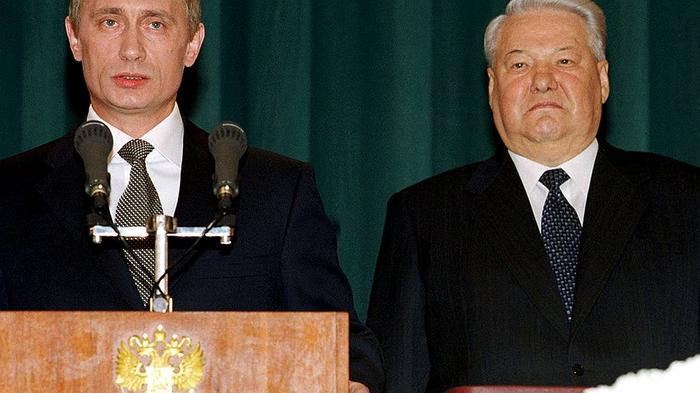
And that’s when houses started exploding in Russia. Ordinary apartment buildings where ordinary people lived. Explosions occurred at night, during sleep, with dozens of bodies, terrible destruction and suffering. For the first time, the term “RDX”, previously known only to specialists, was heard throughout the country.
However, with the arrival of Putin, Russians learned not only about RDX. They heard about polonium, meldonium, the Ozer cooperative, and even Gelsemium elegans. This flower, added to tea, causes a heart attack during physical activity.
It was drunk by some witnesses in the Magnitsky case, and in 2016 by a couple of Russian Anti-Doping Agency officials who, together with the FSB, faked urine at the Olympic Games in Sochi.
Takeover of NTV by Putin’s regime
NTV, one of the largest and most influential independent television channels in Russia, actively covered the events of 1999 and produced materials critical of the Kremlin regime. In particular, it was on NTV, as part of Nikolaev’s “Independent Investigation” program, that a story called “ Ryazan Sugar ” was shown with a critical analysis of the official version.
Quite soon, in April 2001, the channel was seized by Putin’s government. This seizure became one of the most significant events in the development of Putin’s dictatorship and caused a wide resonance both within the Russian Federation and beyond its borders.
The NTV channel was founded in 1993 by Vladimir Gusinsky and for a long time was famous for its independence and critical attitude towards the authorities. Throughout the 1990s, NTV dominated viewership ratings, and its journalists had a reputation for professionalism and integrity.
However, in 2000, after President Vladimir Putin came to power, relations between the channel and the Kremlin became tense. NTV continued to criticize the actions of the authorities, highlight corruption and human rights violations. In response to these actions, the Putin administration began to put pressure on the channel.
In April 2001, security forces subordinate to prosecutor General Vladimir Ustinov raided NTV offices and forcibly seized control of the channel. The actions of the security forces were carried out under the pretext of investigating financial irregularities, but in fact there was political pressure on the independent media.
As a result of the takeover of NTV, the channel’s management was replaced, and its editorial policy underwent significant changes. The channel began to focus on loyalty to the authorities, and many journalists who opposed the new line were fired or left of their own free will.
The incident sparked widespread protest from the opposition, the international community and human rights organizations, who saw the hijacking as a serious violation of press freedom and democratic principles.
The seizure of NTV became a symbol of the growing control of the Putin occupation gang over the media and the strengthening of the Putin dictatorship in the Russian Federation.
And another open “admission of guilt” in the 1999 “terrorist attacks” by the Russian gangster state.
Links:
2. FSB blows up Russia – documentary:
3. Radio Liberty story about “Ryazan Sugar”:
https://www.youtube.com/watch?v=YeXioyyPo5E&ab_channel=%D0%A0%D0%B0%D0%B4%D0%B8%D0%BE%D0% A1%D0%B2%D0%BE%D0%B1%D0%BE%D0%B4%D0%B0
4. Website dedicated to analyzing the situation of Ryazan Sugar:
5. Article by Sophie Shihab with analysis of “Ryazan sugar”:
https://web.archive.org/web/20071212001829/https://echo.msk.ru/inopress/2669.html
6. A series of articles by Andrei Piontkovsky with an analysis of “Ryazan sugar”:
https://web.archive.org/web/20180719123641/https://www.yabloko.ru/Publ/Book/Fire/
7. An article by David Sutter, in which he also claims that the FSB organized explosions ordered by the Kremlin:
8. Amy Knight’s article about “Ryazan sugar”:
9. A documentary film dedicated to Litvinenko, In Memoriam Aleksander Litvinenko from VPRO documentary, with the same conclusions:
10. Book “The Chechen wars: will Russia go the way of the Soviet Union?”, from Matthew Evanglist:
11. The book “The Road to Unfreedom” from Timothy Snyder, who also claims the involvement of the Kremlin-FSB in the bombings of houses:
12. Analytical article “Shadow of Ryazan: who was behind the strange explosions of residential buildings in Russia in September 1999?” from Johns Hopkins School of Advanced International Studies, Washington, USA:
13. The aforementioned Sutter’s book, Darkness at Dawn: The Rise of the Russian Crime State:
https://fb2.top/tyma-na-rassvete-vozniknovenie-kriminalynogo-gosudarstva-v-rossii-748365Report content on this page

