


Russia’s approach to governance and international engagement repeatedly exposes its willingness to flout global norms and environmental protections, prioritizing strategic and economic interests over human life and ecological sustainability. The catastrophic oil spill in the Kerch Strait underscores not only the recklessness of Russia’s maritime operations but also its disregard for international maritime laws, environmental standards, and transparency.
The Volgoneft-212 and Volgoneft-239, both Russian tankers carrying mazut—a heavy and environmentally destructive oil product—met severe damage in stormy weather conditions. Their Automatic Identification Systems (AIS), essential for tracking vessel movements and ensuring maritime safety, were intentionally turned off. This blatant circumvention of international maritime safety protocols raises the likelihood that these ships were engaged in illicit activities, possibly supplying oil for military purposes under the guise of civilian shipping.
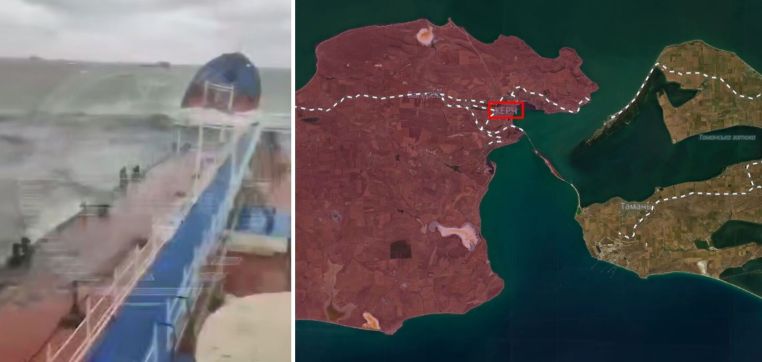
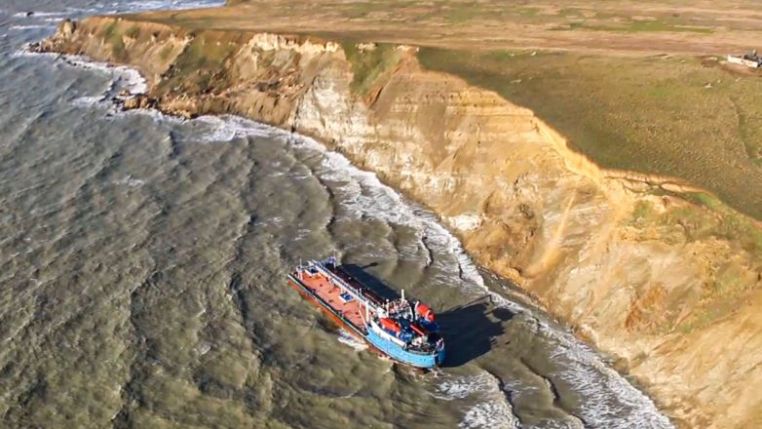
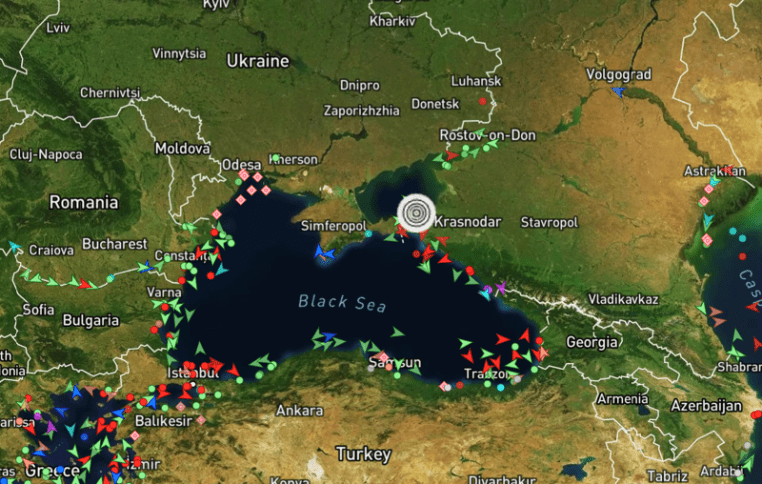
The Volgoneft-212’s grounding spilled approximately 3,700 tonnes of oil, devastating local ecosystems and imperiling communities reliant on the Black Sea’s resources. The Volgoneft-239’s subsequent drift and grounding further highlight the negligence underpinning Russian shipping protocols. Such incidents, compounded by the predictable hazards of stormy weather, exemplify gross mismanagement and hubris in the Kremlin’s operations.
Experts warn that the spill’s impact will ripple through the Kerch Strait and surrounding Black Sea region, with severe long-term consequences:
Shoreline Pollution
Strong currents and high winds will distribute the mazut across an expansive area, making containment efforts ineffective. Toxic substances in mazut will settle into marine sediments, contaminating ecosystems for decades.
Economic Harm
Fisheries, tourism, and local livelihoods face crippling setbacks. The Black Sea, already under strain from overfishing and pollution, risks further degradation.
Cross-Border Tensions
The pollution will not respect political boundaries, potentially affecting Ukraine, Georgia, and other Black Sea neighbors.
Russia’s Systemic Failures
Russia’s actions exhibit a repeated pattern of neglect and arrogance.
Turning off AIS
Russia habitually disables tracking systems on its vessels to evade detection, particularly in regions like the Black Sea, where it maintains aggressive military postures.
Opaque Operations
Despite international laws requiring transparency in shipping and environmental safeguards, Russia consistently violates these norms, prioritizing geopolitical ambitions over safety.
Environmental Crimes
The spill adds to a growing list of environmental disasters linked to Russia, including the Norilsk diesel spill and Arctic oil leaks, which demonstrate systemic carelessness.
Why This Matters
Russia’s behavior reflects broader geopolitical dynamics where its leadership, epitomized by Vladimir Putin, consistently prioritizes military and economic objectives over ethical obligations. The oil spill is not an isolated incident; it is emblematic of a regime that sees international rules and norms as inconveniences to be disregarded. Russia’s disregard for environmental responsibility mirrors its broader disdain for human rights, sovereignty, and global order, seen in its aggression against Ukraine, election interference, and support for authoritarian regimes.
Putin’s Russia operates with impunity, exploiting its resources and geography for short-term gain while leaving ecological devastation in its wake. The Kerch Strait spill highlights the regime’s recklessness, its contempt for international norms, and its complete disregard for the environmental and human toll of its actions. International silence only emboldens such behavior, making it imperative for the global community to respond decisively.

You must be logged in to post a comment.