


Professional field/official position/biography:
Founder of the Wagner Private Military Company
Utkin was born in Kirovohrad in the Soviet Union and, according to the Ukrainian authorities, had Ukrainian citizenship after its collapse . Until 2013, Utkin served as a lieutenant colonel in Pskov , Russia , where he was a member of the GRU’s 2nd Special Reconnaissance Brigade. Utkin has a penchant for the aesthetics and ideology of the Third Reich. His battle name “Wagner” refers to Richard Wagner. During his stationing in Luhansk as part of his deployment in the Russian-Ukrainian War, he insisted that his private unit wear steel helmets instead of the headgear customary for Russian armed forces, which imitated the helmets of the Wehrmacht.
Then Utkin went to the Russian security service provider “Moran Security Group”, which was operated by ex-military personnel and, among other things, offered protection against pirate attacks at sea. The company later founded the “Slavic Corps” military group and recruited volunteers to take on security tasks in Syria. With the “Slavic Corps” Utkin went to Syria to defend Bashar al-Assad. His battle name was “Wagner.”
Utkin was born in the early 1970s in the Urals, presumably in the town of Asbest. The commander of the Wagner PMC unit spent his childhood and school years in the village of Smolino, Krivograd region. In his youth, he joined the Armed Forces of the Russian Federation and commanded a military unit on the border with Estonia.
It is known that Utkin went through several hot spots, including in the North Caucasus, and as a commander of a special forces unit he fought in Chechnya. There are rumors that he almost single-handedly recaptured Russian soldiers from captivity.
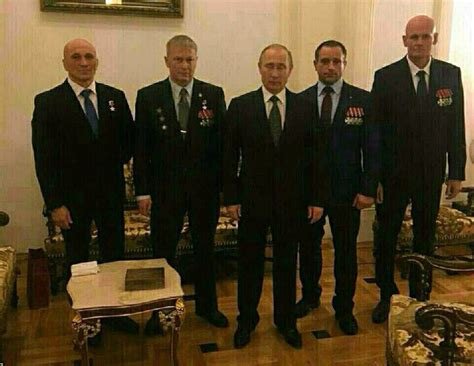
Dmitry Utkin broke up with his wife a few years ago on the basis that she considered her husband incapable of adapting to peaceful life in the rear. It is known that he is a holder of the Order of Courage (four such awards at once) and once, while being awarded, he was photographed with Russian President Vladimir Putin.
In the Armed Forces of the Russian Federation, Dmitry Utkin graduated from service in 2013 as commander of a GRU special forces detachment, retired as a lieutenant colonel. In PMC “Wagner” Utkin began his service in the same year. In February 2014, he was present in Crimea, after which he went to Donbass.
In Russian cinema, there are three incarnations of Dmitry Utkin in the characters of films: “Tourist”, “Sunshine” and “Granite”. In the latter, the role of Utkin was masterfully played by the actor Gleb Temnov.
UTKIN, Dmitry Valeryevich (b. 1970) was the commander of the 700th Special Forces Unit of the 2nd Separate Special Forces Brigade of the Ministry of Defense. After being transferred to the reserve with the rank of lieutenant colonel, he worked for the Moran Security Group and participated in the so-called Syrian expedition of the Slavic Corps in 2013. That year, the Russian state security services even arrested him, but after the outbreak of aggression against Ukraine in 2014, the activities of Utkin and his squad were again in demand by the Kremlin.
Since the beginning of 2014, Utkin has been the commander of his a mercenary unit, named after his call sign Wagner PMC. Since the spring of 2014, Wagner operated in Crimea. In particular, the militants of this unit participated in the disarmament of the Ukrainian military who did not resist the Russian troops on the peninsula. In 2014-2015, the PMC structure also operated in the territories of Donetsk and Luhansk regions occupied by Russian military and mercenaries. Thus, the Security Service of Ukraine (SBU) assured that the Wagner fighters were involved in the downing of the Ukrainian military transport aircraft Il-76 in Luhansk on July 14, 2014, resulting in the death of 49 people; the storming of the Luhansk airport and the city of Debaltseve, Donetsk region.
From October 2015 and at least to 2018, Wagner fought on the side of the Russian military and the Bashar al-Assad regime in Syria. The total number of the Wagner militants in Syria was estimated at 400 people. The group suffered heavy losses during that war. In particular, it lost many of its militants to mortar shelling of the Russian Armed Forces base in October 2015 and the battles for the city of Palmyra in 2016 and 2017. In the first six months, the group lost at least 32 people killed and 80 seriously wounded. During the new series of battles for Palmyra in 2017, at least 9 mercenaries were killed. The total losses of Russian mercenaries during U.S. Air Force air raids in the province of Deir ez-Zor in just one day on February 7, 2018, are estimated at 200 people.
In 2017-2019, the PMC fighters fought in Sudan on the side of the country’s dictator Omar Bashir, overthrown in 2019. In March 2019, it became known that at least 300 Wagner mercenaries were present in Libya, where it supports Benghazi-based Libyan National Army General Khalifa Haftar. According to British intelligence, the PMC operates together with the units of the regular Russian Armed Forces.
Wagner fighters are also present in other African countries and got involved in a series of criminal incidents and international scandals. So, in January 2019, it turned out that they were involved in the murder of three Russian journalists in the Central African Republic who investigated their activities in this country. A month later, American General Thomas Waldhauser told the US Congress that Russia still holds about 500 military personnel in the Central African Republic, with 175 of them belonging to the Wagner PMC. The main interest of armed Russians in the Central African Republic is exactly the same as in Libya: easy access to and control over local natural resources.
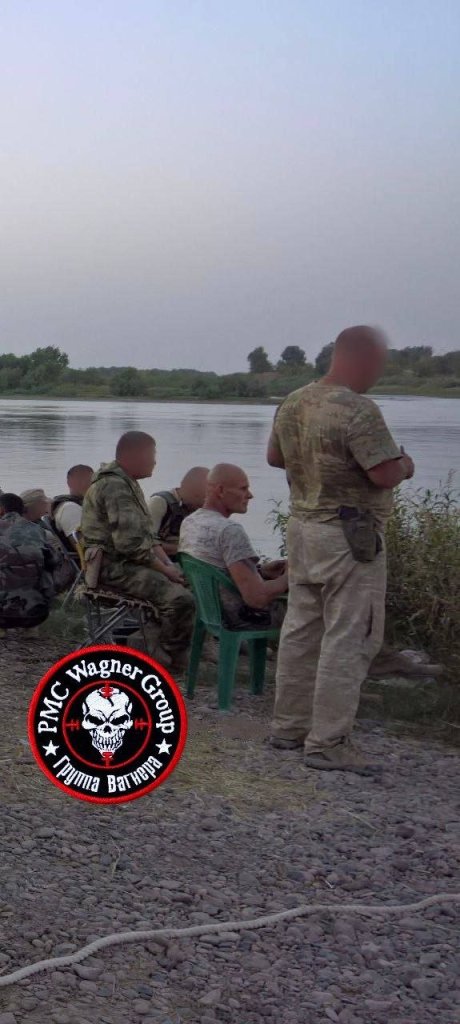
Many of the Wagner fighters received Russian orders and medals even though their activity is illegal by Russian law.
In November 2017, Dmitry Utkin became CEO of Concord Management and Consulting, the management company of the catering holding of the “father of the Kremlin Internet trolls” Evgeny Prigozhin, a close Putin’s associate. However, it doesn’t say that he retired as the formal or informal head of the mercenary group.

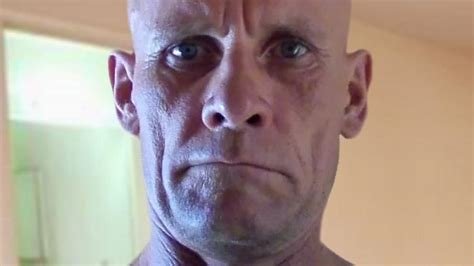


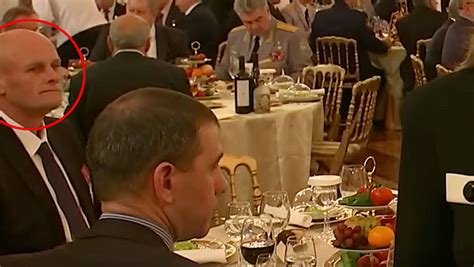
The United States imposed sanctions against Dmitry Utkin as head of the Wagner PMC in June 2017. However, the feeling of international impunity which favors the activities of the mercenaries led by Utkin helps the Russian regime to destabilize the situation in other countries of Africa and the Middle East. It cannot be ruled out that they may return to Ukraine or try to take part in the Kremlin provocations against the Baltic states.

Accused of:
1) Of being the commander of an illegal armed formation, conducting military activities outside the Russian Federation, which is a crime under Article 359 of the Criminal Code of the Russian Federation, “Mercenary.”
2) Murders and war crimes in the territory of foreign states (Ukraine, Syria, Sudan, Libya, and the Central African Republic).
3) Organizing the murder of three Russian journalists in the Central African Republic sent to this country by the Investigation Management Center of Mikhail Khodorkovsky.
4) Commanding one of the units of GRU (the special forces of this highly classified department are carrying out subversive work or secret military activities against foreign states).
5) Putting pressure on witnesses to his criminal activities in the PMC, critics of his activities and threats of reprisals against them.
Dmitry Valerievich Utkin (Russian: Дмитрий Валерьевич Уткин; born 11 June 1970), is a Russian former GRU special forces officer, who served as a lieutenant colonel. He is considered the founder of Wagner Group, with his own call-sign reportedly being Wagner. Utkin has received four Orders of Courage.
Putin’s close associate Dmitry Utkin and his non-humans from the Wagner PMC are involved in the atrocities in the Kyiv region.
The unit’s crimes were previously seen in Syria in 2017. In the SAR, single cases of executions by Russian mercenaries were noticed, in Bucha, Irpen and Gostomel, hundreds of cases of a shot in the head, rape of minors were recorded. An interesting fact is that the name of the PMC came from the call sign of its leader, Dmitry Utkin, a big admirer of Hitler. It was this call sign that Putin’s friend took for himself, because the Fuhrer’s favorite composer was Richard Wagner. More and more supporters are seen in the Russian divisions of the Nazi ideology, especially when SS badges flaunt on the shoulders, pictures from the Kyiv region confirm this.
Mercenaries have no morality – kill their robot for money.
The failures of Russian PMCs reveal the absence of the Russian army as a single structure
For the last 6 years in the world information space, all you have heard is about Russia’s hybrid invasion of Ukraine, support for Bashar al-Assad in Syria and Khalifa Haftar in Libya, private military companies from Africa to Venezuela, and endless espionage and hacker scandals. Reading reports from the battlefields, literally and figuratively, one gets the impression that the Russian army has become stronger than ever and now it can handle almost any operation and project.
In fact, this is absolutely not the case, and here’s why.
If we really look through the last 6 years of history, then we can see how Russia actually suffered defeats and failures, or achieved very subjective successes, in various campaigns, while not resorting to the full-scale use of the army.
For example, in Ukraine, in 2014, Russia, having introduced a limited contingent of its troops into our country, could not fulfill its cherished dream – to arrange the so-called New Russia from Kharkov to Odessa. Yes, and Kyiv somehow failed to be taken in two weeks, although at that time it was opposed mainly by volunteers and the Ukrainian army killed in a quarter of a century of plunder.
In Syria, the Russian military, which also entered in a limited contingent after several years of unsuccessfully fighting PMCs there, also took years to use the full power of their military machine to suppress the resistance of the rebels in sandals. And as soon as they first clashed with regular Turkish troops in the province of Idlib, things immediately went from bad to worse.
In Libya, the Russian mercenaries of PMC “Wagner” were driven all the way to Sirte and in the near future, this persecution will continue further. Similarly, in Mozambique, the Wagner PMC is unable to take control of vital installations, engaging mainly in the so-called “tactical retreat”.
As for spies and cyberattacks, then, of course, having multiplied its cells around the world, Russia has only achieved popularization, but not a high efficiency of activity. Almost every cyber attack is detected by Western intelligence services, and the special operation of Russian agents in the EU ends in total fiasco and disgrace. A shame so offensive that some GRU agents even have to call themselves almost gay on live Russian television.
And now, after so much voluminous preface, we come to the last, at least for today, chapter in the history of the worthlessness of the Russian power structures – the Belarusian fiasco.
Another failure of the Russian operation, this time in Belarus, literally one to one similar to the story in Montenegro in 2016, but with its own specifics. The specificity lies in the fact that the operation was supervised by the GRU, and the former fighters of the Wagner PMC were the perpetrators. That is why now it is this abbreviation and the name of PMC “Wagner” that is heard in all the news feeds, and not the GRU at all.
The GRU, which received the green light at the end of 2019 to carry out the operation to remove Alexander Lukashenko, very prudently recruited people from the Wagner PMC, who are currently unemployed, into their “strike group”, so that in case of failure, all the bricks would fall on Yevgeny Prigozhin , Dmitry Utkin and directly the FSB.


You must be logged in to post a comment.