


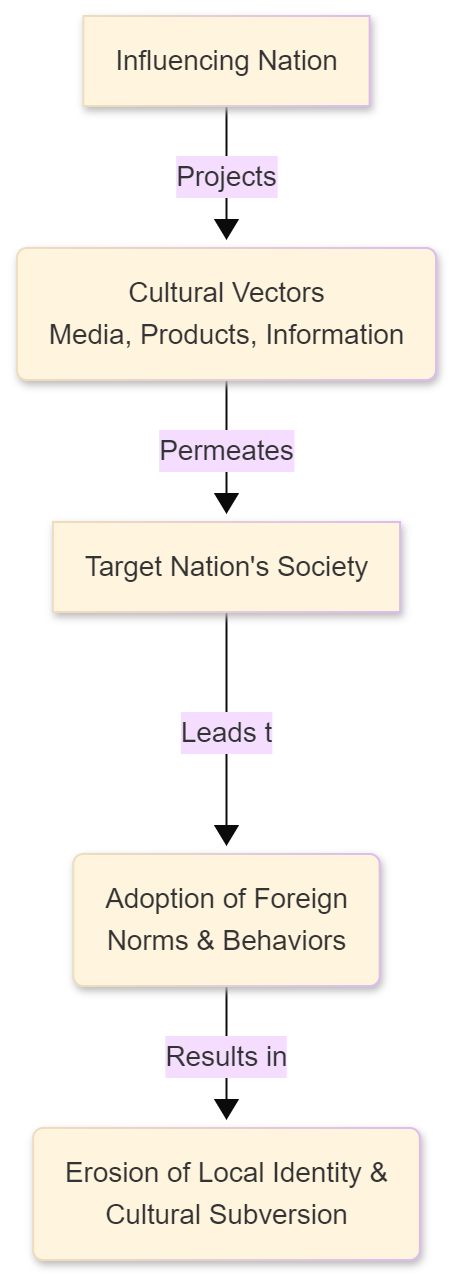
Mental warfare describes a confrontation where one nation projects its values, ideals, lifestyle, and other cultural elements onto another. The conflict is not fought on a physical battlefield but within the collective consciousness of the target population.
Vectors of Cultural Influence
This transfer of cultural norms is rarely overt. Instead, it occurs through pervasive channels of influence. Entertainment media, such as films and music, introduce and normalize foreign social behaviors. Consumer products and global brands embed specific lifestyles and aspirations within the target society. Educational systems and online platforms can also act as conduits, shaping the worldview of a new generation to align more closely with that of the influencing nation. The campaign’s effectiveness depends on the subtle, persistent exposure to these foreign cultural elements.
Identifying a Mental Invasion
One can identify a successful mental invasion by its outcomes. When the people of a target nation begin to widely adopt the characteristics, habits, or behavioral patterns of the influencing nation, a form of cultural displacement is underway. The evidence is not in a declaration of war but in the observable consequences within the society. Shifts in consumer preferences, the adoption of foreign slang, changing social norms, and an erosion of traditional values all point to the effects of a sustained mental warfare campaign. Its success is measured by the degree to which the target culture mirrors the aggressor’s.
Psychological Profiling and Adversary Cultural Services


You must be logged in to post a comment.