


Call to Cyber Arms
So, do not betray the call to electronic jihad if it reaches you, … Your failure would be a betrayal of the nation and the sacred cause, so be among those who are among the first to do good deeds.
This blessed call includes every Muslim and every free person who owns a simple electronic device, whether it be a personal computer, a smartphone, a tablet, or any other digital tool that enables them to participate in the confrontation. It does not require traditional military experience, but rather very basic skills.
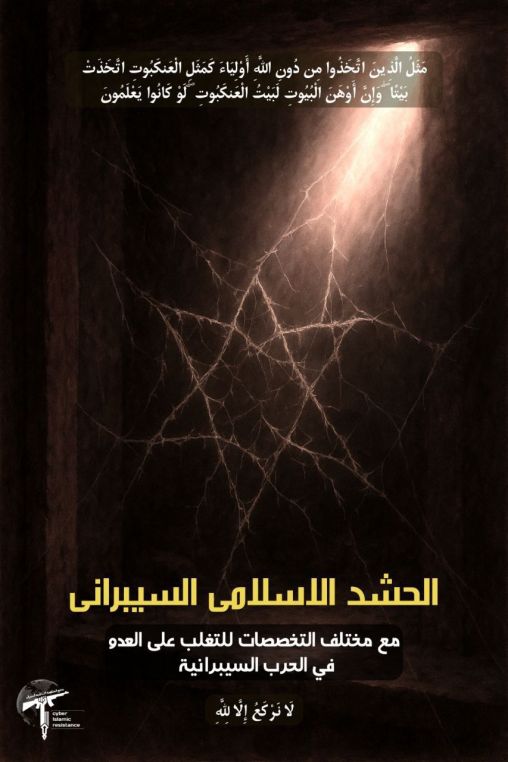
An organized call to online action against Israel aligns with IRGC practice across theology, psychology, recruitment, and tradecraft. Messaging reads as operational guidance rather than mere propaganda due to the shift from exhortation to logistics through the named Telegram bot and handler. A sustained volunteer model that pairs religious obligation with low-skill tasks points to a scalable harassment and disruption campaign against Israeli and allied targets. Confidence assesses as high.
Religious framing anchors the piece from the first line. A quote from An‑Nisa 84 presents action as a divine duty — a move that lowers hesitation and grants moral exemption for unlawful behavior. Prior Iranian mobilization content has leaned on identical cues, using sacred text to recast hacking and harassment as righteous defense. The concluding reference to Al‑Ankabut 69 closes the loop — spiritual reward follows struggle — which helps retain volunteers without pay, and keeps churn low during quiet periods between taskings.
Pan‑Islamic outreach broadens the pool. A call to Muslims and to so‑called free people asks for participation that crosses language, citizenship, and factional lines. Emotion and grievance play as the primary accelerants. Suffering in Gaza and scenes of displacement present a moral crisis that demands action now. Guilt and shared identity drive throughput into the onboarding funnel. Diaspora audiences and young sympathizers sit squarely in the center of that funnel since they experience urgency but often lack ties to professional networks that would warn them away.
An insistence that no military background is needed removes the last major barrier to entry. Anyone with a smartphone or a basic computer becomes a potential participant. Past Iranian activity linked to Basij online brigades and to IRGC‑aligned operators has adopted exactly that model — point‑and‑click DDoS scripts, recycled lure kits, and social account harassment. A claim that Israeli cyber defenses are fragile functions as a false efficacy cue — recruits feel that action today produces results tomorrow. That line does not reflect ground truth inside Israel’s large service providers and major enterprises. Messaging focuses on psychology over engineering — confidence first, capability later.
Command and control moves through Telegram. A bot handles intake and automation — a handler account provides triage and task assignment. That structure reads as decentralized enough to scale across languages and time zones while also preserving plausible deniability for higher‑order direction. Disposable handles, layered admins, and rotating invite links complicate takedown and slow cluster attribution. Reuse of narrative packages and tooling indicators still leaks across waves — link shorteners, lure themes, grammar tics, and time‑of‑day patterns tend to repeat and permit clustering with patient collection.
Tradecraft expectations follow a familiar arc. Resource development begins with messenger account creation and low‑cost VPS procurement — short‑lived domains and content delivery abuse round out the kit. Reconnaissance scrapes emails and org charts from public sources. Initial access centers on spearphishing links and attachments, with occasional credential stuffing against poorly protected portals. Impact activities lean on network‑level floods and endpoint‑level request loops powered by volunteers. Defacement against small sites provides media‑ready screenshots while large‑scale intrusions remain rare due to skill and access limits. The tables below map those behaviors to ATT&CK techniques, expected artifacts, and detection points.
Targeting forecasts split along two lines. High‑volume nuisance pressure lands on public‑facing government sites, municipal portals, small and mid‑size enterprises, NGOs, and diaspora institutions. Higher impact events remain less frequent and often depend on third‑party weaknesses, misconfiguration, or unlucky exposure. A steady drumbeat of harassment, inbox floods, and account‑recovery social engineering threatens NGOs and schools more than hardened national providers. Public perception matters as much as uptime — a short outage paired with viral proof posts drives the narrative of success.
Attribution considerations point toward IRGC‑aligned influence and coordination rather than a loose spontaneous crowd. The theological scaffolding, the explicit logistics via Telegram, the low‑skill volunteer call, and the blend of harassment, phishing, and flood windows mirror known patterns from IRGC‑related information operations and Basij recruitment content. Final judgment on direct tasking versus sympathetic proxy remains open without private platform data — confidence remains high for alignment, moderate for direct command.
Defender posture should emphasize friction at scale rather than silver bullets. Protective DNS and registrar relationships blunt lookalike domains and short‑lived infrastructure. CDN surge playbooks and rate‑limit changes absorb amateur floods. Enterprise gateways strip macros, detonate lures, and block common shorteners. Helpdesks follow verified recovery procedures that deny social resets under pressure. National CERTs stand up a watch floor dedicated to messenger handles named in the call — Arabic and Persian linguists rotate across shifts and publish rapid advisories. NGOs and schools run inbox‑flood drills and maintain alternate communication channels for incident windows. Platforms hunt automation kits that amplify bot throughput and seed onboarding friction that slows handler triage.
Collection priorities focus on messenger identifiers, domain clusters, volunteer toolkits, narrative packages, and tradecraft fingerprints. Pivoting from the named bot and handler remains the fastest route into the operational cluster. Link shorteners, fast‑flux DNS patterns, and reused lure art provide infrastructure joins. Time‑of‑day cycles and stylistic quirks enrich behavioral signatures that bridge across takedown and handle churn. The tables below provide specific collection items and rationale.
Risk will stay elevated for near‑term nuisance activity. Government front‑ends and SMEs face the highest likelihood of short outages and defacement. Jewish communal institutions abroad face a medium likelihood of pressure with high potential impact due to reputational stakes and community safety concerns. Large critical services inside Israel face lower likelihood of material disruption from low‑skill waves, yet high potential impact during rare alignment of unpatched exposure and crowd pressure.
You must be logged in to post a comment.