The Russian government announced sweeping new rules mandating certain state-backed software on consumer devices. From September 1, 2025, every new smartphone or tablet sold in Russia must come pre-installed with MAX, a government-controlled messaging application, along with Russia’s domestic app marketplace RuStore (Osborn, 2025). Beginning January 1, 2026, all new smart TVs in Russia must also include an internet TV application called LIME HD TV, which offers free streaming of Russian state television channels (Osborn, 2025). Officials justified these moves by accusing foreign services like WhatsApp and Telegram of “failing to share information” with law enforcement to combat fraud and terrorism, implicitly casting domestically controlled apps as a secure alternative (Osborn, 2025). This directive comes amid a broader campaign by the Kremlin to tighten its grip over the digital sphere and restrict the flow of information not under its control. For years, the Russian state has steadily whittled away at online freedoms—banning or throttling Western social media platforms, criminalizing online dissent, and cultivating homegrown tech alternatives it can dominate (Eckel, 2025). The forced rollout of MAX, RuStore, and LIME HD TV represents the latest escalation in this campaign: an attempt to technically infiltrate citizens’ devices and daily media with state-controlled software. The following analysis examines the targets, functions, capabilities, and malicious intent behind these government-mandated apps, and how they advance an agenda of oppression, surveillance, and propaganda.
MAX – A State-Controlled Super-App for Communications
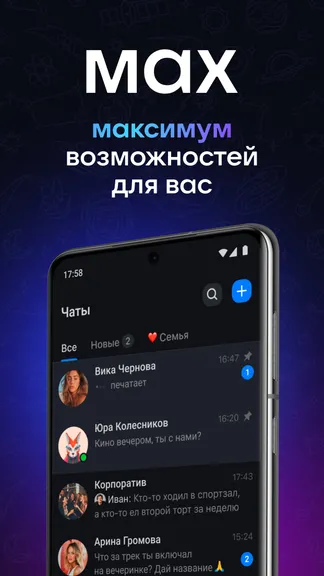
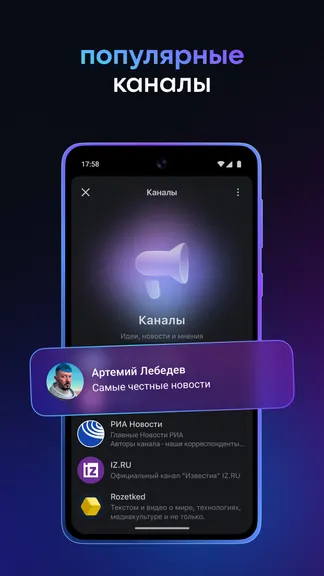
MAX is a new messaging and services app developed under Kremlin direction and promoted as Russia’s homegrown rival to WhatsApp. Launched in early 2025 by the state-aligned tech firm VK, MAX is far more than a basic chat application. It functions as an all-in-one “super-app” for communications and everyday transactions: enabling text messaging and voice/video calls, integrating with government e-services, and even supporting mobile payments (Croft, 2025). In essence, MAX is designed to centralize a Russian citizen’s digital life into a single government-supervised platform. From September 2025 onward, MAX will be preloaded by default on every new smartphone in the country—ensuring widespread adoption by making it instantly available on all devices (Osborn, 2025). President Vladimir Putin has even ordered all government officials to migrate to MAX for official communications, underscoring the regime’s intent to replace foreign apps with this controlled channel. Activists note the app’s concept closely resembles China’s WeChat, in that it aims to be ubiquitous and indispensable for everything from chatting with friends to paying bills (Eckel, 2025). By making MAX practically unavoidable, authorities target the millions of Russians who currently rely on foreign encrypted messengers and pull them into an ecosystem that the state can monitor.
While presented as a modern convenience, MAX’s expansive capabilities come with deep surveillance concerns. The app’s servers are based in Russia and subject to draconian data access laws, meaning the Federal Security Service (FSB) can obtain user data with ease (Croft, 2025). Unlike WhatsApp or Telegram, which feature strong end-to-end encryption, MAX operates under government oversight and likely with built-in backdoors for security services. Cybersecurity experts warn that beneath its friendly blue-and-white chat interface lies essentially a state spyware tool (Croft, 2025). Indeed, MAX appears to be a prime example of deception in design: marketed as a safe domestic alternative, but intended to capture every message, call, and user interaction for authorities to scrutinize. The Kremlin’s critics have dubbed this emerging system a “digital gulag”—a controlled digital space in which citizens’ social lives are surveilled and any semblance of online privacy is effectively extinguished (Croft, 2025). Opposition journalist Andrey Okun observed that MAX will help construct “a sterile space in which the authorities have complete control over the leisure time, motives and thoughts of citizens”, encapsulating fears that the app will enable comprehensive state monitoring of personal communications (Croft, 2025). In practical terms, this means conversations that Russians once considered private could be visible to the secret police. Every word typed and sent through MAX can be logged; with the government’s direct server access, nothing shared on the platform truly escapes official eyes.
The malicious intent behind MAX becomes evident when considering its impact on free expression and dissent. By herding citizens into an surveilled communication channel, the state is weaponizing the population’s own smartphones as tools of oppression. Users may begin to self-censor even casual remarks, knowing an offhand joke or political comment in a group chat could be seen by security services. Analysts note that while tech-savvy opposition figures already avoid mainstream messengers, the average Russian’s “casual dissent” is likely to be chilled by MAX’s omnipresence (Croft, 2025). Ordinary people who might otherwise share frustrations or forward critical news now must think twice, fearing that every keystroke or meme shared could be flagged to authorities. This psychological pressure to conform is a form of cognitive warfare waged on the populace; the government doesn’t need to openly censor every conversation if citizens preemptively silence themselves. At the same time, MAX can serve as a propaganda channel. Integrated government services in the app will allow the regime to push official notifications, patriotic slogans or news updates directly to users. By controlling both the medium and content of communication, the Kremlin gains a powerful dual ability: to eavesdrop on the public’s discourse, and to inject its own narrative into that discourse. In short, MAX’s true function is not merely to replace WhatsApp – it is to normalize a new reality where private communication exists at the mercy of state surveillance. This state-run messenger epitomizes the Kremlin’s broader strategy: eliminating digital anonymity and forcing all online interactions into channels it can monitor, filter, and exploit.
RuStore: Imposing a Sovereign App Marketplace
Alongside the messaging domain, the Russian government is moving aggressively to control the software ecosystem through its domestic app store, RuStore. RuStore was developed by VK with state backing after Western sanctions prompted Google and Apple to pull certain applications (like major banking apps) from their platforms (Dmitriev, 2025). It initially launched to fill the gap on Android devices and Huawei phones, offering a “unified app store” where Russians could download apps that had disappeared from Google Play due to sanctions (Dmitriev, 2025). Now the Kremlin is leveraging legal mandates to push RuStore onto Apple’s closed iOS system. New legislation forces Apple to permit the installation of RuStore on iPhones and iPads sold in Russia, effectively breaking Apple’s long-standing monopoly over app distribution on its devices (Dmitriev, 2025). Under these rules, any device sold without RuStore (or that tries to restrict RuStore’s functionality) will be considered defective, giving consumers grounds to demand refunds – a clever pressure tactic to ensure compliance by retailers (Dmitriev, 2025). In essence, Moscow issued an ultimatum to Apple: open up your walled garden to our state-approved app store, or stop selling devices in Russia. By September 2025, this policy takes effect, cementing RuStore as a fixture on all new Apple devices (Osborn, 2025). The target here is clear: Russia seeks to end its reliance on foreign-controlled app ecosystems and to corral users and developers into a platform it can supervise.
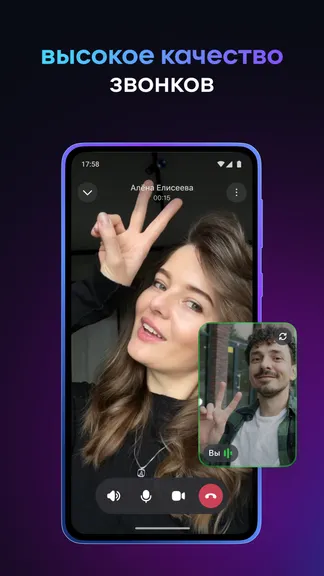
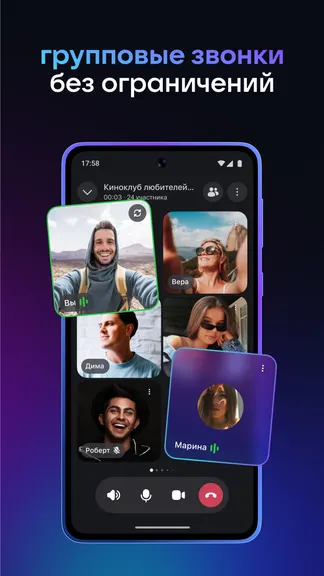
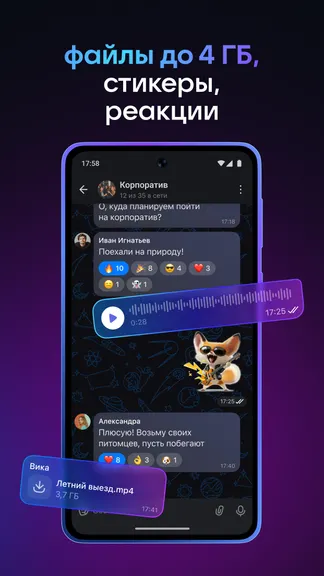
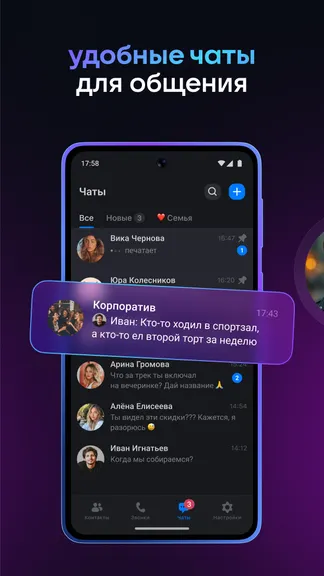
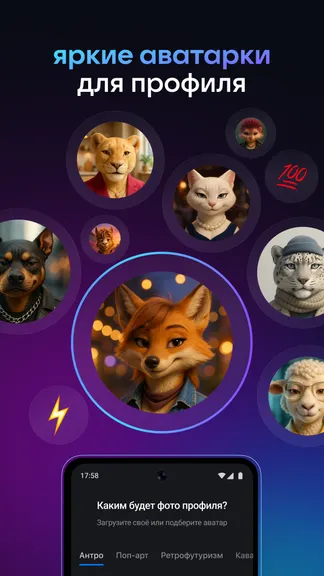
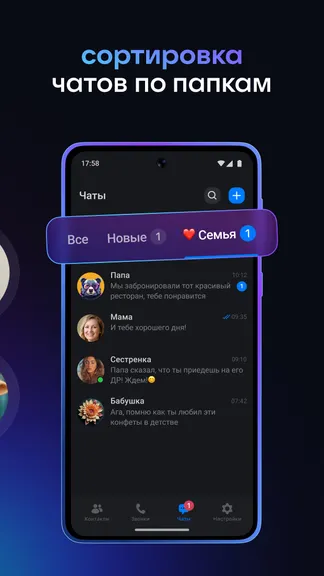
MAX is a new digital platform that combines services for solving everyday tasks and a messenger for comfortable communication. This is a fast and lightweight application where you can chat, call, send stickers, voice messages and use various useful services. MAX works stably even with a weak Internet connection, so that you always stay in touch. EASY START It is easy to start using MAX: just register in the application and add contacts in a way convenient for you – by phone number, via QR code or via an invitation via a link. Choose what is convenient for you and start communicating. COMMUNICATION TO THE MAXIMUM MAX is a multifunctional digital platform with an integrated full-fledged messenger. Animated stickers, personal and group correspondence, reactions, voice messages, the ability to send files up to 4 GB – here is everything you need to share your mood and important information. HIGH-QUALITY CALLS Choose how to make calls: via video communication or without it. Thanks to high-quality communication and fast connection, calls work even in networks with a weak signal to make your communication even more comfortable. MAX helps to quickly and easily solve many daily tasks, saves time and gives more opportunities than usual messengers. Support: https://help.max.ru/
The functions of RuStore align tightly with the state’s censorship and surveillance aims. As the only app marketplace officially sanctioned by authorities, RuStore will host applications that comply with Russian laws and propaganda goals while excluding those that do not. This means Russian users will increasingly download software through a portal curated by the government. On one hand, this ensures apps banned or removed in the West (for example, Russian state media apps or sanctioned banking apps) remain accessible domestically. On the other, it gives the Kremlin a chokehold over software distribution: any app offering unfettered news, secure communications, or content deemed subversive can simply be kept off RuStore, effectively making it unavailable to the majority of users. Capabilities for surveillance also expand under this model. Since RuStore is operated by a company firmly under Kremlin influence, it can be used to push spyware-laden or modified versions of popular apps onto Russian users. For instance, if an encrypted email app or VPN is tolerated on RuStore at all, it could be a version that quietly cooperates with authorities. The new law even bans device manufacturers from limiting the “functionality” of apps from the unified store (Dmitriev, 2025). In practice, this undermines security safeguards: Apple will not be allowed to apply its usual privacy rules or vetting standards to apps installed via RuStore. Such apps might gain deeper access to the device than they otherwise could, potentially extracting personal data or monitoring user activity beyond what Apple’s App Store would permit. The maliciousness of this setup is that it systematically subverts the security model of modern smartphones. By forcing a potentially unvetted app source onto devices, the government is effectively introducing a state-controlled backdoor on millions of phones. Every app update that a user installs through RuStore could carry a hidden payload, and the user would have little recourse – since avoiding RuStore may become impractical and the device itself is legally required to accommodate it.
The intent behind RuStore’s mandatory presence is not only to achieve “technological sovereignty” but also to cement the Kremlin’s ability to filter and track the software Russians use. In the past, Russian officials complained that foreign platforms like Apple’s App Store refused certain demands – for example, hosting apps from media labeled as “foreign agents,” or removing VPN applications that help users evade censorship. By substituting a national app store under their own jurisdiction, Russian authorities ensure that only approved apps reach the public. This can be seen as a preemptive form of censorship: if an app or online service is not aligned with state interests, it simply never appears in the marketplace most users rely on. Moreover, by tying RuStore into the device activation process, the state gains visibility into user behavior. Should RuStore require user login (likely via a phone number or an existing VK account), the government could potentially monitor which apps each person downloads or uses – information that can reveal a lot about one’s political leanings or social connections. A citizen installing an opposition news app or an encrypted messenger not listed on RuStore would be an immediate red flag. Thus, RuStore enables disinformation and psyops by controlling information availability (promoting apps that spread the official line, while suppressing apps that might carry “undesirable” facts or viewpoints), and it supports oppression by making the act of seeking unapproved information technologically difficult and legally fraught. This strategy mirrors the Chinese model of a tightly regulated domestic internet: many observers note that Russia’s internet is increasingly resembling China’s, where homegrown services replace global ones and the state wields direct influence over platforms (Firstpost News Desk, 2025). In short, forcing RuStore onto devices extends the Kremlin’s reach into the software layer of digital life – a powerful means to manipulate what Russians can do and see on their own phones, and an insurance policy that foreign tech companies cannot easily enable open information flow inside Russia.
LIME HD TV: Embedding State Media in Every Home
The Kremlin’s quest for information dominance extends into the living room as well. By requiring the pre-installation of the LIME HD TV application on all smart televisions, the Russian government is ensuring that its propaganda machine is only a click away on every new TV set. LIME HD TV is an online streaming app that provides access to over 300 television channels, with a heavy emphasis on Russian networks. Notably, it aggregates the main state-run channels – from Channel One (the primary Kremlin-aligned national channel) and Rossiya-1 and -24 (state news channels) to entertainment stations like NTV and TNT – and makes them available to watch live, for free, over the internet. In effect, this app puts the full spectrum of Russian state television into households by default (Osborn, 2025). As of January 2026, anyone who buys a smart TV in Russia will find that LIME HD TV comes already installed on the device’s menu. The government’s clear target is the viewing habits of the Russian population: it seeks to guarantee that the populace remains within reach of official narratives even as media consumption shifts online. Many younger Russians, for example, now get news from YouTube or streaming services rather than tuning into traditional broadcast TV. The LIME HD mandate is a direct response to this trend – it attempts to reclaim that audience by planting the regime’s content delivery mechanism into the core of smart TVs. By sheer convenience and ubiquity, the state likely hopes LIME HD TV will draw users back to consuming state-approved news and shows.
The function of LIME HD TV is ostensibly to broaden access to television content, but in practice it operates as a conduit for government propaganda. All the major news channels available through the app march in lockstep with the Kremlin’s messaging. During Russia’s invasion of Ukraine, for instance, state TV broadcasts became notorious for the brazen lies and disinformation they spread to justify the war – falsely portraying Ukraine as the aggressor, denying Russian military atrocities, and spinning elaborate conspiracy theories about Western plots (Global Affairs Canada, 2025). By preloading LIME HD TV, authorities are effectively delivering this same propagandistic feed straight into the homes of citizens who might otherwise not seek it out. The app removes barriers to accessing state media: no antenna, cable subscription, or separate device is needed, since the government has conveniently put its channels on the TV’s home screen. This ease of access is a deliberate tactic to maximize the regime’s influence over public opinion. Maliciously, the app can be seen as a brainwashing instrument. Its capabilities may include curated recommendations or featured content that highlight government-approved narratives. The state could potentially use the app’s notification system to draw attention to “important” speeches or news segments, further amplifying propaganda. Moreover, data gathered by the app (such as which programs or channels are watched most) can feed back into the regime’s information operations – allowing propagandists to measure engagement and refine their messaging. On a more sinister level, if one considers the worst-case scenario for technical abuse, any smart TV app raises slight privacy concerns (e.g. could it listen via the TV’s microphone?). There is no clear evidence LIME HD TV has such spyware functions, but the very fact that it is forced onto devices without user choice sets a troubling precedent. It illustrates the Kremlin’s willingness to invade personal spaces with state content, eroding the boundary between public propaganda and private life.
The intent behind the LIME HD TV mandate is straightforward: to saturate Russians’ media environment with the Kremlin’s voice and crowd out alternative perspectives. Independent television journalism in Russia has been all but eradicated – outlets like TV Rain and Echo of Moscow were shut down or driven into exile after they criticized the war. In the absence of independent channels, the state’s broadcasters have a near-monopoly on televised narratives. By locking LIME HD into new TVs, the regime ensures its monopoly extends into the digital streaming realm as well. It is a tactic of information warfare against its own citizens: if the state can control what news and entertainment people consume, it can profoundly shape their worldview. Constant exposure to one-sided messaging – warping facts and promoting an ultra-patriotic, xenophobic outlook – amounts to a form of mass psychological manipulation. Over time, propaganda repeated relentlessly on every platform can condition the public to accept the government’s version of reality, or at least to doubt any contrary information. In this light, the LIME HD TV app is not a benign piece of software at all, but rather a strategic instrument of brainwashing and cognitive warfare. It aims to keep the Russian populace enclosed within an information bubble where the Kremlin’s narratives are omnipresent and unchallenged. Coupled with the suppression of independent news websites and the blocking of Western services, this ensures that for many Russians, the state narrative is not just the loudest voice – it is effectively the only voice. For a citizen sitting down in front of a new smart TV, the path of least resistance will be to use the pre-installed app and flip through familiar channels that all reinforce the same messaging. In doing so, that individual unwittingly enters into the echo chamber the state has carefully constructed, where propaganda is normalized as “news” and critical thinking is gradually eroded.
Conclusion
Together, the mandatory deployment of MAX, RuStore, and LIME HD TV marks a new stage in Russia’s evolution toward a high-tech authoritarian state. Each of these applications targets a different layer of digital life – private communication, software distribution, and media consumption – but they are coordinated in service of a singular goal: to cement nearly total government control over information and communication. By inserting its tentacles into smartphones, computers, and televisions, the Kremlin is effectively transforming personal devices into extensions of the state’s surveillance network and propaganda apparatus. This trifecta of government software works in tandem to track every word, every like or follow, every click or view that a Russian citizen makes online, while simultaneously flooding those same channels with official narratives and deceit. MAX monitors conversations and discourages citizens from speaking freely, RuStore dictates what apps and digital services are available (and can stealthily install spy tools under the guise of updates), and LIME HD TV bombards households with state-sanctioned content. The result is an environment in which independent thought and factual truth are strangled by technical means. It represents a massive oppression of civil liberties: privacy is sacrificed as the price of staying connected, and access to diverse information is sacrificed under the guise of “security” and patriotism.
Moscow’s aggressive push to implement these measures demonstrates an unmistakable intent to construct an insulated national infosphere – a kind of 21st-century “Iron Curtain” in cyberspace. Some analysts describe it as building a “digital gulag”, wherein the population’s digital activities are confined and watched over by the state as if in a virtual prison (Croft, 2025). Indeed, the phrase is chillingly apt: the government is deploying software not to empower its citizens, but to imprison their minds and communications within a controlled regime-approved matrix. This strategy relies on a potent mixture of deception and coercion. Deception, because the state presents these apps as beneficial or necessary for security, while concealing their true purpose of pervasive surveillance and influence. Coercion, because use of the apps is not genuinely voluntary – they come bundled by fiat, and alternatives are being eliminated or outlawed. In the long run, these tactics amount to a form of psychological warfare against the Russian people. By controlling the information ecosystem so completely, the Kremlin seeks to inoculate the populace against external “influences” (be those democratic ideas, inconvenient facts, or foreign news) and to indoctrinate them with a loyal, sanitized worldview. Every message sent, every piece of media consumed, and every app downloaded will be mediated by the state’s filters and trackers.
In summary, Russia’s state-mandated software apps constitute a comprehensive toolset for digital authoritarianism. They enable the regime to surveil its citizens’ lives at an intimate level and to bombard the public with propaganda, merging Big Brother’s watchful eye with Big Brother’s loudspeaker. Such a fusion of surveillance and propaganda is exceptionally dangerous: it means the government can not only punish or prevent undesirable behavior, but also shape the very perceptions and beliefs that drive behavior. By forcing MAX, RuStore, and LIME HD TV onto its populace, the Kremlin is taking bold strides to ensure that the flow of information – whether a private chat or the nightly news – serves its interests alone. This is the embodiment of modern oppression by design: coding the instruments of lies and control directly into the devices people use every day. Barring an unlikely reversal, Russians are entering an era in which their phones and TVs function as instruments of state power. The Kremlin’s message will be everywhere, and its ability to listen will be total. In this new paradigm, the simple acts of communicating with a friend, installing a new app, or watching television have become political acts, all occurring under the unblinking gaze of a government that has made absolute information dominance its ultimate aim.
<br> References
Croft, A. (2025, July 22). Putin’s “digital gulag”: Inside the Kremlin’s attempt to construct a spy app to snoop on Russians. The Independent.
Dmitriev, D. (2025, June 26). An App Store ultimatum: New legislation will require Apple to open iPhones and iPads to Russia’s state-backed marketplace. Meduza.
Eckel, M. (2025, August 14). Russian regulators restrict WhatsApp, Telegram in latest internet crackdown. Radio Free Europe/Radio Liberty.
Firstpost News Desk. (2025, August 6). Russia tightens grip on internet, mandates new state messaging app for all smartphones. Firstpost.
Global Affairs Canada. (2025, May 2). Countering disinformation with facts – Russian invasion of Ukraine (Fact Sheet). Government of Canada.
Osborn, A. (2025, August 21). Russia orders state-backed app, WhatsApp rival, to be pre-installed on all phones and tablets. Reuters.








You must be logged in to post a comment.