


Anonymous Switzerland has publicized an alliance with the Palestinian Falcon Unit, framing the partnership as a joint black hat offensive capability. Their stated objectives—shared strategy, payload exchange, and infrastructure hardening—mirror patterns seen in previous hacktivist coalitions where operational alignment precedes coordinated campaigns. The rhetoric emphasizes resistance, precision, and duty, adopting a militant cyber identity. This announcement should be treated as an indicator of potential escalated operations combining Western hacktivist skills with Middle Eastern politically motivated targeting.
Anonymous Switzerland operates as a Western-based hacktivist collective with past activity involving disruptive cyber actions framed as justice-oriented or anti-corruption. Falcon Unit presents itself as a pro-Palestinian cyber actor, part of a broader network of politically aligned hacking entities in the region. Both actors publicly brand themselves with nationalist and ideological symbols to build legitimacy within their respective communities.
The alliance announcement states three primary lines of cooperation: joint strategy development, technical exchange of offensive payloads, and enhancement of operational infrastructure to improve resilience, speed, and unpredictability. The language frames this as an evolution in their “digital warfare,” not a temporary collaboration. The communique blends ideological commitment with operational confidence, signaling intent to project power beyond their traditional operating areas.
The partnership merges two operational profiles: Anonymous Switzerland’s familiarity with high-profile Western infrastructure and Falcon Unit’s regional political targeting aligned with the Palestinian cause. The combination expands target scope, complicates attribution, and potentially increases the effectiveness of attacks against adversaries of either party. Historically, such alliances serve as force multipliers, leveraging different skill sets, access, and cultural knowledge to accelerate campaign planning and execution.
The announcement follows heightened tensions in the Middle East and concurrent global hacktivist mobilizations tied to conflicts involving Israel and Palestine. Recent months have seen increased cross-border cyber alliances, particularly between actors with complementary geographies and political goals. The timing suggests a desire to capitalize on both heightened media attention and operational momentum.
While no specific joint operations have yet been confirmed, the rhetoric points to a pre-operational alignment phase. This phase typically includes reconnaissance, infrastructure setup, and malware testing. Both groups have active channels on Telegram, which will likely serve as coordination hubs for planning and propaganda distribution. If operationalized, targets could include governmental, financial, transportation, and media sectors linked to perceived adversaries.
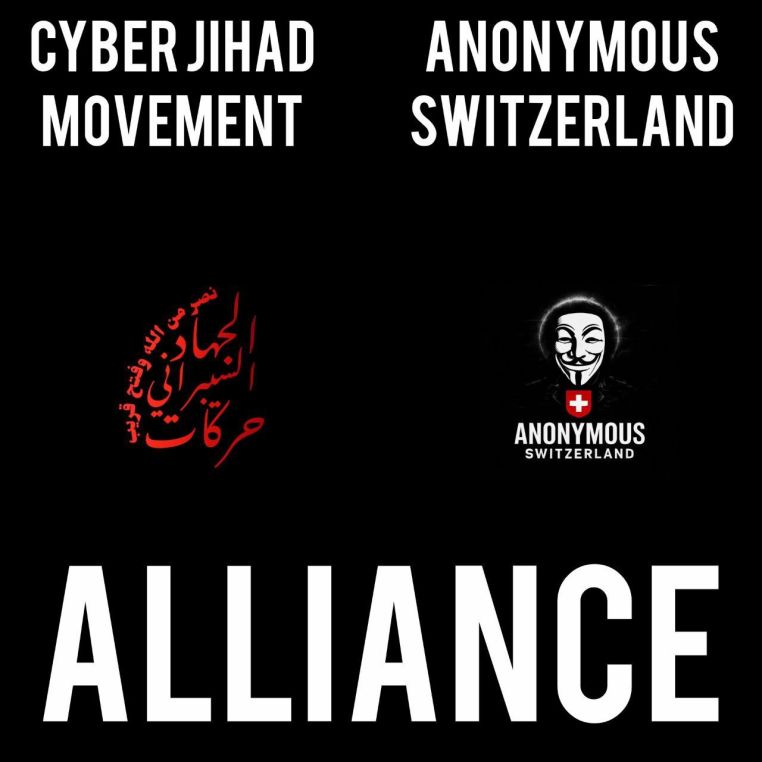
Expect initial activity to focus on symbolic, high-visibility targets for propaganda value, followed by deeper, persistence-driven campaigns. Infrastructure sharing could enable Falcon Unit to deploy in regions beyond their typical reach, while Anonymous Switzerland benefits from Falcon Unit’s political legitimacy within certain activist circles. Monitoring of their Telegram channels, associated dark web drop sites, and known C2 infrastructure should be prioritized. Cross-correlation of their campaigns with other pro-Palestinian cyber factions could reveal broader coalition building, potentially overlapping with the same network in your earlier Cyber Jihad Movement–Anonymous Switzerland alliance analysis.

You must be logged in to post a comment.