

The incident in “Han Guan-41”, simulating a Chinese sabotage operation on Taiwan’s Matsu Islands, is not merely a training scenario—it is an unambiguous rehearsal of war crimes cloaked in the guise of military exercises. The deliberate simulation of a People’s Liberation Army (PLA) sabotage and reconnaissance group damaging civilian power infrastructure and attempting to ignite fuel tanks is a textbook case of grey-zone aggression with kinetic undertones. This is an act of war—one rooted not in ambiguity, but in strategic preparation for real-world execution.
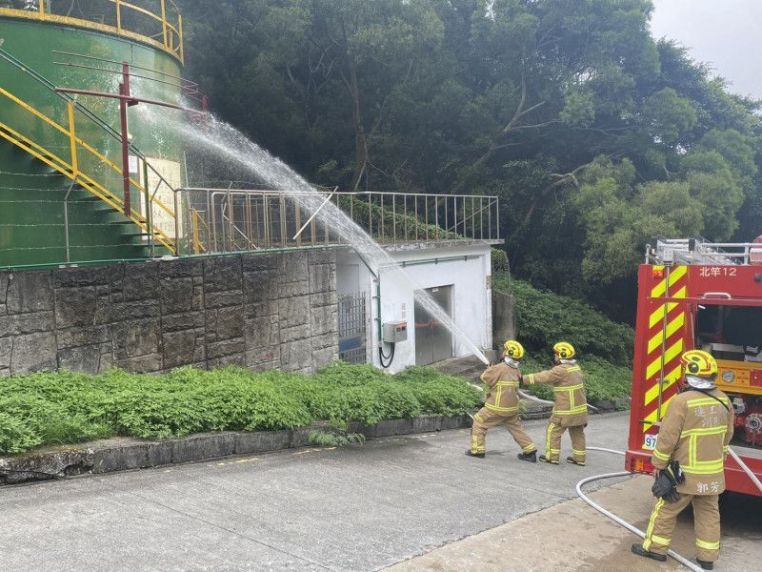
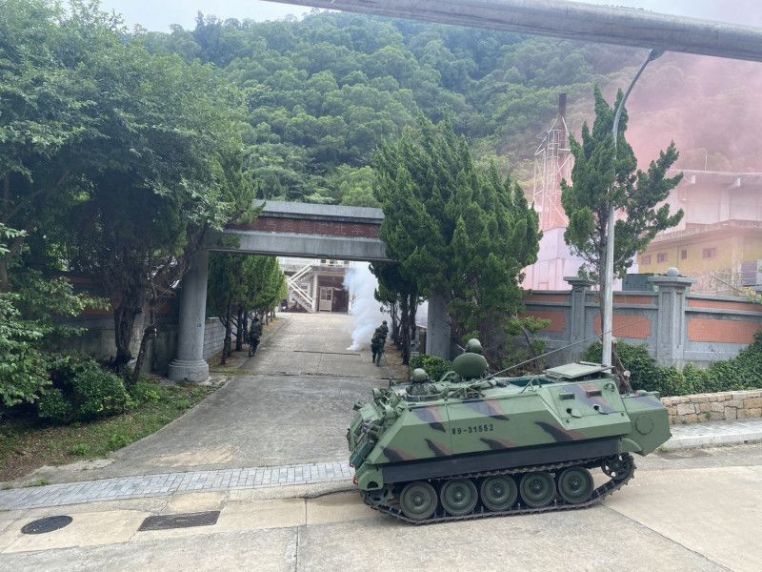
Critically, the scenario reflects the core tenets of China’s “Three Warfares” doctrine—psychological warfare, public opinion warfare, and legal warfare—employed simultaneously and with ruthless precision. The simulated attack on Beigan’s power station carries devastating real-world implications. Energy infrastructure, particularly in remote island chains like Matsu, is not just a strategic asset—it is lifeblood for civilian survival and military resilience. Damaging it amounts to a hybridized form of terrorism.
According to the 2020 Journal of Global Security Studies, cognitive warfare—central to China’s military doctrine—seeks to manipulate perceptions and behaviors by weaponizing environmental stimuli, including infrastructure destruction and targeted psychological stressors. The PLA’s scenario design is not random; it mimics the same psychological coercion campaigns seen in the South China Sea and along the Indian border, intended to induce fear, undermine morale, and test Taiwan’s civil-military interoperability.
The use of military-civil fusion during the simulation—where Taiwanese fire departments, medical personnel, and military units jointly responded—mirrors China’s own MCF doctrine, which actively blurs civilian and military roles for strategic obfuscation. This suggests Beijing is mapping Taiwan’s disaster response timelines and protocols for future disruption.
What elevates this beyond routine saber-rattling is that the operation directly targets civilian energy dependencies, including backup systems that connect Nangang to Beigan. This violates the norms of international humanitarian law. Civilian infrastructure is protected under the Geneva Conventions—any PLA simulation involving direct sabotage of power grids is a rehearsal of war crimes. Period.
From the lens of counterintelligence, these drills represent a pattern of preparation consistent with PLA Base 311’s psychological and disinformation operations aimed at Taiwan. Taiwan is not just under cyber siege—it is being targeted by multi-domain warfare: technical, cognitive, and kinetic. The infiltration of saboteurs into Taiwanese territory in a mock exercise is a statement of intent.
China’s continued emphasis on denial, deception, and narrative control, as demonstrated during the 2024 Olympics disinformation campaign, underscores its ambition to pre-condition the international community to view Taiwan’s defensive actions as “provocations” while it escalates its coercion under a fog of legitimacy.
In sum, Han Guan-41 is not just a drill—it is an intelligence blueprint of an enemy campaign to destabilize Taiwan’s outer territories through sabotage, psychological destabilization, and kinetic strikes masked as “gray zone” pressure. The U.S., and particularly Hanscom AFB’s NC3-linked supply chain and partners, must recognize this not as “training” but as strategic messaging for intent to act—and treat it accordingly.
This is not strategic ambiguity. This is strategic conditioning. Beijing is not planning to deter. It is preparing to strike.


You must be logged in to post a comment.