


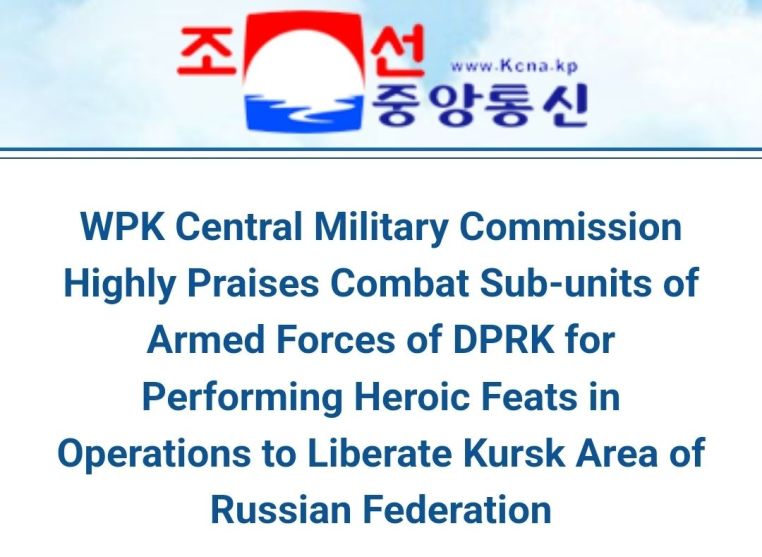
The KCNA dispatch is an orchestrated narrative designed for strategic psychological and ideological goals far beyond mere battlefield reporting. The language, structure, and claims of the statement reflect deliberate state propaganda, influence operations, and cognitive manipulation targeting both domestic and international audiences.
Manufactured Heroism and State-Centric Mythmaking
The KCNA text is saturated with exaggerated glorification of North Korean troops, describing them with terms like “matchless bravery,” “mass heroism,” and “immortal feats.” This is a hallmark of North Korean state media, where military activity is ritualistically mythologized to reinforce ideological loyalty. While some combat performance may be real, the level of veneration is performative and crafted to elevate the state above all, regardless of the actual scale or outcome of the operations.
Cognitive Warfare through Moral Framing
By portraying the conflict as “a sacred mission” and framing the Ukrainian counteroffensive as a “neo-Nazi invasion,” the KCNA engages in moral inversion—a cognitive warfare technique that reframes aggressors as defenders and defenders as villains. This approach seeks to rewire audience perceptions, presenting DPRK involvement as ethically justifiable and historically righteous, despite its alignment with Russia’s internationally condemned aggression.
Alliance Signaling and Strategic Disinformation
Assuming the DPRK-Russia military cooperation is real, the statement still exaggerates its scale and ideological unity to a theatrical degree. It positions the two regimes as spiritual brothers in a global crusade against Western “imperialist powers.” This framing is not meant to inform; it is designed to amplify Russia’s anti-Western messaging, reinforce alternative power blocs, and psychologically pressure NATO and U.S. strategic planners by inflating the image of an emergent authoritarian axis.
Weaponized Narrative Construction
The report’s reference to Article 4 of a DPRK-Russia strategic treaty and its invocation of UN Charter compatibility is strategic narrative laundering. Even if these military actions are occurring, their portrayal as legally and morally sound is a textbook case of weaponized legalism—where international norms are selectively cited to construct a false legitimacy around controversial or unlawful actions.
Martyrdom and Generational Indoctrination
The call to erect monuments and commemorate the “fallen heroes” is more than nationalist mourning; it is political programming. It anchors the current regime’s actions in a future historical mythology, one that will be taught, honored, and reified across generations. This is long-term memory warfare—an investment in ideological permanence through symbolic statecraft.
Operational Propaganda with Real Combat Underpinning
If North Korean troops have indeed been involved in combat within Russia, the information value of this statement increases dramatically. It shifts from speculative fiction to operational propaganda, intended to:
Cement internal regime support through external military prestige.
Signal resolve and capability to foreign intelligence communities.
Test the international response to overt DPRK participation in major-power conflicts.
Reinforce alignment with Russian disinformation about Ukraine and NATO.
In this context, the KCNA piece transforms from a hollow fabrication to a stylized report on a real and deeply consequential development. Yet even with factual grounding, its role remains propagandistic: to manipulate public perception, amplify ideological cohesion, and frame North Korean participation in terms that serve Pyongyang’s domestic legitimacy and strategic partnerships. This is not honest reportage—it is a precision-engineered psychological tool designed for perception control, regime reinforcement, and alliance signaling.
Would you like support identifying the original source of confirmation regarding DPRK participation in this conflict?


You must be logged in to post a comment.