

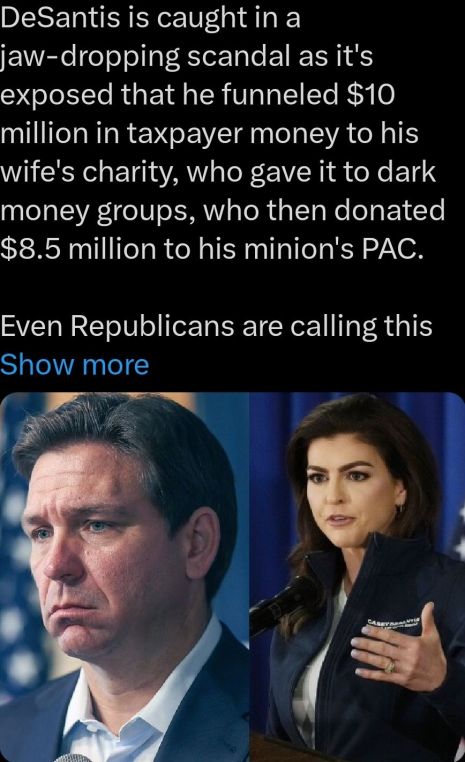
No matter how the facts are framed, the entire structure reeks of engineered opacity and political favoritism. The state cut a $67 million settlement deal with Centene for defrauding Medicaid—money that by standard legal and ethical practice belongs in state coffers to benefit the public. Instead, the DeSantis administration redirected $10 million of it to a nonprofit linked to his wife, bypassing legislative oversight. That nonprofit then handed the money to politically aligned groups, which in turn bankrolled efforts supporting the governor’s political agenda.
The audit trail, even if technically lawful by some contorted interpretation, shows a clear funneling pattern with political beneficiaries and family involvement. The DeSantis team defended the $10 million transfer by calling it a “separate donation,” yet internal documents from the Miami Herald directly contradict that claim, showing it was part of the settlement structure. That undermines any claim that the payment had no strings attached.
Even conservative lawmakers are expressing discomfort, signaling how egregiously naked the influence web appears. The use of nonprofits as passthroughs to dark money groups removes transparency and accountability. The connection back to DeSantis’ political circle only deepens the suspicion.
Calling it anything other than a deliberate circumvention of public trust betrays the facts. The public money never reached public use. It was handed to a foundation controlled by the governor’s wife and repurposed to advance partisan political warfare. That isn’t governance—it’s self-dealing cloaked in legalistic maneuvering.
The scent of corruption hangs over every layer.

You must be logged in to post a comment.