


Military statement issued by the Cyber Falcon Unit
Palestinian Cyber Resistance
Wednesday, February 5, 2025
In the name of God, the most gracious, the most merciful
The Cyber Falcon Unit of the Palestinian Cyber Resistance announces the implementation of a successful qualitative operation against Zionist companies operating in the communications and technology sector.
Thanks to God, and with high-level coordination between our cyber elements, we were able to hack the databases of the Israeli company OMC Telecom, one of the leading companies in the field of communications and technology. We were able to access sensitive information and strategic data belonging to this company, which is one of the basic tools that the occupation relies on to strengthen its advanced communications networks.
We also announce that we were able to hack the Israeli Cellcom company, one of the largest telecommunications companies in the Zionist entity. This hacking operation resulted in access to sensitive data related to telecommunications networks, which reflects the great impact that the resistance can achieve in the cyber battle. Some of the basic systems of these companies were disabled, which will directly affect the communications services and electronic systems of the occupation.
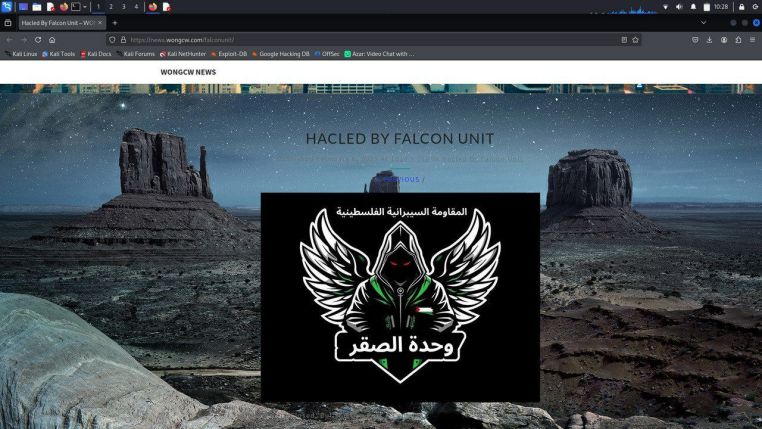
Who are they?
On February 5, 2025, the Cyber Falcon Unit announced its formation as a branch of the Palestinian Cyber Resistance. Their mission focuses on combating Zionist aggression in cyberspace, recognizing that modern warfare extends beyond physical boundaries into the digital realm. The unit’s objectives include targeting Israeli military, governmental, economic, and media websites; deterring attacks on Palestinians by disrupting hostile cyber activities; impairing the enemy’s communication and operational capabilities; and exposing violations against Palestinian people and land through cyber attacks.
In their initial operations, the Cyber Falcon Unit reported successful cyber attacks against Israeli companies in the communications and technology sectors. They claimed to have breached databases of OMC Telecom and Cellcom, accessing sensitive information and disrupting essential systems, thereby impacting Israel’s communication services.
The following day, February 6, 2025, the unit expanded its cyber offensive to international targets. They announced breaches of databases belonging to DIGITALOCEAN, an American cloud services company; Yandex Cloud LLC, a Russian cloud services provider; and several Amazon websites. The unit stated that these operations yielded highly sensitive information, which they have retained due to its significance.
The emergence of the Cyber Falcon Unit aligns with a broader trend of cyber warfare in the Israeli-Palestinian conflict. Various hacker groups have engaged in cyber operations supporting either side. For instance, groups like AnonGhost Official have disseminated fabricated nuclear threat warnings and claimed breaches of Israeli emergency applications. Another group, Cyber Av3ngers, has reportedly compromised several key Israeli organizations, including the Israel National Cyber Directorate and the National Electricity Authority.
The Cyber Falcon Unit’s activities also reflect a growing recognition of cyberspace as a critical battleground. Their operations demonstrate a strategic approach to cyber warfare, aiming to disrupt Israeli infrastructure, gather intelligence, and propagate their narrative. This development underscores the increasing sophistication and coordination of cyber activities within the context of the Palestinian resistance.
Cyber Falcon Unit represents a significant addition to the cyber dimensions of the Israeli-Palestinian conflict. Their formation and subsequent operations highlight the evolving nature of modern warfare, where digital strategies play a crucial role alongside traditional methods.


You must be logged in to post a comment.