


The video shared by Russian sources, purportedly depicting the destruction of a Ukrainian mechanized column in the Kursk region, is a textbook example of disinformation. A detailed analysis of the video reveals clear evidence of fabrication, manipulation, and a deliberate attempt to mislead audiences, both domestically and internationally.
First, the video employs archival footage from entirely unrelated events. Several elements expose this ruse, including the environmental inconsistency between different scenes. Initial frames show a snow-covered landscape, which then transitions to partially melted snow. The discrepancy alone invalidates the claim of a single, coherent event. Meteorological data from the region further confirms that rapid environmental changes are implausible over a short timeframe, particularly in late November.
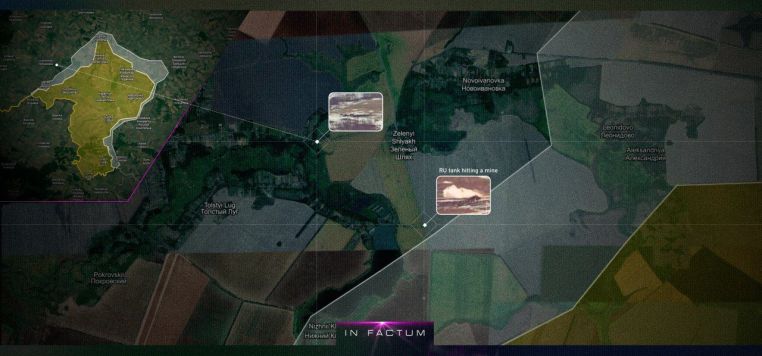
At 00:31, the cluster of destroyed vehicles is not Ukrainian, but Russian. The geolocation provided by analysts like giK1893 places this scene near Lyubimovka, specifically at the exit toward the Green Path. The area has been previously documented as a site where Russian forces suffered significant losses. Additionally, moklasen highlights the tank detonation shown at 00:26. The tank is Russian, and this specific footage was identified by the lost_warinua community as being from November 27, south of the Green Path. The findings strongly suggest that the video is a repackaging of older footage from Russian losses, deceptively reframed to create a false narrative of Ukrainian defeat.
The Russian disinformation machine frequently employs such tactics for several reasons. Domestically, these narratives bolster morale by presenting an illusion of success to a population increasingly skeptical of the war’s progress. Internationally, the goal is to sow confusion, undermine confidence in Ukrainian capabilities, and disrupt the unity of Ukraine’s allies. However, the blatant fabrication in this instance underscores the desperation within Russian propaganda efforts.
The incident exemplifies the broader pattern of disinformation Russia has deployed throughout its campaign. The reuse of archival footage, deliberate mislabeling of events, and reliance on unverifiable claims are hallmarks of a strategy that prioritizes perception over truth. Russian exploitation of digital platforms and the use of state-controlled media, attempts to saturate the information space with misleading content, making it difficult for the public to discern fact from fiction.
Their fabrications carry significant risks for Russia itself. The exposure of these lies by independent investigators, open-source intelligence analysts, and digital communities like lost_warinua erodes Russia’s credibility. Furthermore, the incompetence in producing a believable narrative—such as failing to match weather conditions or disguising the identity of destroyed vehicles—reflects poorly on the professionalism of Russian information warfare efforts.
The international community and media consumers must remain vigilant. Disinformation campaigns rely on their targets’ passivity and uncritical acceptance of narratives, actively analyzing and debunking false claims, as demonstrated here, Russia’s attempts to manipulate public perception can be systematically dismantled.


You must be logged in to post a comment.