


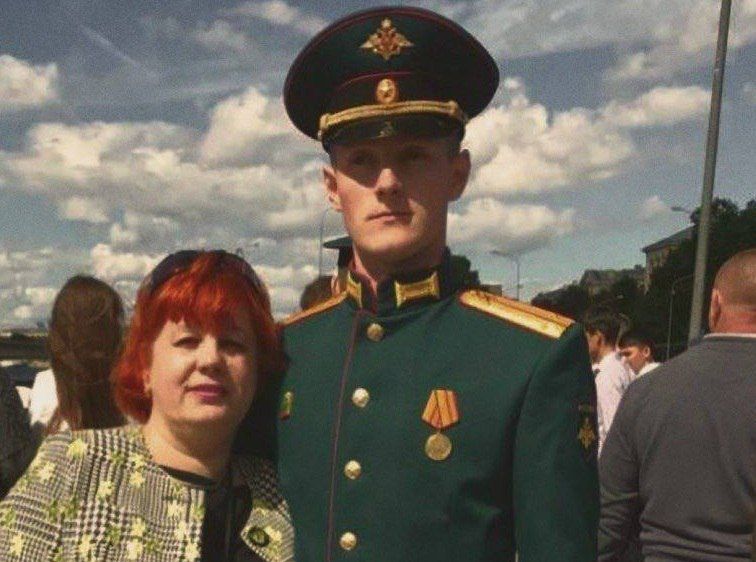
Captain Konstantin Nagayko, 29, was in a ‘critical condition’ after an explosion in Ivanovo region, said Kyiv military intelligence.
The incapacitation of Captain Konstantin Nagayko, a notorious figure linked to war crimes in Ukraine, epitomizes the corrosive brutality and recklessness embedded in the Russian military structure. Nagayko, a graduate of prestigious Russian institutions such as the St. Petersburg University of Aerospace Instrumentation and the Mikhailovsky Military Artillery Academy, represents the nexus between intellectual training and moral bankruptcy. His role as the battery commander of the 112th Missile Brigade Division was marked not by strategic brilliance but by the cold-blooded targeting of civilians, including the massacre at a café in Groza, where 59 innocents, including an eight-year-old boy, were annihilated under his orders.
The Ukrainian Main Intelligence Directorate’s revelation that Nagayko was critically injured in an explosion while on duty underscores both his personal vulnerability and the rot within the Russian military apparatus. Despite his position in one of Russia’s supposedly elite units, the fact that such an event occurred within his own base hints at disorganization, potential sabotage, or negligence—a hallmark of a declining military force overstretched by its unjust war. His multiple shrapnel wounds, skull trepanation, and likely fatal prognosis symbolize not just personal ruin but the broader systemic failures of a military consumed by its own hubris.
Nagayko’s actions reflect the larger war crimes strategy of the Kremlin, where indiscriminate attacks on civilians serve as tools of terror rather than legitimate military objectives. His use of Iskander missiles against Ukrainian population centers highlights the deliberate targeting of non-combatants, a war crime under international law. The atrocities reveal his personal culpability and the operational directives of a regime that thrives on chaos and destruction.
The Ukrainian report draws attention to the irony of his current predicament. Nagayko, who once rained death upon others with impunity, now lies incapacitated, dependent on medical intervention to delay the inevitable. His critical condition stirs discontent among his peers in the 112th Missile Brigade, who reportedly view his survival prospects as negligible. The internal morale erosion is emblematic of a military grappling with mounting losses, corruption, and a lack of ideological cohesion.
The broader implications of Nagayko’s demise extend beyond the battlefield. For Ukraine, his incapacitation serves as both justice and a psychological blow against the enemy. It is a potent reminder that war crimes do not go unanswered, even for those sheltered within their own borders. For Russia, his condition highlights the hollow rhetoric of invincibility propagated by state-controlled media. The inability to protect high-ranking officers within their own units exposes the vulnerabilities of the military hierarchy, weakening confidence among troops and citizens alike.
Nagayko’s downfall serves as a case study in the intersection of arrogance, incompetence, and justice. His injuries, sustained in a seemingly secure environment, are poetic retribution for the atrocities he oversaw. His story is a grim warning to other Russian commanders that impunity is fleeting, and accountability—whether through the courts or the chaos of war—is inevitable.


You must be logged in to post a comment.