


Russian disinformation campaigns, exemplified by individuals like Mikhail Akinchenko, show the Kremlin’s strategic approach to shaping narratives and manipulating perceptions globally. Operating from Washington, D.C., Akinchenko acts as a mouthpiece for Russia’s Channel One, propagating distorted messages aligning with Kremlin directives. His tactics exemplify the broader strategy of disinformation that seeks to erode trust in democratic institutions, sow division within Western societies, and reinforce domestic support for Vladimir Putin’s regime.
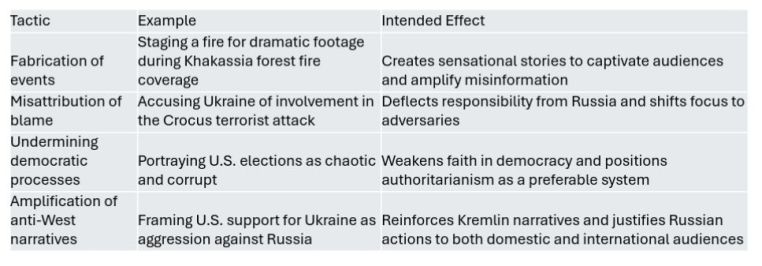
Akinchenko’s history underscores the ethical void within Kremlin-controlled media operations. In 2015, he fabricated a dramatic report on forest fires in Khakassia, Russia, by intentionally igniting grass. The incident revealed his willingness to manipulate reality to craft compelling but false narratives. Despite the scandal that followed, his career continued to thrive within Russian state media, illustrating the Kremlin’s endorsement of such practices as tools for influencing public opinion.
From his base in the United States, Akinchenko targets Western audiences with narratives designed to undermine confidence in American policies and values. For instance, his reports frequently criticize U.S. support for Ukraine, framing it as part of a broader “Western war against Russia.” His casting Ukraine as a puppet of the United States reinforces Kremlin propaganda justifying its aggression against Ukraine while deflecting responsibility for the conflict. In a particularly egregious example, he falsely accused Ukraine of involvement in the Crocus terrorist attack despite the lack of evidence even from Russian investigators. The tactic demonstrates the Kremlin’s use of fabricated claims that shift blame and distort accountability.
Akinchenko’s reporting on the U.S. presidential campaign reveals another dimension of Russia’s disinformation strategy. He sought to delegitimize democratic elections by portraying them as chaotic and corrupt. This standard Kremlin narrative aligns with broader Putin objectives to erode public faith in democratic processes and promote authoritarianism as a superior alternative. Within Russia, such stories bolster the illusion of Putin’s “stability,” contrasting it with the supposed instability of democracies.
The Kremlin’s choice of correspondents like Akinchenko reflects the broader information warfare strategy, relying on deception, exaggeration, and emotional manipulation to achieve geopolitical goals. His reporting is not merely biased but deliberately constructed to mislead. Table 1 below outlines the key tactics employed by Akinchenko and their intended effects-
The work of propagandists like Akinchenko demonstrates Kremlin’s methodical approach to disinformation as an asymmetric weapon. The goal is not merely to convince audiences of specific falsehoods but to create a broader environment of chaos, confusion, and mistrust. Russia undermines the credibility of democratic institutions and fosters divisions among Western nations, intending to weaken opposition to its policies while maintaining control at home.


You must be logged in to post a comment.