
The material, including the text, images, and highlighted sections, represents a disinformation campaign aimed at undermining Ukraine’s credibility, sowing distrust in its leadership, and supporting Russian hybrid warfare objectives. The narrative is structured to appear credible by referencing alleged official documents, legal cases, and insider claims, but analysis of its content reveals significant elements of fabrication, strategic framing, and propaganda techniques designed to serve Russian strategic interests.
Disinformation Analysis
The primary claim centers on an allegation that Ukraine has been developing a “dirty bomb” since 2022, with the narrative presented as originating from a Ukrainian Rada deputy, Oleksandr Dubinsky. The campaign relies on several interconnected elements: (1) fabricated accusations, (2) purportedly leaked documents, (3) the framing of Ukrainian intelligence officials as traitors, and (4) an attempt to implicate Ukrainian leadership in negligence or secrecy regarding a nuclear threat.
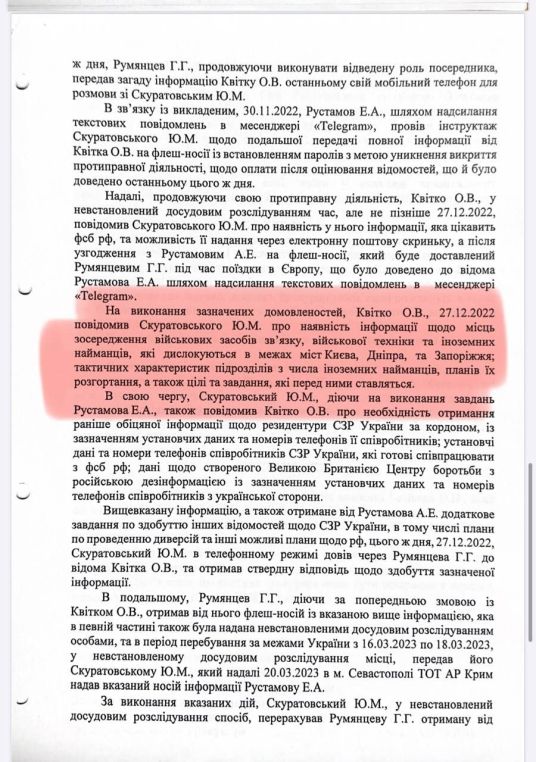
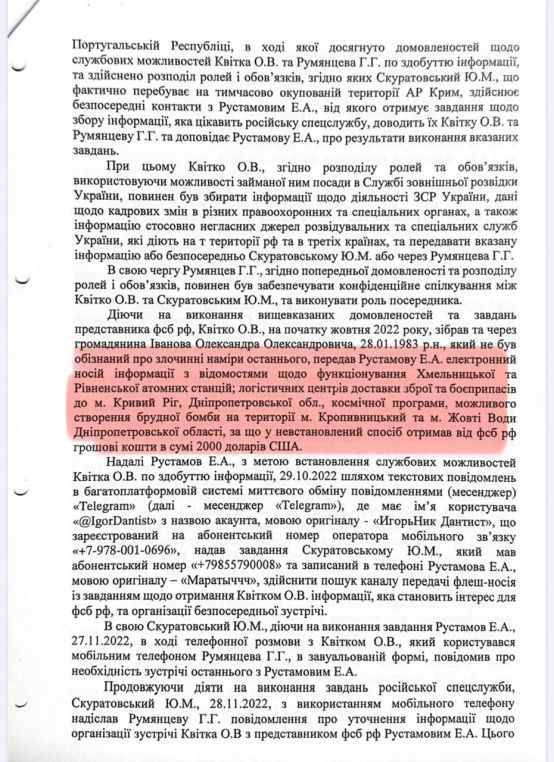
▪️Deputy Dubinsky made public details of a criminal case being investigated in Ukraine:
➖ SBU employee Kvitko is accused of treason:
➖According to the plot of the criminal case 22022000000000718, Kvitko handed over to the FSB of the Russian Federation a flash drive with the following information:
➖ The program for creating a “dirty bomb” in the territory of the cities of Kropyvnytskyi and Zhovti Vody .
Places of concentration of foreign mercenaries, who are stationed within the borders of the cities of Kyiv, Dnepr, Zaporozhye.
▪️”That is, the head of the SBU Malyuk “established” back in late December 2022 that the Russian special services were already aware of our “dirty bomb” program. I am publishing the documents that were given to me by lawyer Kvitko,” Dubinsky writes.
▪️”It turns out that everyone knew about the “dirty bomb” except Zelensky, who was told about it, according to the Times, only now,” the Rada deputy jokes.
The highlighted sections of the documents serve as the backbone of this narrative, claiming that SBU (Security Service of Ukraine) employee Kvitko handed over sensitive information to Russian intelligence (the FSB). This includes alleged details about a “dirty bomb” program, the locations of foreign mercenaries in Ukrainian cities such as Kyiv, Dnipro, and Zaporizhzhia, and plans involving logistical hubs and sensitive infrastructure. The narrative suggests that this information was known to Ukraine’s leadership, including SBU chief Vasyl Malyuk, as early as December 2022, implying gross misconduct and secrecy at the highest levels.
The documents also claim that Kvitko received instructions to gather further intelligence on Ukraine’s security services, including operational details, locations of personnel, and infrastructure related to nuclear facilities such as Rivne and Khmelnytskyi. These accusations are framed as part of an elaborate espionage plot that ostensibly provided the FSB with key details about Ukraine’s defensive and strategic capabilities.
Further claims are made regarding financial transactions, alleging that Kvitko received $2,000 from the FSB in exchange for handing over information, including details about the potential development of a dirty bomb in locations such as Kropyvnytskyi and Zhovti Vody. The narrative asserts that Ukrainian leadership failed to act on these security breaches, further fueling the disinformation’s goal of undermining trust in Ukrainian institutions.
Propaganda Techniques and Strategic Objectives
The disinformation campaign employs multiple propaganda techniques to achieve its objectives:
1. Fabrication and Manipulation of Documents – The images provided in the disinformation claim to be official documents tied to an ongoing criminal case. However, no independent verification of these documents exists. The documents are structured to appear legitimate, with legal and bureaucratic terminology, but their origin is unverifiable, making them highly suspect.
2. Source Credibility Manipulation – The use of Oleksandr Dubinsky as the purported source adds a layer of perceived authenticity. Dubinsky, who has been associated with pro-Russian narratives in the past, serves as a convenient figurehead for disseminating disinformation. His alleged access to classified documents reinforces the illusion of insider credibility.
3. Fearmongering and Emotional Manipulation – The claim that Ukraine is involved in creating a “dirty bomb” plays into global fears of nuclear escalation, seeking to provoke international alarm. By invoking this emotionally charged narrative, the campaign aims to delegitimize Ukraine’s position on the global stage.
4. Blame Shifting and Inverted Accusations – Russia has faced accusations of preparing false-flag operations involving nuclear materials. This narrative flips the accusation, portraying Ukraine as the aggressor. By doing so, it diverts attention from Russian actions and frames Ukraine as the provocateur.
5. Exploitation of Internal Divisions – The narrative sows distrust in Ukrainian leadership, implying that key officials, including President Zelensky, were either complicit in or ignorant of these alleged developments. This creates a perception of incompetence and fuels domestic dissatisfaction.
Content Flow and Key Claims from the Text and Images
The documents and highlighted text present a series of interconnected claims. They allege that SBU officer Kvitko –
Passed sensitive information to the FSB, including details about a Ukrainian “dirty bomb” program, foreign mercenary deployments, and military logistics hubs.
Engaged in espionage activities under the guidance of Russian operatives, including Rustamov E.A., using Telegram as a communication platform.
Provided specific intelligence on nuclear facilities and defense infrastructure, supposedly enabling Russia to target these assets.
Received payments from Russian intelligence in exchange for his cooperation.
Additionally, the narrative claims that
Ukrainian leadership, including SBU chief Malyuk, was aware of these breaches in late 2022 but failed to act decisively.
President Zelensky himself was allegedly kept in the dark until much later, highlighting supposed dysfunction within Ukraine’s government.
Russian intelligence had infiltrated Ukrainian security agencies, further undermining trust in the country’s institutions.
The highlighted sections in the documents emphasize specific details meant to bolster the narrative’s credibility. These include references to specific dates, communication methods (e.g., Telegram), and financial transactions. These details are strategically inserted to create a sense of plausibility while remaining unverifiable.
Critical Analysis of Claims
The entire narrative is built on unverifiable claims, questionable documents, and suspect sources. Several red flags indicate its fabricated nature:
No independent verification of the documents exists. Their origin and authenticity remain dubious, raising the likelihood of forgery.
The details provided are overly specific but lack corroborating evidence, a common tactic in disinformation campaigns to create the illusion of credibility.
The narrative aligns closely with Russian propaganda objectives, including portraying Ukraine as a threat, undermining international support, and deflecting attention from Russian actions.
Strategic Objectives
This disinformation campaign serves multiple strategic goals
1. Undermining Ukraine’s International Reputation – By framing Ukraine as a state involved in nuclear proliferation, the narrative seeks to erode international support, especially from Western allies.
2. Dividing Ukrainian Society – The portrayal of Ukrainian leadership as negligent or complicit aims to fuel internal dissent and distrust.
3. Deflecting Attention from Russia – The narrative shifts focus away from accusations of Russian false-flag operations, instead blaming Ukraine for escalating tensions.
4. Creating Confusion – The complexity of the claims and the use of purported official documents are designed to overwhelm audiences, making it difficult to discern truth from fiction.
Recommendations for Counteraction
To effectively counter this disinformation, the following steps are critical
1. Verification and Transparency: Ukrainian authorities should promptly investigate and publicly refute these claims, providing transparent evidence to expose their fabricated nature.
2. Expose the Disinformation Campaign: Highlight the inconsistencies and probable Russian origin of the documents, emphasizing their alignment with known propaganda tactics.
3. Proactive Communication: Ukrainian officials should preemptively address related narratives, ensuring that accurate information reaches both domestic and international audiences.
4. Monitor and Respond: Social media platforms and information channels should be closely monitored for the spread of this disinformation, with real-time responses provided to mitigate its impact.
The narrative and accompanying documents represent a sophisticated yet ultimately transparent example of Russian disinformation. By combining fabricated evidence, emotional manipulation, and strategic framing, the campaign seeks to undermine Ukraine’s credibility and disrupt its social cohesion. A coordinated response involving transparency, fact-checking, and proactive communication is essential to counter these tactics and protect both domestic and international perceptions of Ukraine.


You must be logged in to post a comment.