

Venezuela, new elections, and encroachment on the territory of Guyana
Publication date:4 days ago•Reading time:7 minutes to read
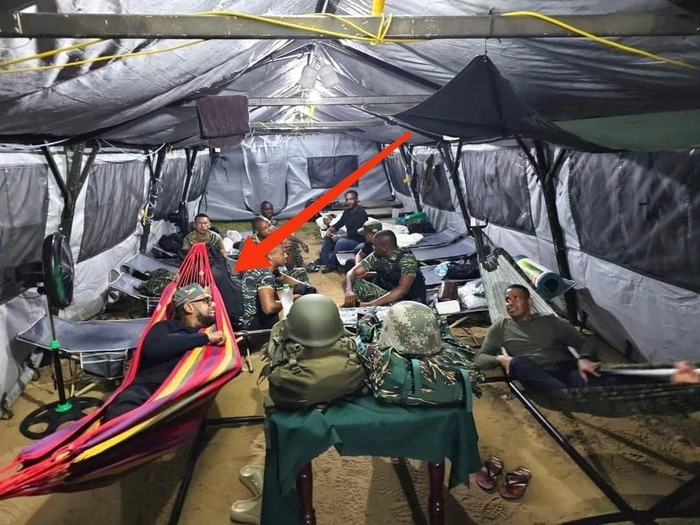
The president of Guyana is in a military camp on the border with Venezuela
Venezuela is a country known to us due to the protracted political, social and economic crisis caused by the socialist and authoritarian policies of Hugo Chávez and his successor Nicolas Maduro.
Now this country is facing the first presidential elections after 2018 and the pseudo-referendum that will take place in early December.
But let’s start this story not from Venezuela, but from the neighboring South American country – Guyana. This week, its President Mohammed Irfan Ali spent a day overnighting in the west of the country, then he took a helicopter ride flying Guyana’s national flag, in parts passing directly over the Venezuelan border.
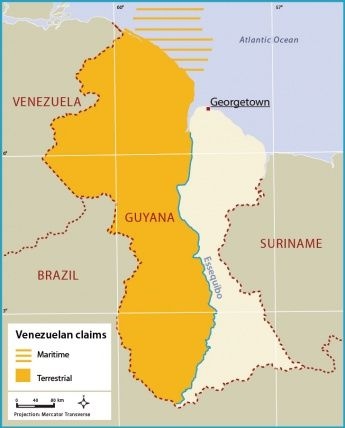
The fact is that Venezuela claims more than ⅔ of the internationally recognized territory of Guyana, the territory that Venezuelans call the “Essequibo region”.Map of Guyana. Territories claimed by Venezuela are shown in orange.
Essequibo is a region rich in oil, gold and some other natural resources, most of which is an impenetrable jungle. Venezuela has been claiming it since the day it declared its independence, that is, for more than 200 years. The water area and economic zone adjacent to Essequibo are also rich in natural resources.
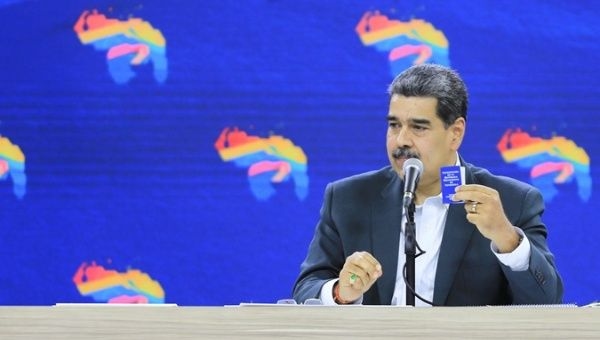
And in connection with the elections, which are to be held in the second half of 2024, the Maduro regime decided to raise its popularity by playing on the patriotic feelings of the citizens.Nicolas Maduro.
Very soon, on December 3, 2023, a “consultative” pseudo-referendum will be held in Venezuela, all 5 questions concern Essequibo.
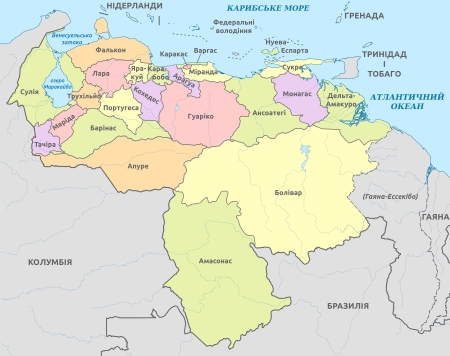
Maduro calls on citizens to answer “yes” to all questions. Among the issues are the distribution of citizenship to all residents of Essequibo and the future annexation of the region, with the creation of the “state of Guayana Essequibo” within Venezuela, which is to become the 24th subject of the federation.Map of Venezuela
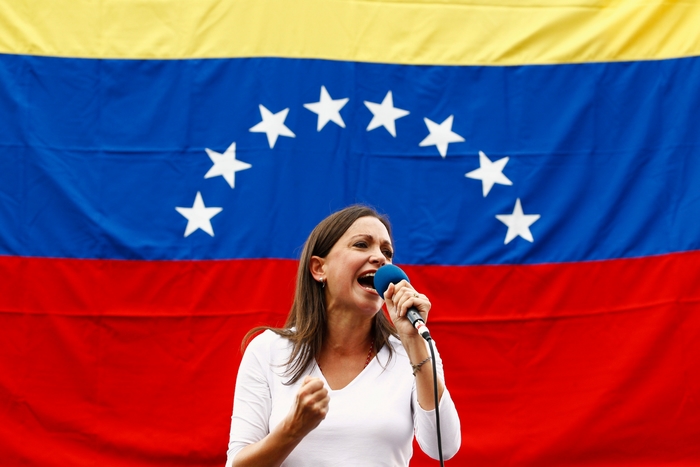
Guyana condemned the referendum and demanded that it be stopped immediately. The country’s government appealed to the International Court of Justice with this issue, but the referendum will take place very soon, the court will not be able to influence the holding of this “national plebiscite”.Maria Machado
María Corina Machado, an opposition leader known for her liberal, anti-Chavista and pro-market views, also wants to stop it. In her opinion, the questions raised are manipulative and frivolous, and may call into question Venezuela’s position in the dispute. Machado, like most of the opposition, believes that the Essequibo region should be part of Venezuela.
This position is not uncommon for Venezuela. Juan Guaido, the former leader of the opposition and recognized by most democratic countries, including Ukraine, the President of Venezuela, also supported Venezuelan encroachments. For example, the National Assembly headed by him ratified the “agreement on sovereignty over Essequibo” already in 2019, during the dual power. At that time, opposition representatives also criticized the Maduro government for discrediting Venezuelan territorial claims.Rehearsal of the referendum
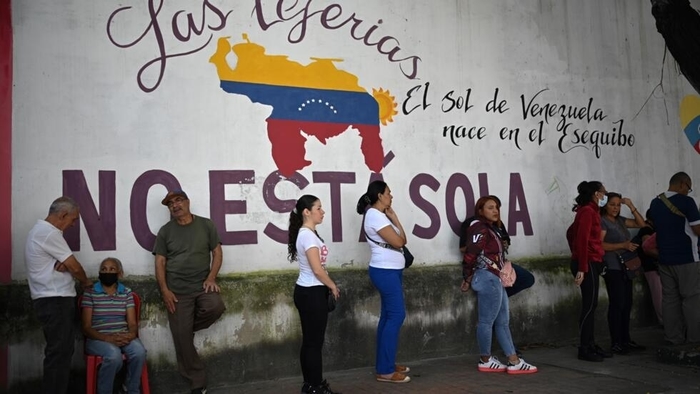
Let’s return to the present. Last Saturday, November 18, the Maduro regime already held a “referendum rehearsal” and declared that the rehearsal was successful.
In order to achieve the necessary result, which should be achieved on December 3, it is planned to make extensive use of administrative resources. In addition, hurrah-patriotism is dispersed on television and in schools in special lessons dedicated to Essequibo.
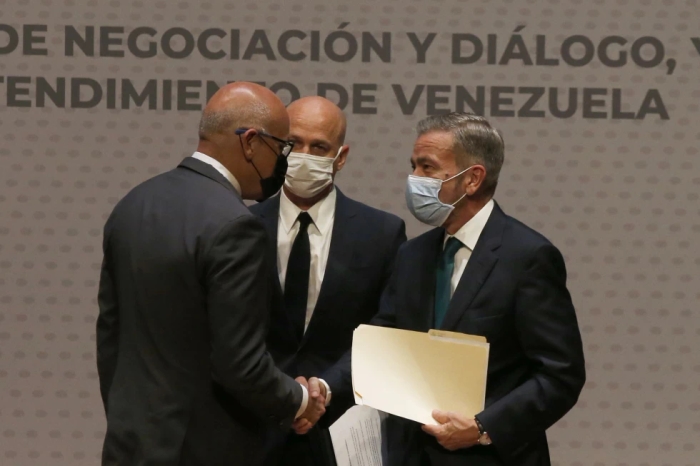
After the pseudo-referendum, the next important event for the country should be the Presidential elections, which should take place in the second half of 2024. The opposition and the government, with the mediation of the United States, signed an agreement on holding elections. According to this agreement, sanctions are partially lifted from Venezuela. If the sanctions are lifted, the country’s economy will be able to grow by almost 10%. The last time the country saw such growth was under Hugo Chávez, when oil prices were quite high.A representative of the opposition and the government at the signing of the agreement
But it is not known whether the Maduro regime will fulfill the terms of the agreement. Perhaps he is using it to partially improve the welfare of the country before the vote, at the expense of petrodollars. US Secretary of State Anthony Blinken warned that if the regime does not fulfill its part of the agreement, the sanctions will be quickly returned.
Some previously imprisoned opposition figures have been released, but the question of whether Machado will be able to participate in the elections is still relevant. Machado’s ban on running for office until 2030 remains in effect. Also, the Maduro government did not recognize the result of the October opposition primaries, in which almost 3 million Venezuelans participated, calling it falsified. On it, Machado received more than 90% of the votes of opposition-minded Venezuelans.
But it is quite likely that if the presidential elections are as “fair” as the upcoming referendum. So even if Machado is admitted, she will have to face the involvement of resource administrators and potential falsification of voting results. We can say that now the government is “training” the organization of elections by holding a pseudo-referendum.
It is difficult to speak about the consequences of the referendum. Maybe it’s just a play on patriotism. It was similar during the rule of Hugo Chavez. Then, on his initiative, another star was added to the Venezuelan flag to symbolize Essequibo. Chavez also raised this issue more often in the public discussion. But in the end, the tension was cooled and the status quo was preserved.
Although authoritarian regimes are capable of starting “small victorious wars” to raise their own popularity. One can only mention the Argentine invasion of the Falklands. In addition, Venezuela’s rival will be Guyana, an independent country with a population of approximately 800,000 people, most of whom live outside the territories claimed by Caracas.
Let’s see how the situation will unfold. Georgetown, the capital of Guyana, is visibly worried. Because they see an existential threat to the existence of their country.
We hope that Maduro will not go beyond loud statements in the style of “the sun of Venezuela rises in Essecubio” and real control over Guyana will not be established.
We will continue to monitor both the situation with tensions with Guyana and the conduct of the elections. That’s it, thank you for your attention.


