


Tank factories of the Russian Federation
The tank industry of the Russian Federation occupies one of the most important places in the economy of this country. Over the long years of its existence, tank-building enterprises of Russia have developed and put into operation many tanks of various modifications and classes. As of 2023, the Russian Federation continues the development of its tank industry, giving the main priority to the restoration of machines that were in storage and the creation of newer modifications of the T-72 and T-90 tanks.
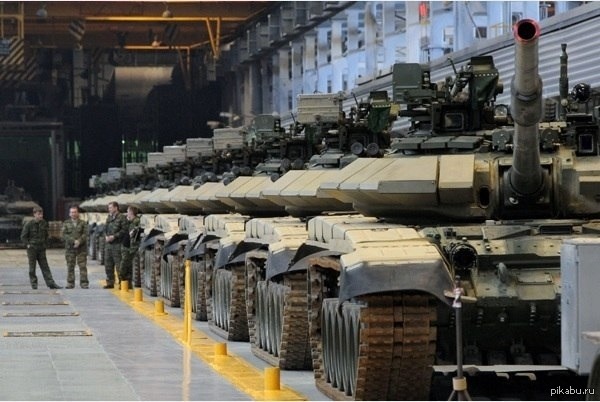
History of tank construction of the Russian Federation
The history of Russian tank construction dates back to the beginning of the 20th century, when the first tanks were developed. In Soviet times, tank building occupied an important place in the country’s military industry. In the 1940s, the T-34 and KV-1 tanks were developed, which became very successful on the battlefields of World War II.
In the 1960s, the T-62 and T-64 tanks were developed, which remained the main tanks of the Soviet Army for many years. In the 1970s, the T-72 and T-80 tanks appeared, which were also quite successful. In the 1990s, the Russian Federation continued to develop its tank industry, developing the T-90 tanks, already in the 2010s they were able to make the T-14 “Armata” tank
There are several major tank factories in Russia that produce tanks and other military equipment. Some of them:
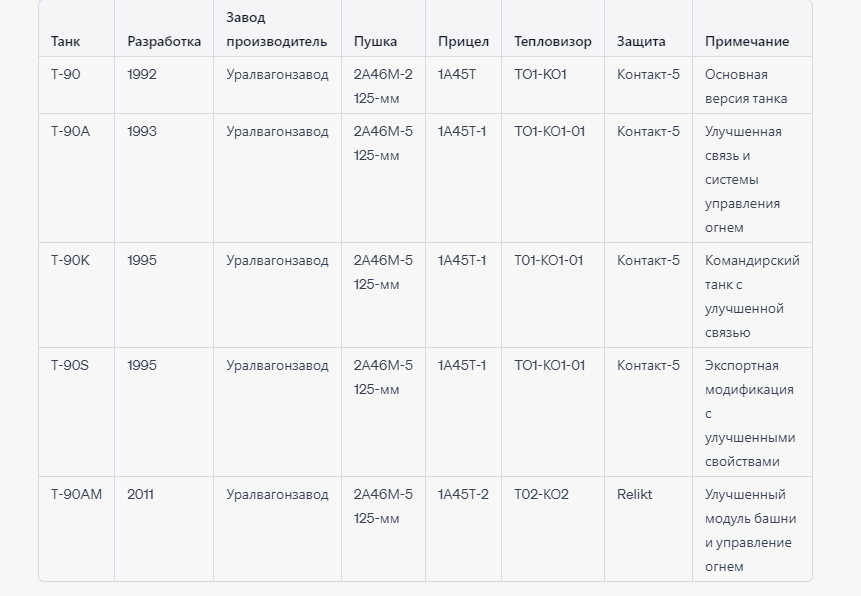
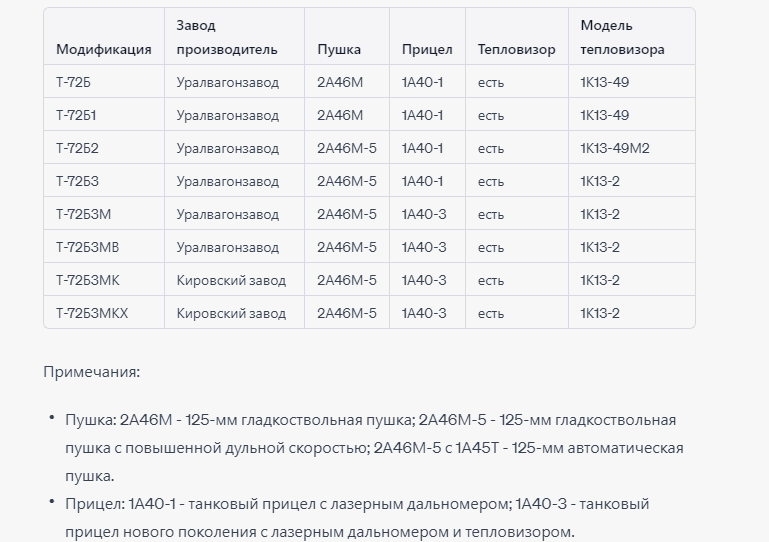
- Ural Tank Plant – located in the city of Nizhny Tagil, Sverdlovsk region. This plant is one of the main producers of T-90 and T-72B3 tanks for the Russian army.
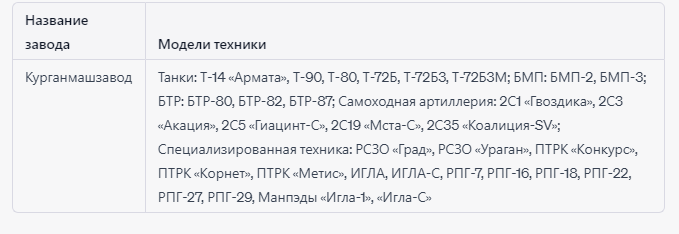
- Kurganmashzavod – located in the city of Kurgan, Kurgan region. This plant specializes in the production of armored personnel carriers, infantry fighting vehicles and T-14 “Armata” tanks.
- The Kirov Tank Plant is one of the oldest and largest manufacturers of military equipment in Russia. The main model produced by this plant is the T-80U
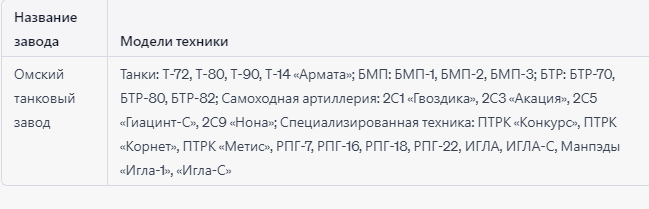
- Omsk Tank Plant – located in the city of Omsk, Omsk region. This plant specializes in the production and modernization of T-72, T-80, T-90 tanks.
So now we will consider each of these plants separately:
Ural Tank Plant
The tank manufacturing plant in the city of Nizhny Tagil is one of the largest and most important enterprises of the Russian military-industrial complex. Founded in 1934, the plant has a long history of manufacturing armored vehicles and weapons for the Russian army. It has modern infrastructure and equipment of the latest generation, which allows it to produce a wide range of armored vehicles and weapons. The plant has a production area of more than 500,000 square meters and employs more than 20,000 workers. The plant produces a wide range of armored vehicles, including tanks, infantry fighting vehicles and self-propelled artillery. Some of the most famous vehicles produced are the T-90 main battle tank, the BMP-3 infantry fighting vehicle and the 2C19 Msta self-propelled howitzer.
The plant also produces various weapons, grenade launchers and anti-tank guided missiles. In addition, specialized equipment is manufactured, such as mine clearance vehicles.
Production prospects
The plant itself has a strong technical base and a clear reputation as a manufacturer of high-quality armored vehicles and weapons, for example, contracts for the supply of tanks to North Africa or India, although their failures on the battlefield greatly reduce the prospects for the development of this enterprise, because it works entirely for the Russian army, and mostly repairs equipment which was in battles or from storage, and does not make a new one.
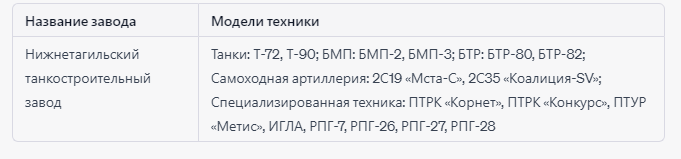
Currently, it is not possible to find information about the current release of the equipment.
Kurganmashzavod
The Kurgan Tank Plant is one of the largest enterprises in the Russian Federation that produces armored vehicles and special equipment for military needs. The plant was founded in 1941. Its main purpose was to provide the Soviet Union with tanks to fight against Germany.
The Kurgan Tank Plant was founded by the famous Soviet engineer Mykhailo Ivanovich Koshkin. The factory was built on the territory that used to belong to the “Red Proletariat” collective farm. The enterprise was of strategic importance for military needs, as it supplied the army with T-34 and KV-1 tanks.
During the following years after the end of the war, the Kurgan Tank Plant continued its work and increased its potential. In 1956, the factory launched the production of T-54 and T-55 tanks, which replaced the old T-34 and KV-1 tanks. In 1969, a new tank model was created – the T-62, which was also produced at the Kurgan Tank Plant.
Over the following decades, the Kurgan Tank Plant increased its production capacity and productivity to meet the growing needs of Russia’s military industry.
After the collapse of the USSR and the establishment of Russia’s independence, the Kurgan Tank Plant continued its work and produced models of tanks for the Russian army. In 2002, the plant received a new name – OJSC “Kurganmashzavod” and began production of T-90 and BMP-3 models.
Today, OJSC “Kurganmashzavod” is one of Russia’s leading enterprises in the field of tank equipment production. The plant cooperates with military institutes and military departments of the country to develop new technologies and models of tanks for the Russian army.
In its long history, the Kurgan Tank Plant has changed many different owners, names and production directions, but has always remained one of the key enterprises of Russia in the field of tank construction.
Kirov Tank Plant
The plant was founded in 1934 as the “Krasnoye Sormovo” plant, initially producing a variety of cargo equipment. However, already in 1936, the plant started the production of T-28 tanks.
During the Second World War, KTZ became one of the most important manufacturers of tanks for the Soviet army. During the war, more than 16,000 tanks were manufactured at the plant, including T-34, KV and IS. After the war, KTZ continued the production of tanks and other military equipment.
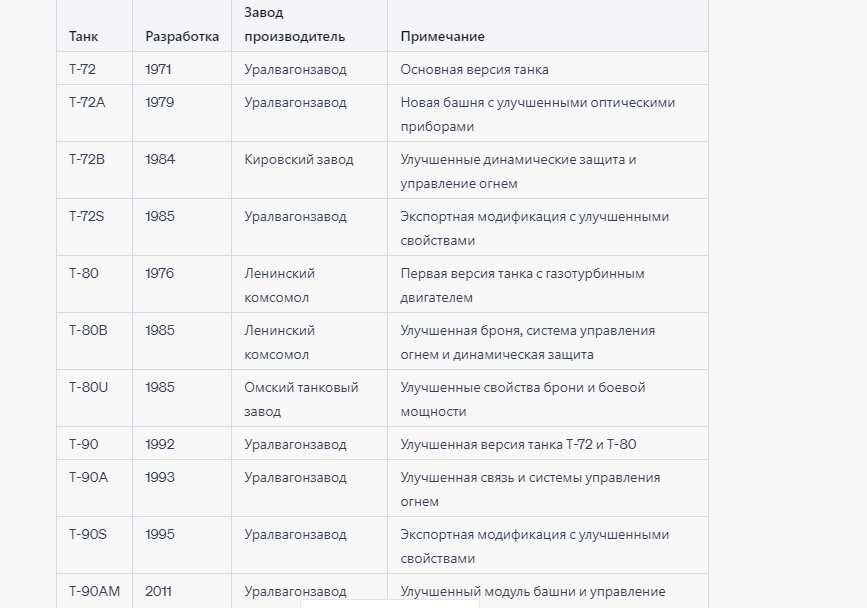
The plant participated in the production of various models of tanks, including the T-72A, T-72B and T-72B3, as well as the T-80U tank.
In 2010, KTZ was acquired by the Uralvagonzavod company, which is engaged in the production of military equipment and railway equipment. Today, KTZ continues to produce T-72 and T-90 tanks, as well as other military equipment, such as BMPs and self-propelled howitzers.

Omsk Tank Plant
The Omsk Tank Plant is one of the largest manufacturers of military equipment in Russia. The plant was founded in 1934 under the name “Omsk Railway Wagon Repair Plant”. In 1941, the plant switched to the production of T-34 tanks.
Today, the Omsk Tank Plant is one of the main manufacturers of tanks in Russia. Production of tanks at the plant began in 1955, when the T-54 production line was launched. Now the plant specializes in the production of T-80 tanks and its modifications.
The T-80 tank is one of the most modern tanks in the world, the plant currently produces the T-80BVM modification. The plant also produces other armored vehicles, including armored personnel carriers and specialized equipment for bridge replacement works.
The Omsk Tank Plant occupies an important place in the Russian military-industrial complex, in particular, the plant is one of the leading manufacturers of combat equipment for the Russian army.
Although the Omsk Tank Plant was established to produce tanks, the plant also produced minibuses, trucks and marine equipment in the 1960s and 1970s. However, since the beginning of the 80s, the plant has completely switched to the production of military equipment. Already in the Russian Federation, the plant was the main developer of various modifications of the T-80 tank, currently the latest version is the T-80BVM
So, the Omsk Tank Plant is a large and important enterprise in Russia, capable of producing high-quality armored vehicles that meet the requirements of the Russian Ministry of Defense.
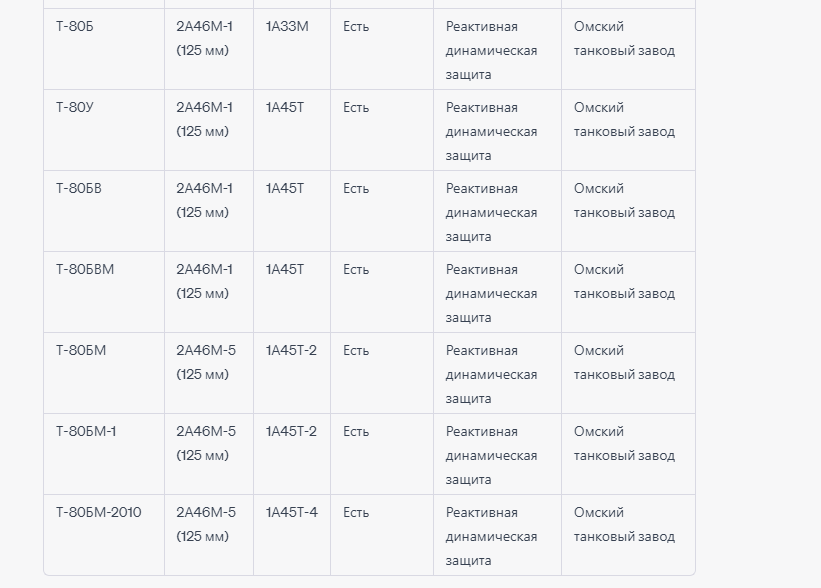
Also, the Russian Federation is currently actively restoring the equipment that was in storage, so all the factories listed here, as well as others, work in a single system, so now each of the factories is using its capacity to produce any model of Russian armored vehicles.
Additional images:
Conclusion:
Well, to tell the truth, the Russians have a fairly strong base for the production of tanks. For example, the following information was given regarding the volume of output:
2010 – 118 units
2011 – 119 units
2012 – 131 units
2013 – 120 units
2014 – 135 units
2015 – 80 units
2016 – 112 units
2017 – 100 units
2018 – 87 units
2019 – 77 units
2020 – 96 units
2021 – 102 units

