


There are more opponents of the escalation of the “military operation” than its supporters.
We made this conclusion with the help of filter questions, dividing the respondents into several groups. We explain:
At the first stage, we separated those who favor the escalation of the “military operation” from those who oppose it. Wave 11 respondents were asked 2 questions about support for Putin’s hypothetical decisions to attack Kyiv and sign a peace agreement. As a result, 4 segments were identified:
- ▪️ supporters of the escalation of the “military operation” (27%; will support the offensive and will not support the peace agreement);
- ▪️opponents of escalation (34%; will support a peace agreement and will not support an offensive);
- ▪️neutrals (33%; will support any decision);
- ▪️negativists (2%; will not support any of the options).

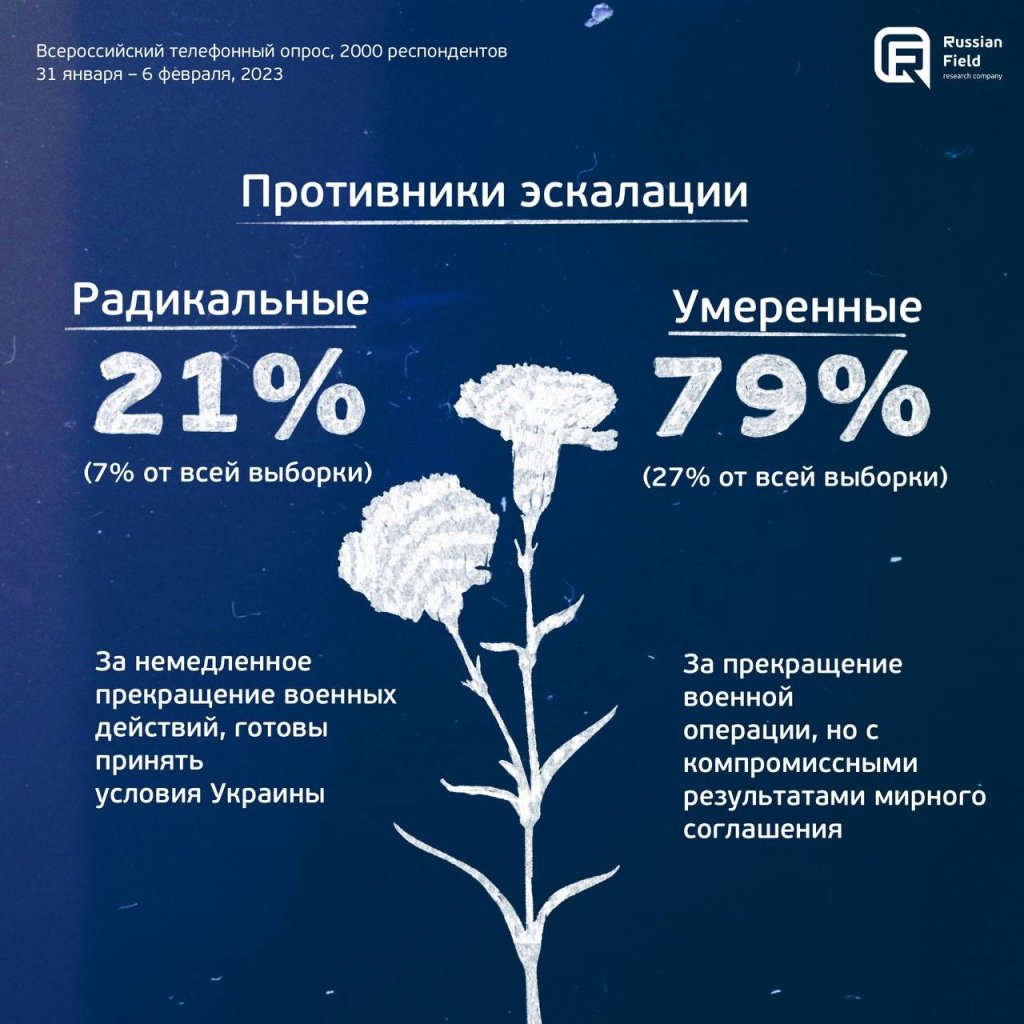
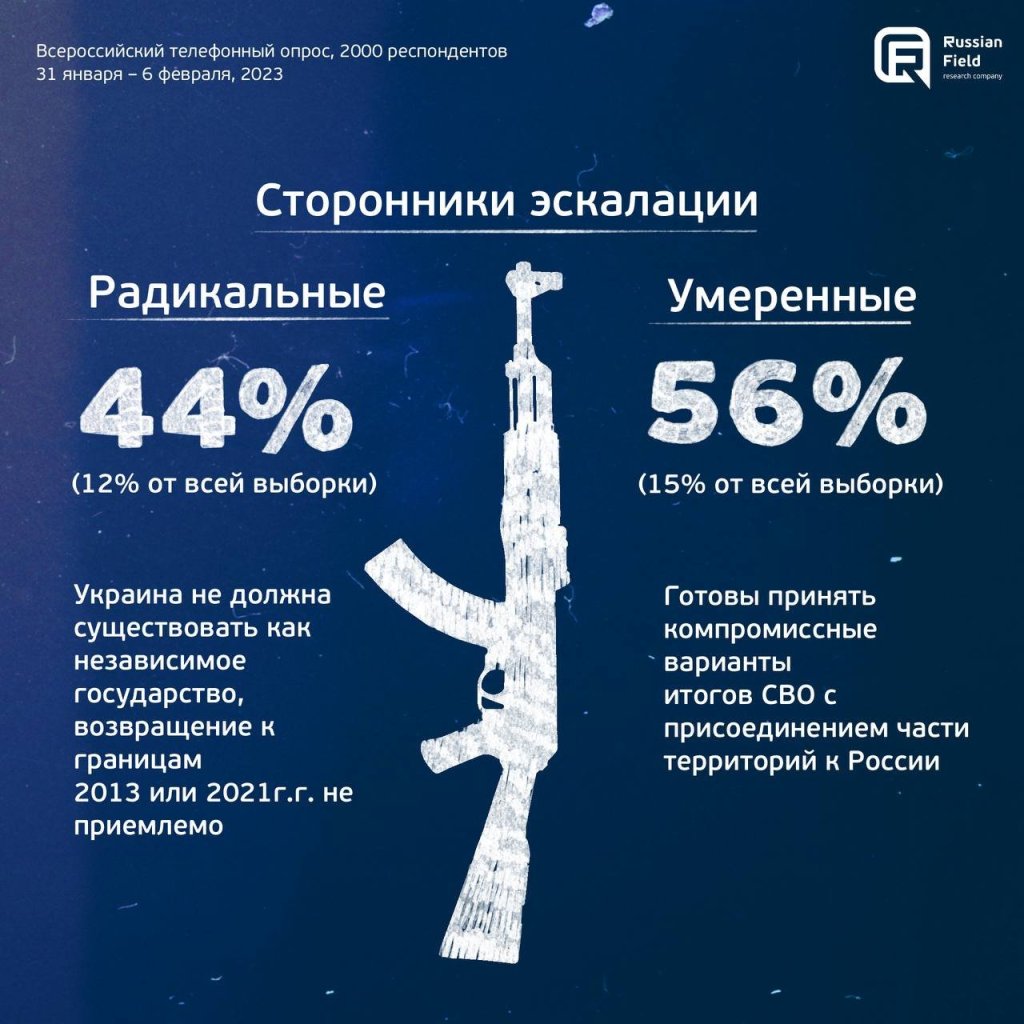
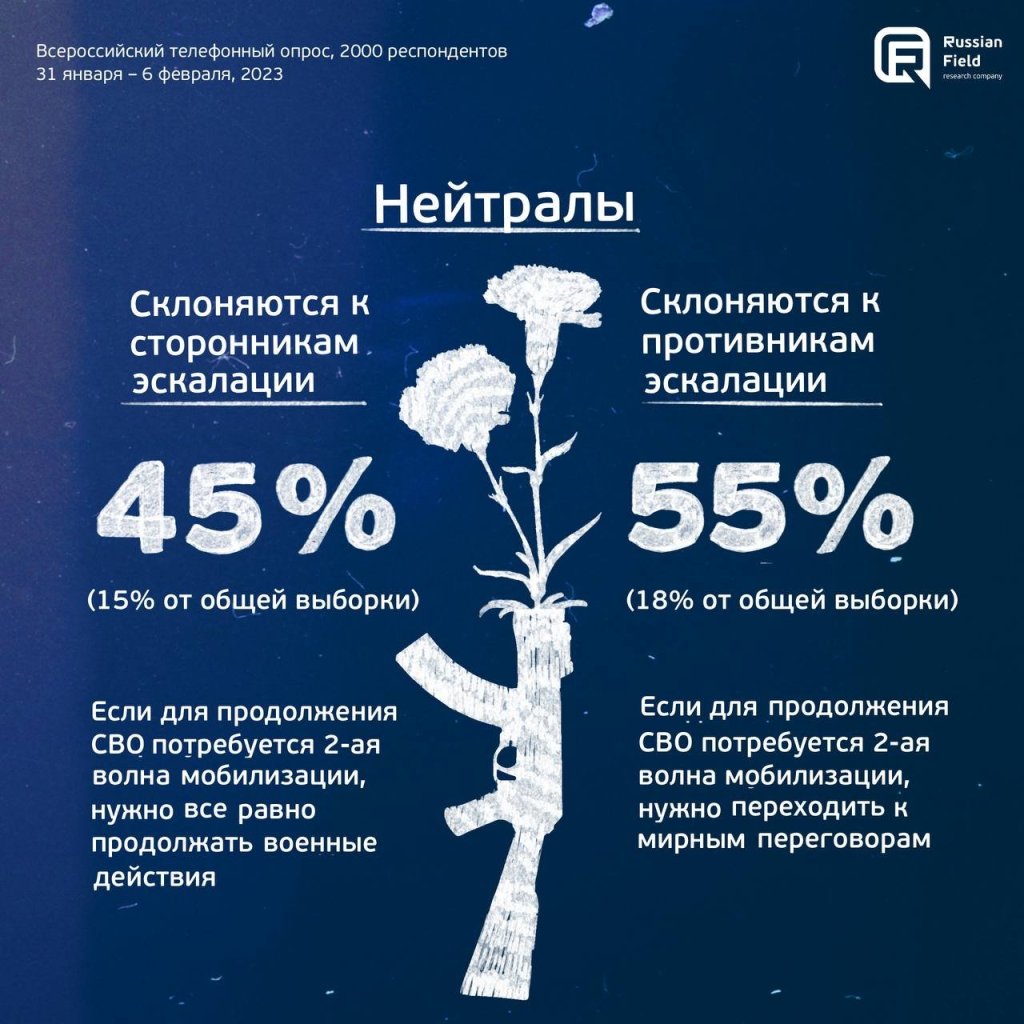
At the second segmentation stage, 4 main groups of respondents were divided into subgroups depending on their attitude to various scenarios for the continuation and completion of the “military operation” (the questions for each segment varied). As a result, we managed to identify the following sub-segments:
- ▫️Radical and moderate supporters of escalation (12% and 15% of the total sample)
- ▫️Radical and moderate opponents of escalation (7% and 27% of the total sample)
- ▫️Neutrals leaning toward supporters or opponents of escalation (15% and 18% of the total sample)
Supporters of the escalation of the “military operation” are united by support for hostilities in all their aspects and readiness for further confrontation with higher stakes.
Moderate and radical opponents of escalation , on the contrary, differ fundamentally in many positions: the radicals are in favor of an immediate cessation of hostilities, often on Ukraine’s terms, while moderate opponents are ready for a compromise peace.
Neutrals are similar in many respects to the escalators, but they are less politicized and tend to stick to positions of power.
https://russianfield.com/godsvo
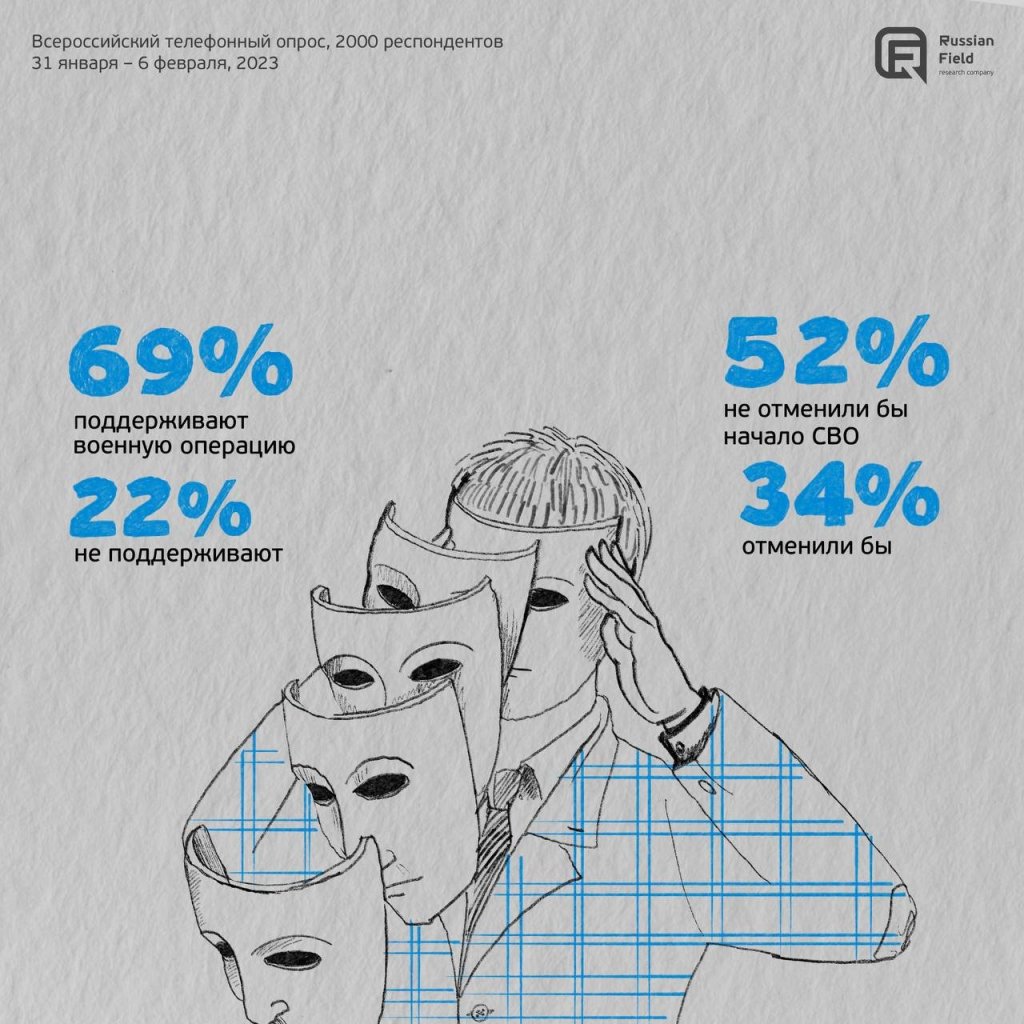
▪️Support for the “military operation” has remained virtually unchanged for 10 months: 69% support the “military operation”, 22% do not. At the same time, 34% would cancel the decision to start hostilities, 52% would not cancel it.
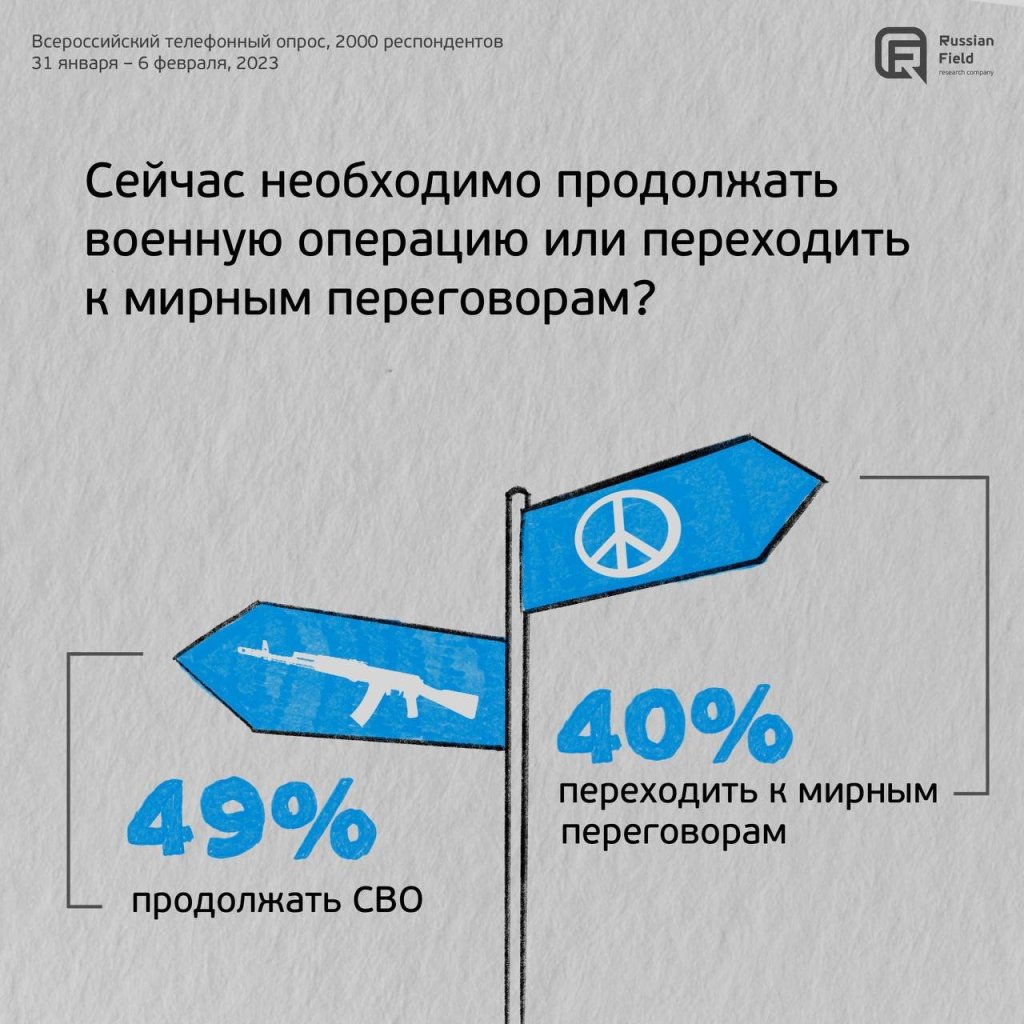
▪️49% of respondents believe that the “military operation” must be continued, 40% support the transition to peace negotiations.
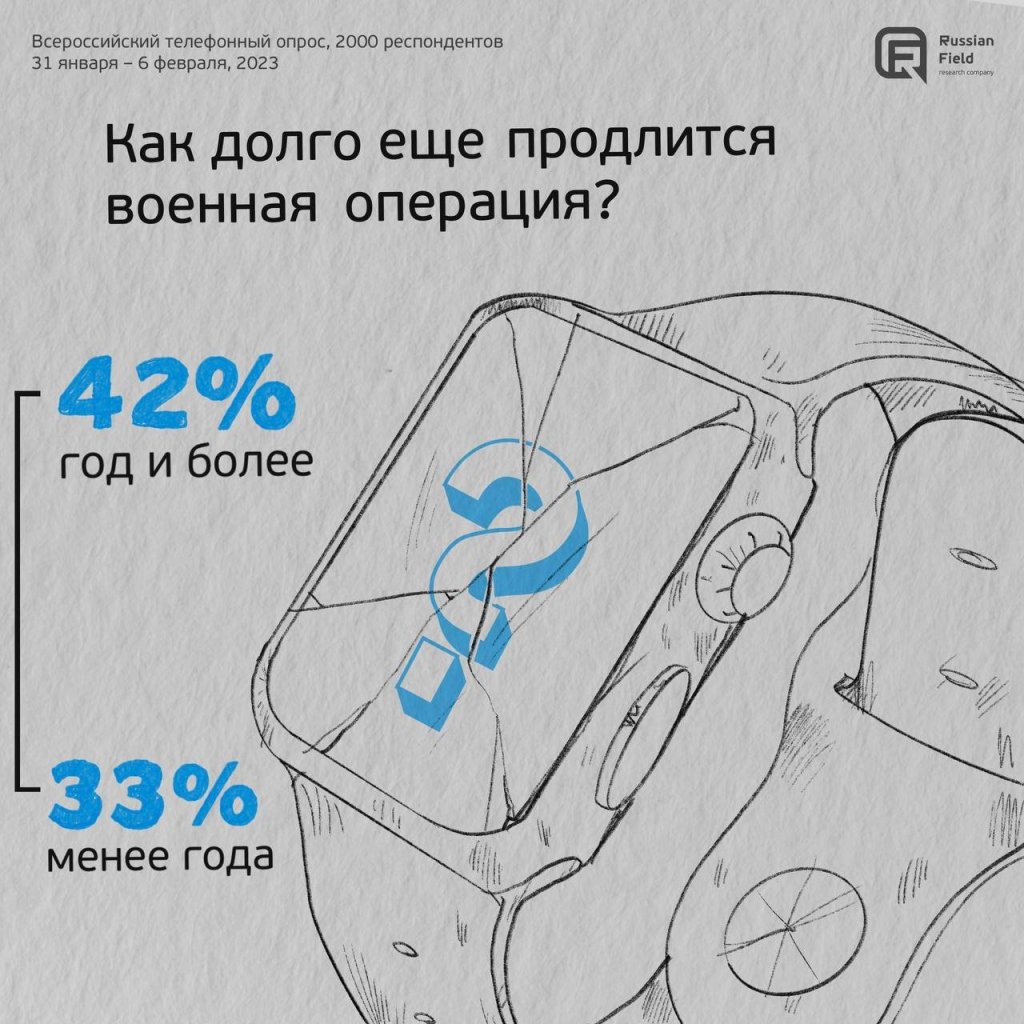
▪️Among the respondents, the prevailing opinion is that the “military operation” will last more than a year (42%), 33% predict a period of no more than a year.
▪️Compared to the 10th wave of the study (November 29 – December 5), respondents began to give more positive assessments of the course of hostilities. 56% (+6 p.p.) of those surveyed assess the course of the “military operation” as successful for the Russian army, 23% (-10 p.p.) believe that military operations are unfolding unsuccessfully.
▪️About half of the respondents (48%) believe that official data on the progress of the “military operation” can be trusted. 45% hold the opposite opinion.
▪️The majority of respondents (71%) are not afraid to take part in surveys on the topic of “military operation”, 24% of respondents reported fear.
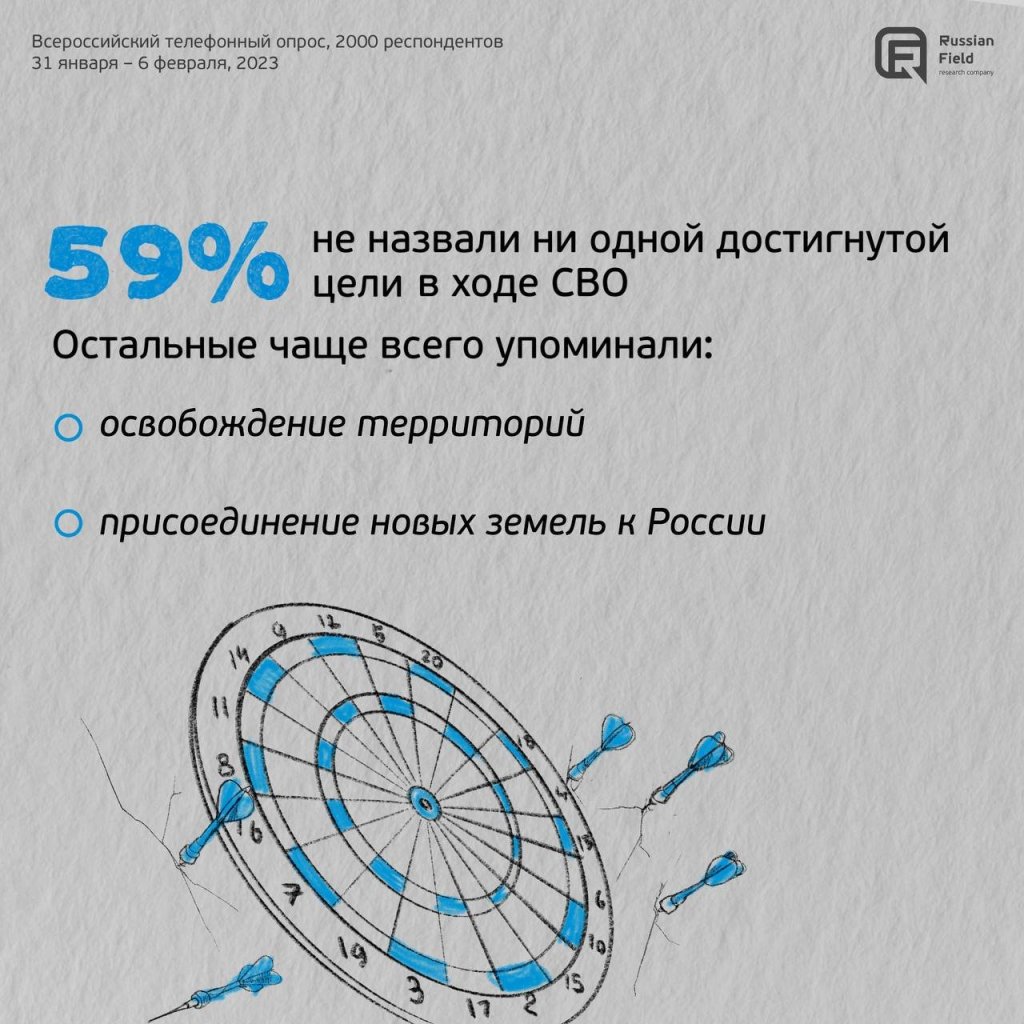
▪️37% of the Russians surveyed found it difficult to answer the question about the goals achieved during the “military operation”, 22% believe that no goals were achieved. Among the rest of the respondents, the liberation of territories (Donetsk, Donbass, Luhansk) and the annexation of new lands to Russia (LPR, DPR) were most often mentioned.
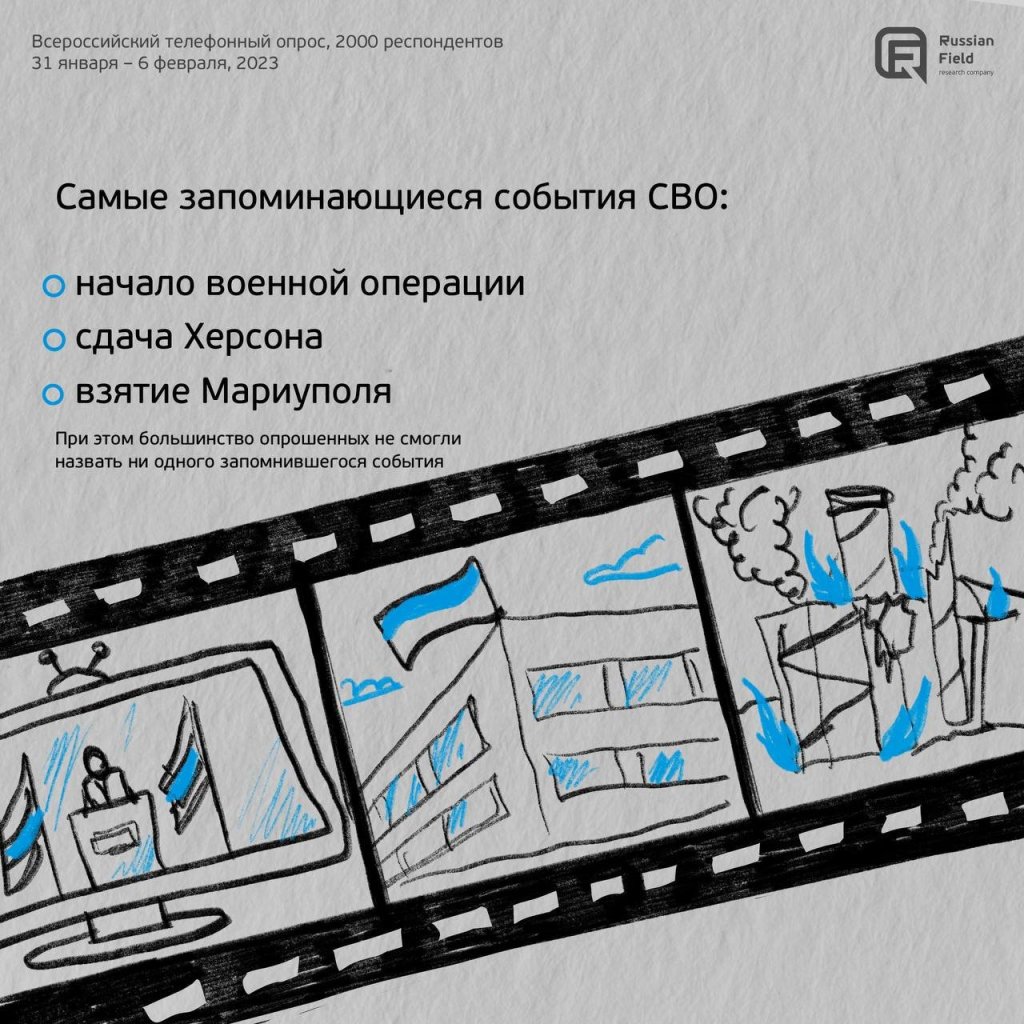
▪️The vast majority of respondents could not name a single memorable event during the “military operation”. Among those who could remember any events, the TOP-3 included the beginning of hostilities, the surrender of Kherson and the capture of Mariupol.
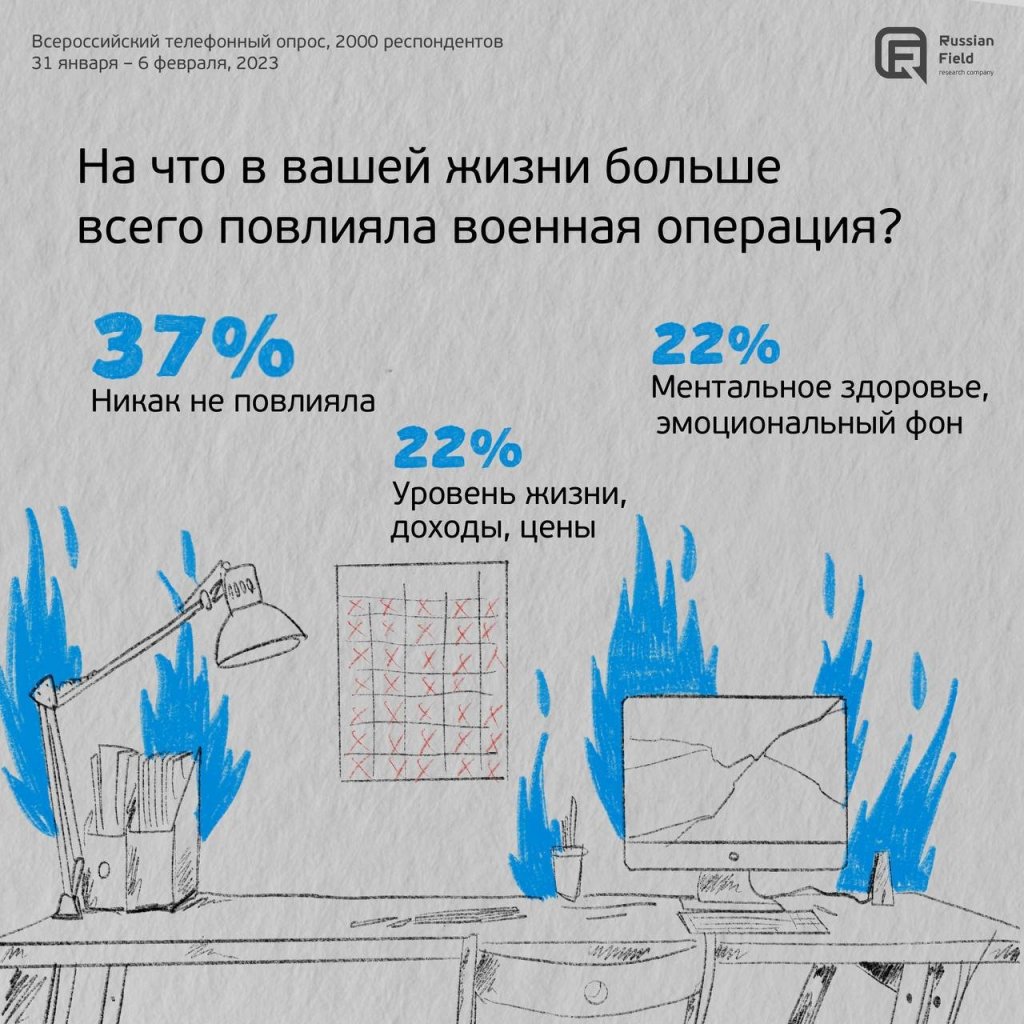
▪️37% of respondents reported that the “military operation” did not affect their lives in any way. Among the rest of the respondents, the impact on the standard of living, income, prices (22%) and on the psychological state (22%) was most often mentioned.
▪️About a third of the respondents do not know anything about the activities of E. Prigozhin during the “military operation”, however, 41% of respondents positively assess his activities, 15% – negatively.
▪️Every fifth respondent has relatives or friends who emigrated from Russia in the last year. Most of all such acquaintances are among the youngest respondents aged 18-29 (33%).


You must be logged in to post a comment.